This is the fifth and last dispatch from the RV leg, still written from the Dark Side. The places, the photographs and the facts are real. The melodrama is not. Parts 1 to 4 told the road day by day. This one is the verdict: why we chose a motorhome, how it went, and what it cost. The bill for the whole 42-day trip is in its own post; the bill for the RV days is at the end of this one.
THE DARK LORD’S VERDICT. TWELVE DAYS, ELEVEN NIGHTS.
Why a motorhome
The briefing
Every Dark Lord has one project that sits on the plans for years. Mine was a motorhome. An RV trip had been on my bucket list for many years, a one-of-a-kind experience, and I wanted to do it with the family. I had read a great many blogs about it, the way a commander studies enemy terrain, and the verdict matched what I already suspected: if you want to do it properly, you do it in the United States, where the roads, the campgrounds and the parks were built with this very vehicle in mind. Australia is the other place people name. Others would add New Zealand, Canada and parts of Europe, where the roads are wide and camping is easy, or where “camper stops” take the place of campsites.
The cost argument
This is my view, not an audit, and the full bill is at the end of the post. If you rent a car, you pay for the car and you pay for somewhere to sleep, and a room inside a national park costs far more than one in a city, while the cheaper rooms are always further from the sights. Set that against the motorhome, which is the car, the room, the kitchen and the bathroom in one, and I think the RV comes out cheaper, provided you book early. Food is part of it: the Walmart bill covered snacks, drinks and everything between meals, and having a fridge, a microwave and a stove on board changes what a day on the road costs.
And then there is the part no bill will show. A house on wheels is not the same as four wheels on the road. It is airier, the views are better, the plans are more flexible, and there is a kitchen, a bathroom and a bed wherever you stop, with no changing out of the day’s clothes. For the national parks specifically, I do not think there is a better way to do it. Several of our nights were spent inside the parks themselves, at Yellowstone, Zion and the Grand Canyon, so we woke up where the day’s sights were.
Choosing the ship
Two rental companies kept coming up: Cruise America and El Monte. El Monte gave me the better deal and, as I read it, the more flexible one. (El Monte is part of the thl group, which bought it in December 2016.)
Then the class of vehicle. Rental companies split motorhomes into three classes. I chose the middle one, Class C, because it gave us the best experience.
- Class A: the bus-style flagship. Typically 26 to 45 ft, sleeping 6 to 8. The most space and storage, and the most to drive, park and fuel.
- Class B: the camper van. Typically 17 to 24 ft, sleeping 2 or 3. Compact and nimble, but with little space and a minimal kitchen.
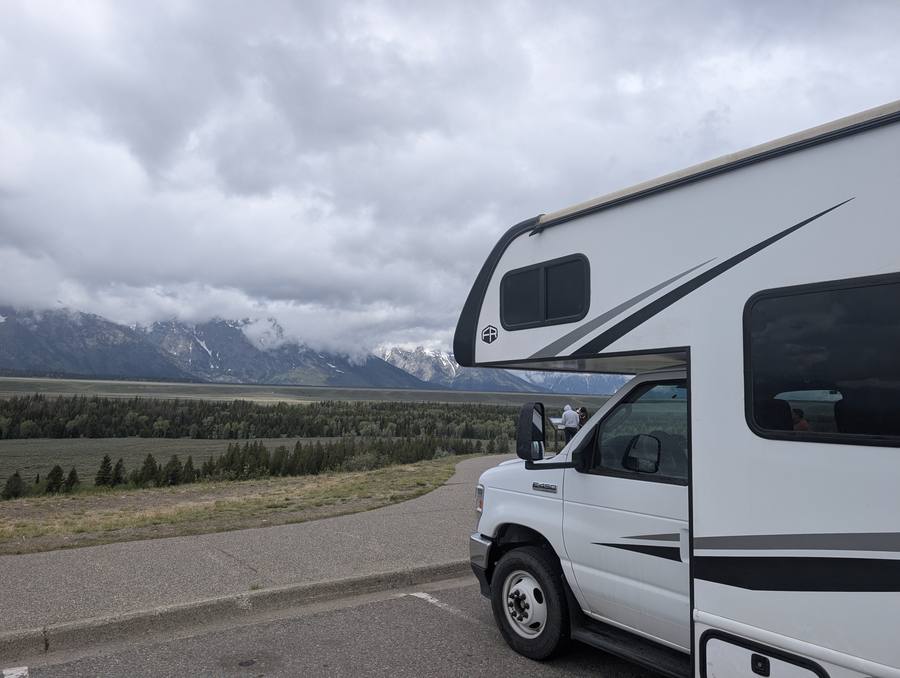
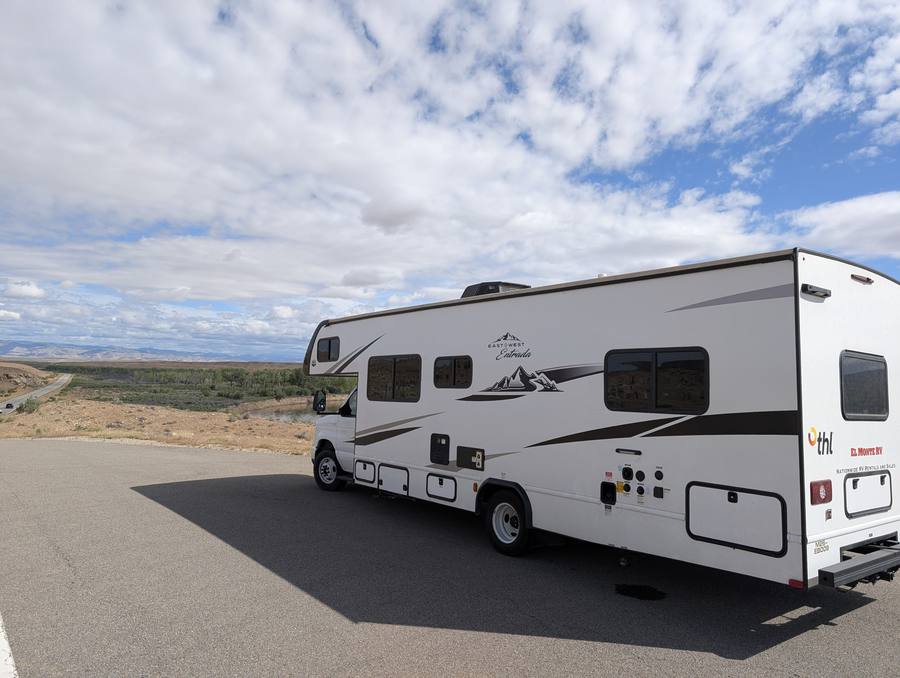
- Class C: the truck cab with a coach body on the back. Typically 20 to 35 ft, sleeping about 4 to 6. A balance of space, cost and drivability, with less storage than a Class A. Ours was 27 to 29 ft.
Figures are from El Monte RV’s own comparison of the classes. Towed trailers and fifth-wheels are a different category: they need a separate tow vehicle.
The route problem
I spent weeks on the plan. We went through many versions of the stopovers and the route, and the best answer was a one-way rental, a balance of days against cost. The pick-up city matters, because the daily rate depends on it. I could have rented from Dallas, but the price there was far higher because of the World Cup. Denver to Las Vegas it was; the finished plan is in its own post.
The campgrounds were the other half of the plan. I did extensive research and made the bookings months ahead, so that the best campsites were available. The rental itself was booked in July 2025, almost eleven months before pick-up.
- Most national park campgrounds that use Recreation.gov open their dates about six months ahead.
- Yellowstone took its 2026 bookings through the park’s lodging operator. From the 2027 summer season, Fishing Bridge RV Park and the Bridge Bay, Canyon, Grant and Madison campgrounds move to Recreation.gov, with dates opening about six months ahead, according to the operator’s own page.
The booking windows for Zion, Bryce and Grand Canyon are not covered here; check each park’s page before planning.
Taking over the flagship
The handover
The crew at the depot were very helpful and cheerful, and they made the handover as smooth as it could be. That included the part that was not smooth. The first motorhome we were given had a fault in its water heater, and a ship that cannot heat water does not command anything, so it was replaced with another. The change took about an hour. To make up for the wait, El Monte gave us a free kitchen kit and camping chairs.
A tour of the new ship was conducted for all four of us. We did not have time to unpack, so that waited until the first night.
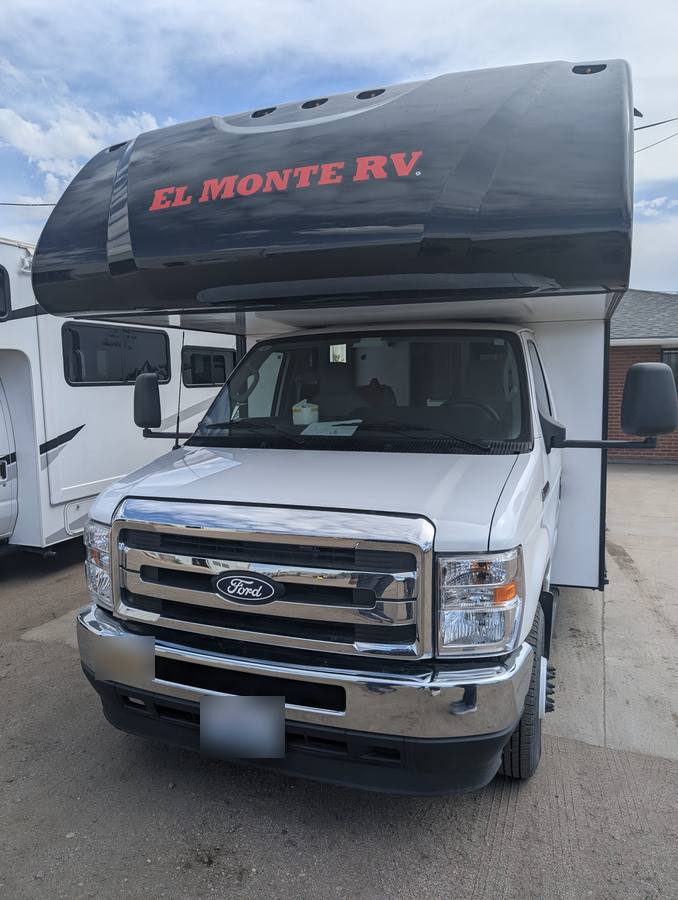
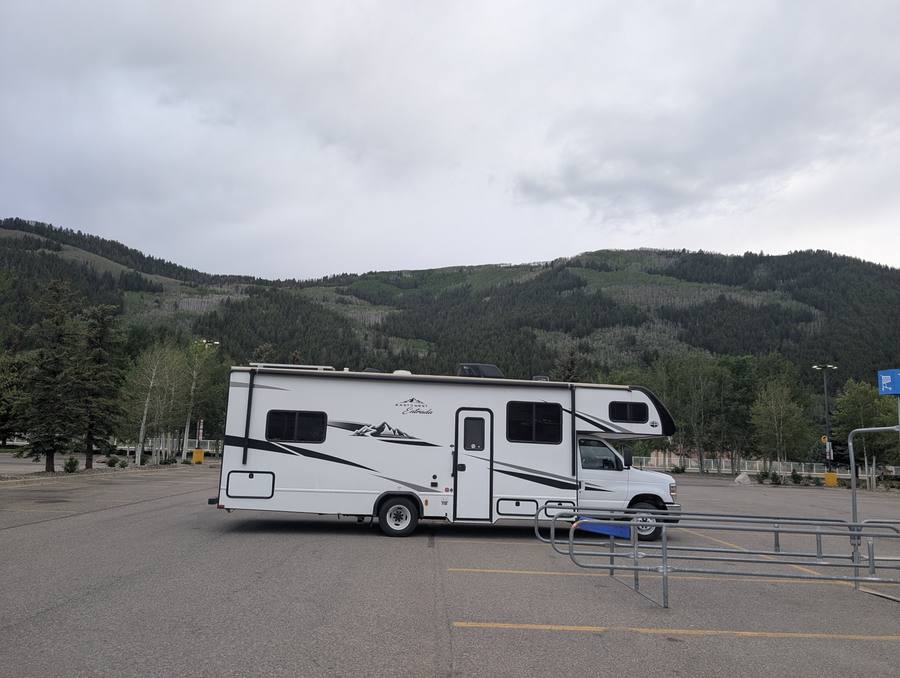
- Allow one to two hours for the vehicle orientation and the paperwork, according to El Monte’s rental information.
- The security deposit is held on a credit card in the main renter’s name. Ours was a $1,500 hold placed on the day of pick-up.
- Mileage is sold in packs of 100 miles. We bought ours ahead of time, went 14 miles over, and a goodwill credit of about the same size cancelled the charge.
- The generator was free in ours, and the meter showed three hours used over the whole trip.
- The usual rule is to return the RV with a full tank of fuel and a full tank of propane.
First impressions
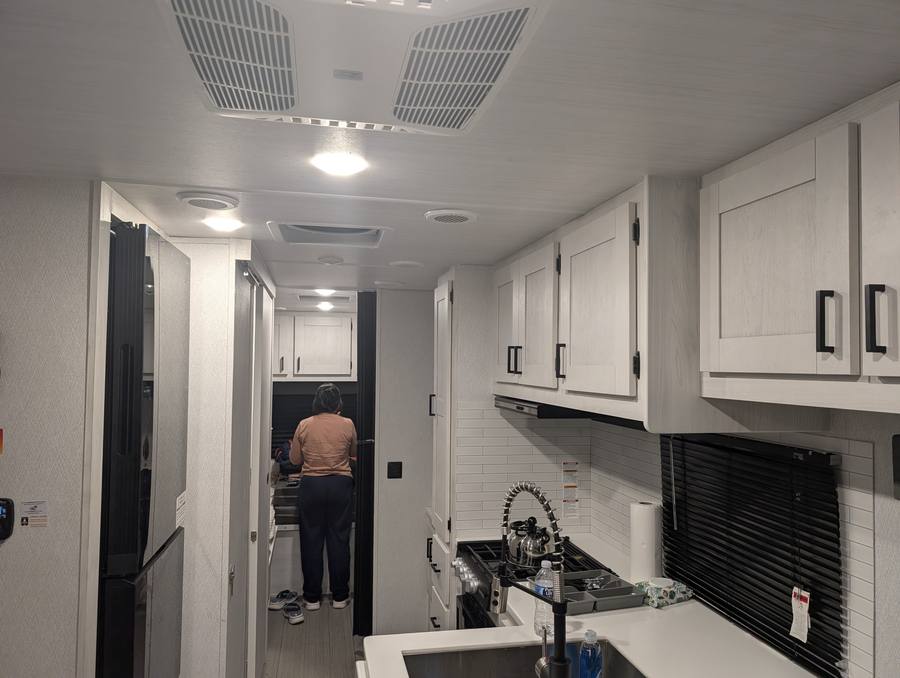
We had been given a new 2026 model, and it showed: the fittings were of very good quality, and it had that new-vehicle feel. There is loads of space. We emptied our suitcases and bags and stayed unpacked for the whole trip. The high headroom, the dining table and the sofa gave it a very open, airy feel. The air conditioning and the heater were both very good and effective.
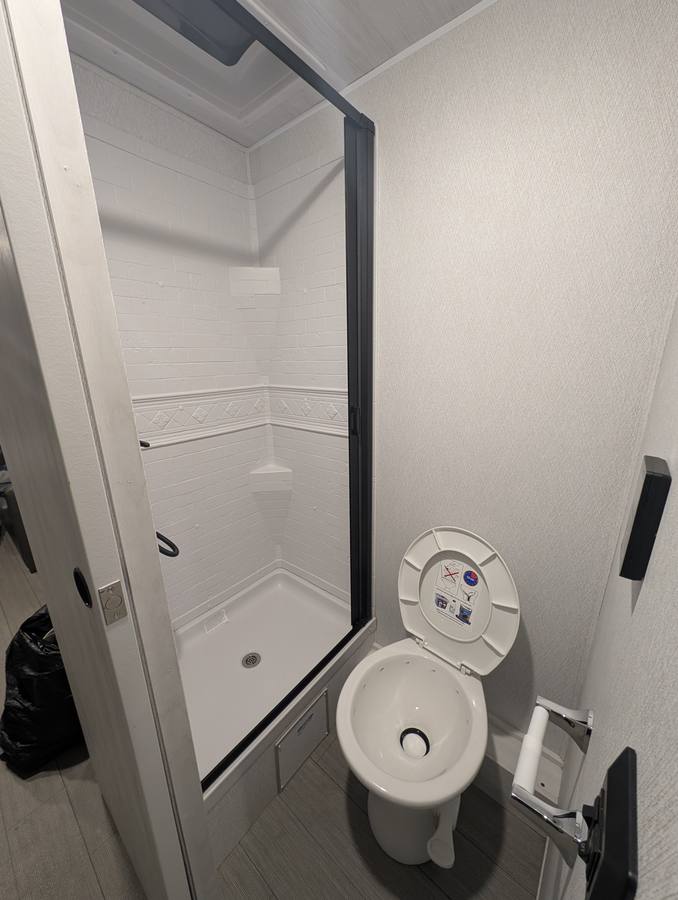
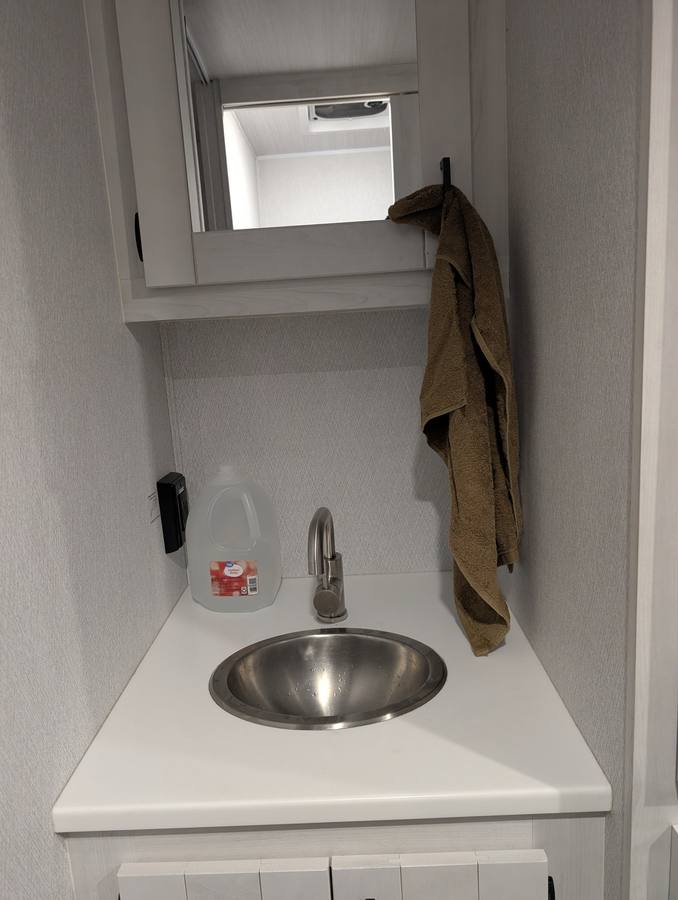
Driving it
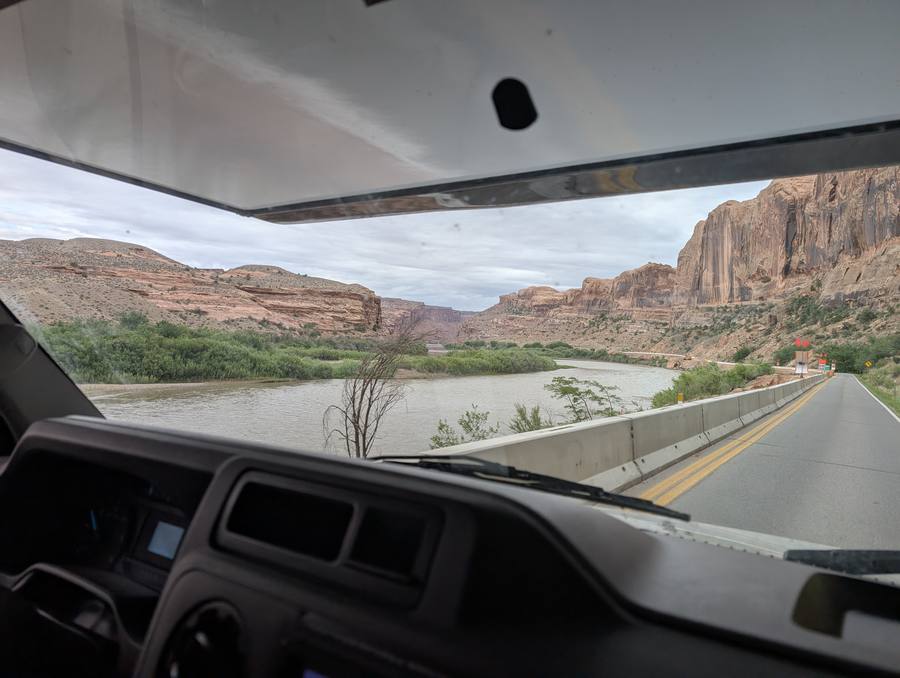
It was easier to drive and manage than I thought it would be. It drives like a large SUV, and it takes a little getting used to. The mirrors are a great help. For reversing, the co-driver is best put down on the ground, behind the vehicle. (The usual advice agrees: use a spotter whenever you can, even if you have a camera.)
A few rules I learned and would pass on:
- Slow down everything. There is no need to be in a hurry, and everything will be fine, especially at crossings and turns.
- Respect the crosswind. It has a big effect on a tall box like this, a lot of correction is needed, and when the wind keeps changing you have to stay very alert.
- Secure everything. Anything loose will fall on turns or under sharp braking.
- Gusts hit hardest where you leave shelter: coming out of trees, passing overpasses, or meeting big trucks.
- One experienced RV writer finds 55 to 60 mph the “sweet spot” on freeways, and 45 to 55 mph on two-lane roads.
- If the wind is knocking you around, pull onto the shoulder and wait it out.
- Take a short break roughly every hour, because fighting the wheel is tiring.
Source: Camping World’s RV driving advice.
A beginners’ rule of thumb says drive no more than about 200 miles a day, stop every two hours, and arrive by 2 pm. Our average over the eleven nights was about 224 miles a day, and the long days ran well above it: 2 June alone was about 400 miles.
Running the ship
On the road
On the road I kept to the speed limit, or a little above it, and cruise control did most of the work. Fuelling was easy, and the gauge made it easy to plan. According to our trip sheet the RV managed about 8.3 miles to the gallon, roughly 297 gallons over the 2,464 miles, which worked out at about 50 cents a mile.
- Camping World puts the control “sweet spot” at about 55 to 60 mph on freeways, and says that cutting highway speed from 75 to 55 mph can save up to about 20 per cent of fuel.
- Good Sam notes that motorhome tyres are often speed-rated for only about 65 mph, and recommends staying at or under it.
On many western interstates the posted limit is already 75 or more, so check your own tyres’ rating before you take “the limit” as your speed.
Hooking up
I covered the full routine of levelling, shore power, water and tanks in Part 1, so here is only what the whole trip taught me. Handling the outlets and connecting to the shore supply and the water was a breeze, every time. Emptying the tanks was just as easy: a lever has to be pulled, and then closed. A few videos on how to empty the waste hose were a real help beforehand, and I would suggest the same to anyone new to it. I did not have to wear gloves at all, because I never came into contact with the waste water, black or grey. The gauge told me when to go. It was a flawless system.
- Black water first, then grey. The grey rinses the hose.
- There are two T-handles, the gate valves. If they are not colour coded, the smaller pipe is the grey tank and the larger pipe is the black.
- A clear elbow on the hose lets you see when the flow stops.
- The guides still recommend gloves as a precaution, and a separate hose for drinking water.
Source: Camping World. My experience was glove-free, but that is not the advice.
Life on the lot
Power, water and tyres
Out on the pitch the ship ran on shore power, and the generator was there for the lights, the water pump and the air conditioning when we needed it. The tyres never needed a thought: I did not have to add air to them or check them at all. (El Monte says every rental gets preventive maintenance before it leaves the depot.) Everything else about the routine is in Part 1.
The camps
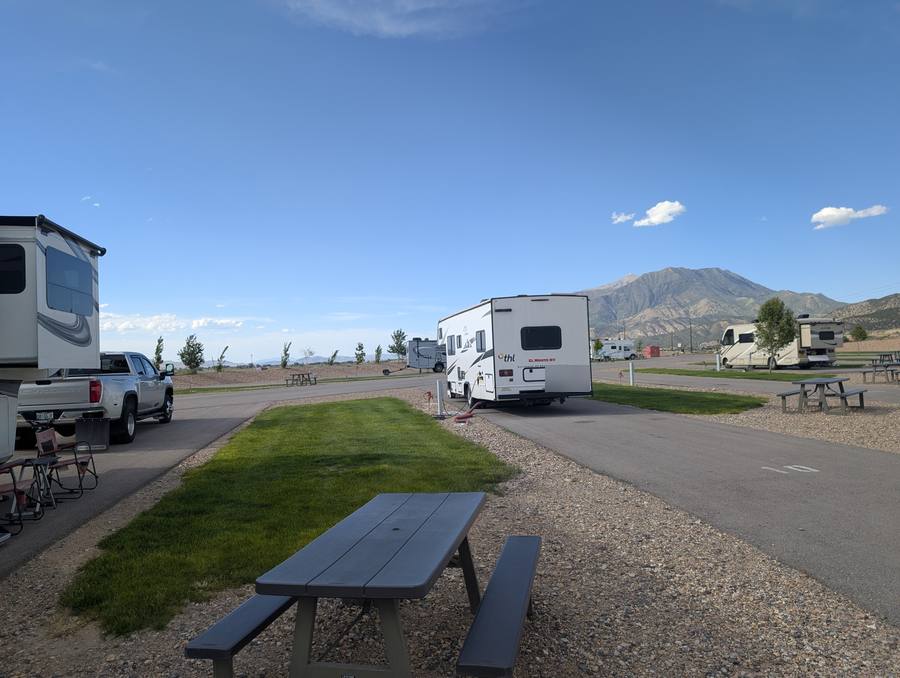
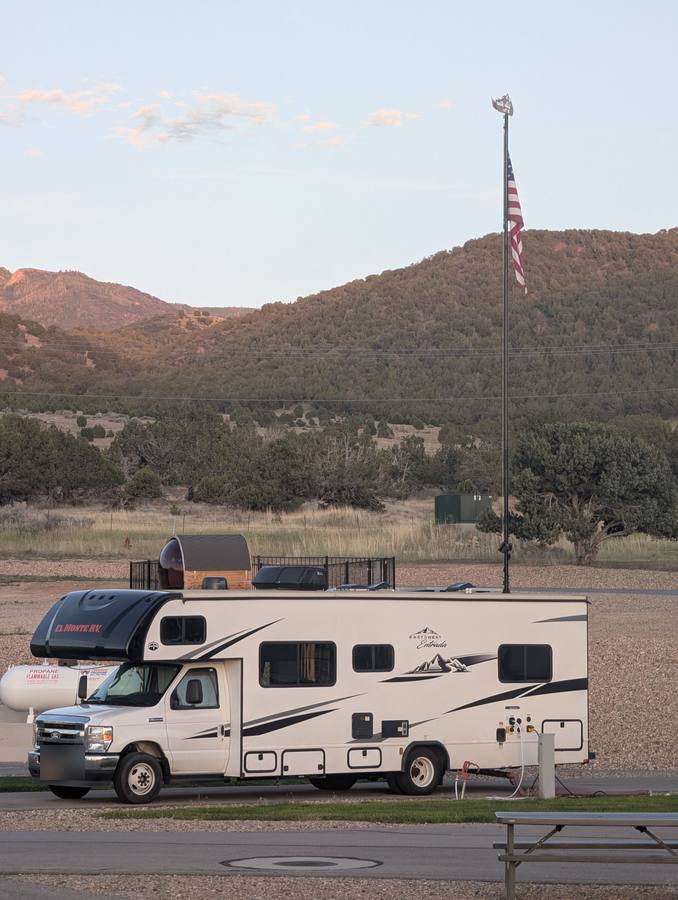
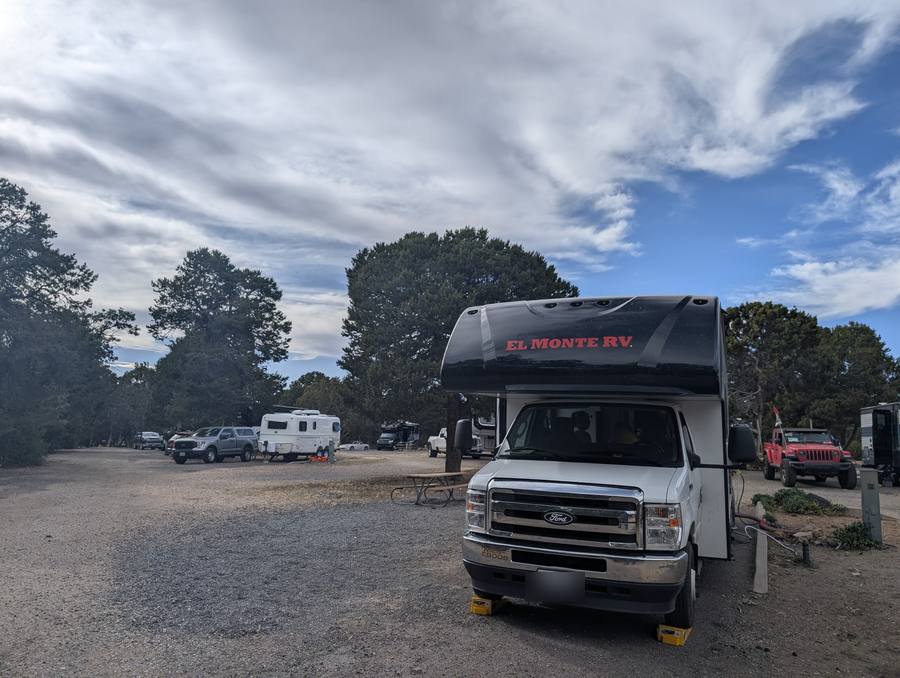
The campsites deserve their own paragraph, because they were the quiet success of the trip. The quality of the campsites, and the whole experience of them, was beyond words. Two of them I would single out: Yellowstone Grizzly RV Park in West Yellowstone was picture perfect, and Rollin’ Home RV Park in Nephi was very beautiful, with a wonderful bath in the camp washrooms. Each night’s details are in the earlier parts. Here is where the flagship slept.
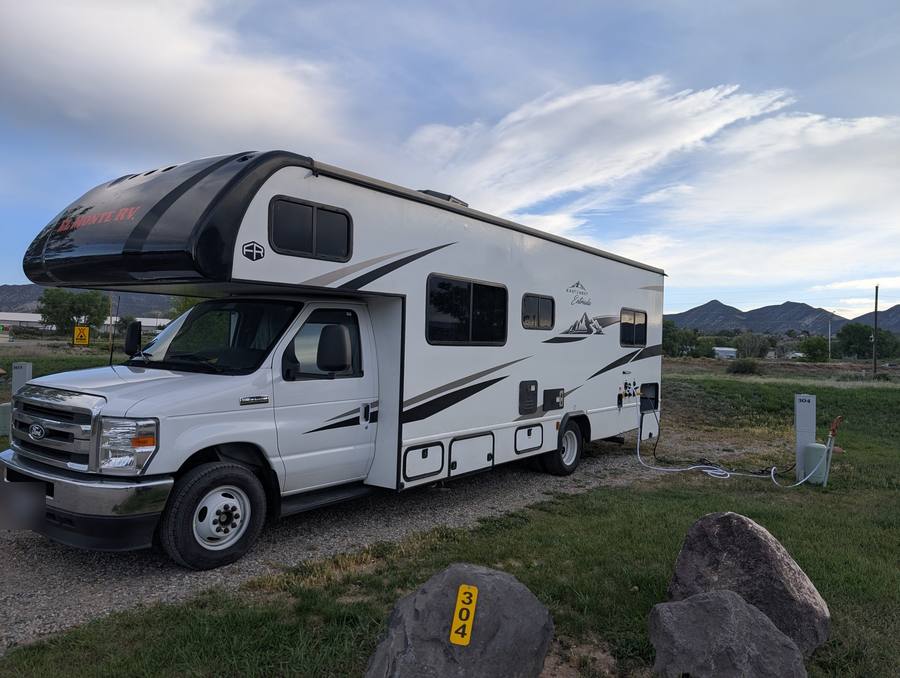
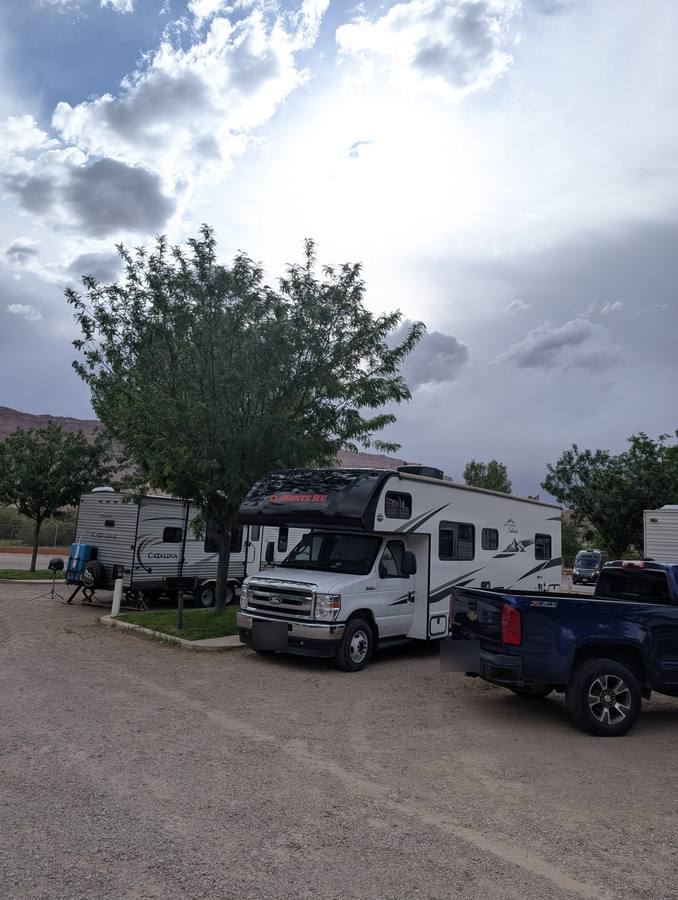
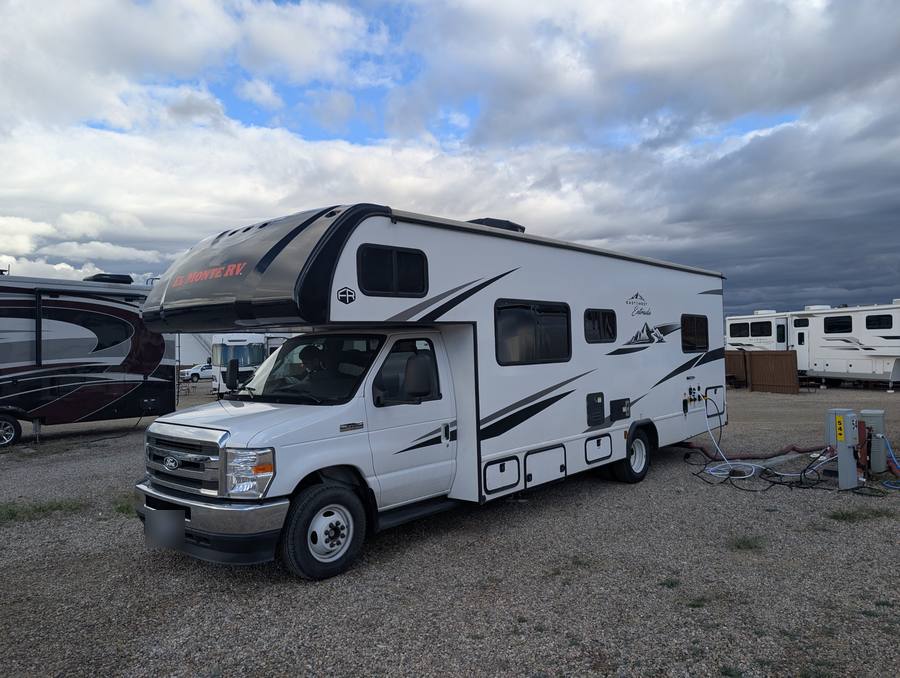
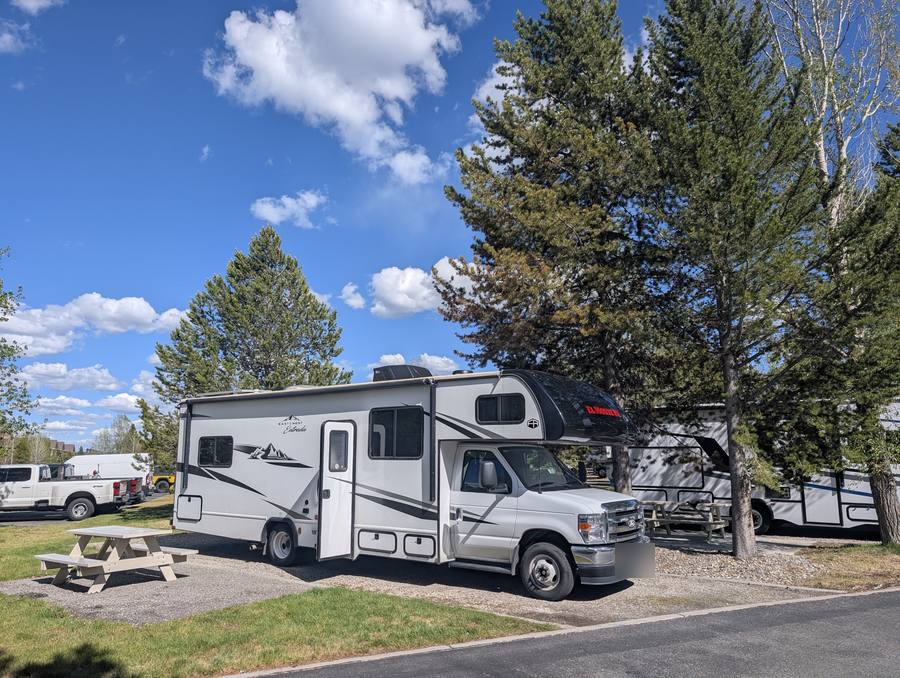
The people
We met some fabulous people in the campgrounds and in the national parks, wonderful families, and we chatted with them and got to know the country and its people. There was the retired Oregon couple at Nephi who had sold their house five years before and live in a 48-foot trailer with a pickup, eight months in Arizona, two on the road, two in Oregon (Part 2). There was the family at Zion whom we then met again at the Grand Canyon (Part 3). It changed our view of the country for the better. The America we met in those campgrounds was warmer and kinder than the one social media shows us.
The verdict
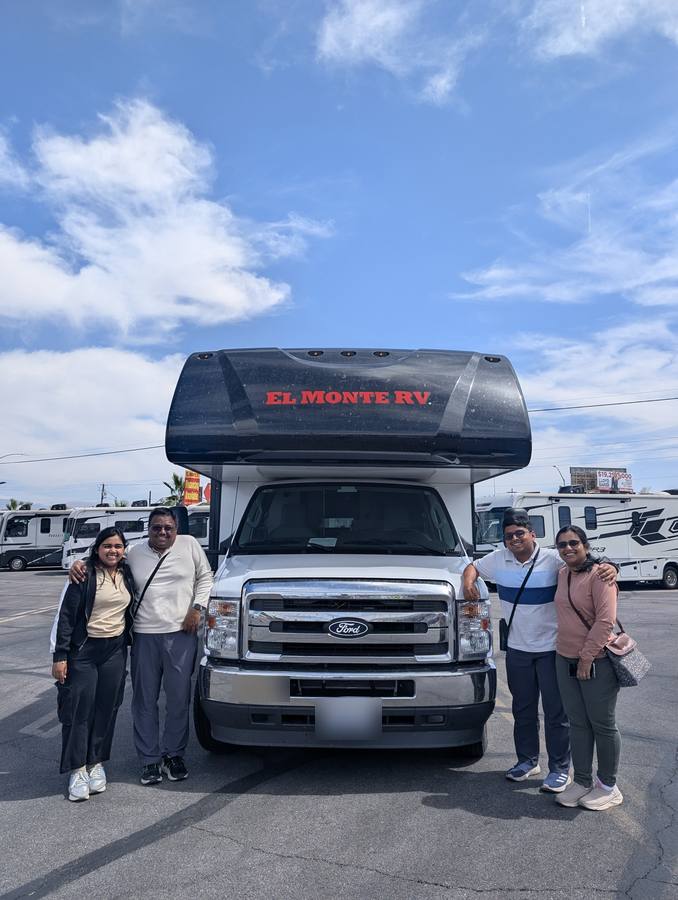
It was more than we had hoped for. My daughter was very apprehensive beforehand, and she was the happiest of us all during these days. We had a wonderful family time for twelve days and eleven nights, and we lived the American life. It is something we would like to repeat.
These twelve days were the icing on the 42-day trip.
The bill
A Dark Lord’s accounts are settled in the end, so here they are. This is what the twelve days cost, for the four of us, from the 28 May pick-up to the 8 June return. All amounts are in US dollars, from the signed rental contract, our trip spreadsheet and the fuel list.
| Item | Amount |
|---|---|
| The motorhome: rental for 11 nights, less the long-term discount | $1,128.60 |
| Mileage packs (1,900 miles bought; 2,464 driven) | $665.00 |
| Insurance and coverage | $324.50 |
| One-way fee, Denver to Las Vegas | $395.00 |
| Readiness and road-safety fees | $108.74 |
| Sales tax | $271.64 |
| Motorhome total | $2,893.48 |
| Campgrounds: 9 sites, 11 nights | $936.00 |
| Fuel: 11 fill-ups | $1,235.83 |
| Groceries: four Walmart runs (Avon, Vernal, Layton, Page) | $570.00 |
| Eating out during the RV days | $95.00 |
| Linen and supplies | $134.00 |
| Laundry at the camps | $21.00 |
| Park stores | $14.00 |
| Total for the RV days | $5,899.31 |
The generator was free, and the small mileage overage (14 miles) was cancelled by a goodwill credit. That is about $536 a night, or about $134 per person per night. The motorhome, the campgrounds and the fuel alone came to $5,065.31, or about $2.06 for each of the 2,464 miles. Not included: the national parks pass, any park entry fees, and the $15 permit for the Zion tunnel. The same RV days appear, spread across categories, in the cost post for the whole trip.
That closes the RV chapter. The whole series, from the plan to the verdict, is listed below.