Cruising was on my bucket list for years. Singapore was the most affordable place for a family from India to start one, and Singapore itself deserved a proper look. So in the summer of 2017 we did both: six nights in a hotel in Bugis, five days of zoo, rides, gardens and light shows on nothing but public transport, and then four nights at sea on a Royal Caribbean ship, out to Penang and Phuket and back.
When we got home I wrote two long guides for friends who wanted to copy the trip, full of rupees, timings and "do this, skip that". This post stitches them into one story. Nine years is a long time in travel, though. The bird park has moved across the island, the aquarium has a new name, you can tap your own bank card at the metro gates, and a Singapore dollar costs a lot more rupees. So wherever something has changed, there is a Now (2026) box beside what we did then. The story is ours; the updates are for you.
Part 1: Getting there and getting set
Singapore is easy to get around, there is a lot to see, and it keeps children busy. The catch is that there is always more to see than days to see it in, and every day costs a fixed amount. So the number of days you can afford decides the list, not the other way round.
The flight
I wanted the flight to be part of the holiday, so we flew Singapore Airlines. Two tips I still stand by. First, fly in by day and out in the evening. We left Delhi in the morning and were in Bugis by evening, with time for a meal and a full night's sleep before the first day of sightseeing. A night flight means arriving tired, begging for an early check-in and losing most of the next morning. Second, book early and non-refundable; that is where the best fares are. Return tickets for the four of us came to about ₹92,000, booked five months out.
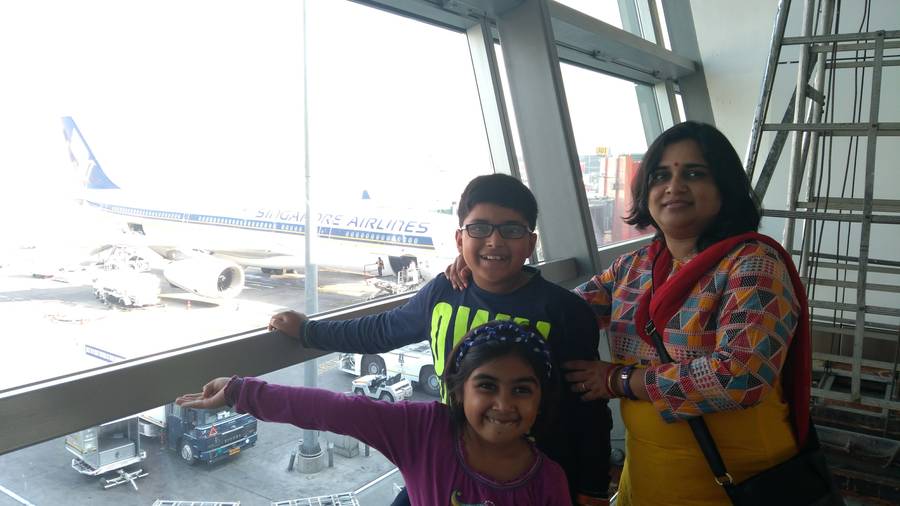
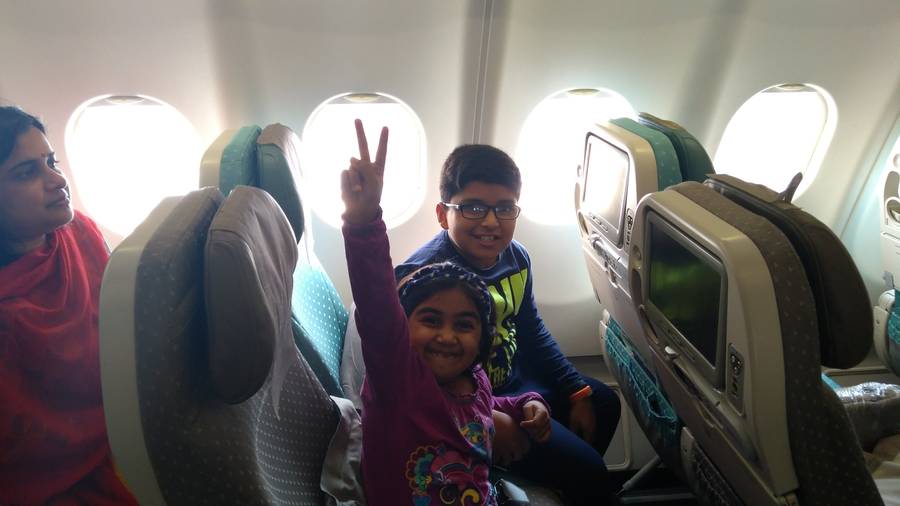
Singapore Airlines, Air India and IndiGo all fly Delhi–Singapore non-stop, and the flight is still a little under six hours. Day flight in, evening flight out still works.
Where we stayed
The choices are hotels, serviced apartments and homestays. In 2017 Airbnb looked perfect for a family staying six nights, but Singapore had just made short-term home rentals illegal, so we forgot about it.
Hotels fell into three bands for us: budget (₹4,000–9,000 a night), mid-range (₹10,000–12,000) and luxury (₹15,000 and up). Most budget places had no breakfast, shared bathrooms, a poor MRT connection or a location in the red-light district of Geylang, so they did not suit a family.
We stayed six nights at Village Hotel Bugis, booked directly with the hotel after it offered a discount: a family room (one king bed and one single) with breakfast, about ₹67,000 for all six nights. The MRT was a short walk away and everything felt close. If I go back, I will stay there again. Book flights and the hotel at least three months ahead; I booked the flight five months out and the hotel three. Booking.com and Agoda are good for searching, and a free-cancellation booking makes a useful safety net while you hunt for a better deal.
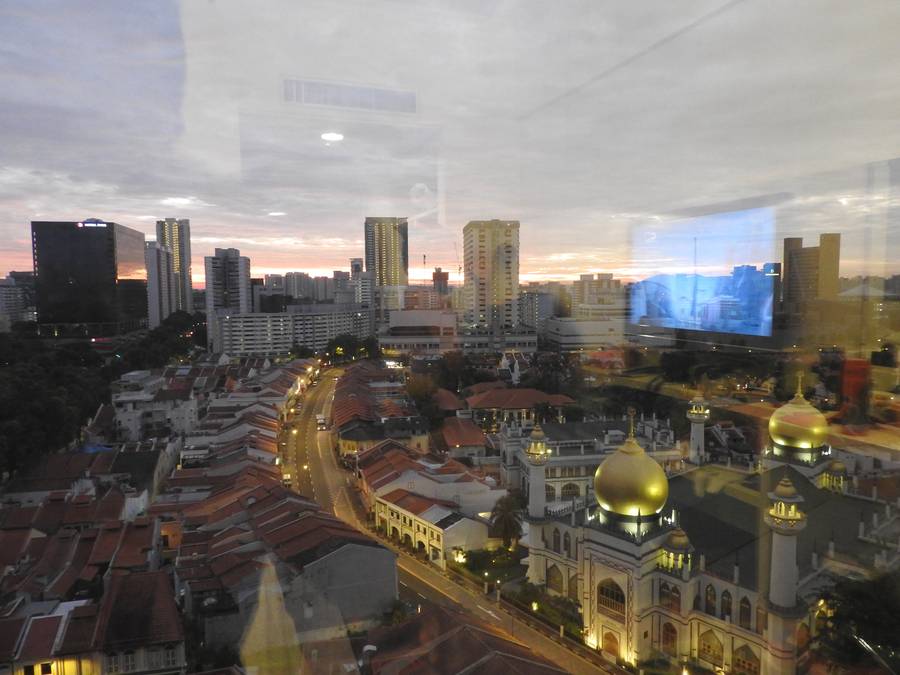
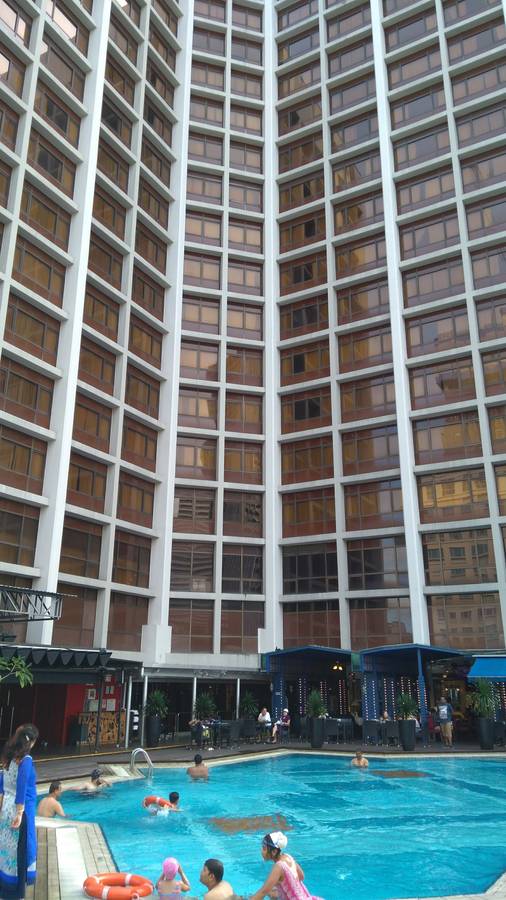
A 4-star hotel in Bugis, on the edge of Kampong Glam, opened in 1988, with 393 rooms and an outdoor pool. It is connected to a shopping centre, and Sultan Mosque and Haji Lane are a few minutes' walk away. Why it worked for us: breakfast included, a real family room, and a short walk to the MRT.
Airbnb-style stays are still illegal. Private homes cannot be let for less than three consecutive months, and public HDB flats need six, so stick to licensed hotels and serviced apartments. The hotel is now Village Hotel Bugis by Far East Hospitality, still a 4-star; an online search in early 2026 showed rates from about S$183 a night for two adults (about ₹13,400), and they vary a lot by date.
The visa
In 2017 the Singapore visa was simple: download the form, fill it in, deposit it with the passports at an authorised agent with ₹1,850 per person, and collect the visa three days later. My tip was to take the whole family along and get the photos done on the spot so nobody's photo was rejected.
Indians still need a visa, but it is now an e-visa filed through an authorised agent. From 1 January 2026 the fee is ₹2,100 per application, plus a fixed agent charge (₹1,000 for the Mumbai consulate's agents, ₹1,300 for the New Delhi High Commission's). Allow three to five working days. One new step: everyone, children included, must fill in the free SG Arrival Card online in the three days before landing. Use only the official ICA website or the MyICA app; look-alike sites charge for it.
Money
I bought 500 Singapore dollars in cash in India and paced our cash and card spending so the cash lasted the stay and ran out as we left. For everything else I used my credit card rather than a forex card. The forex card was about 2% cheaper, but most of the big bills had already been paid in India, and the credit card gave peace of mind. For easy sums in 2017, I counted 1 SGD as ₹50.
That shortcut no longer works: in early November 2026 one Singapore dollar cost about ₹73 at the mid-market rate. Every 2017 rupee figure in this post uses the old ₹50; the 2026 figures use ₹73.
Part 2: Five days in Singapore
Day 1 (Wednesday): the zoo, the River Safari and a Ramadan evening
An early start, the MRT and then a bus got us to the zoo soon after it opened. The zoo is very good and smaller than its map suggests; four hours is enough. The tram is not much use because it stops at only three places, so walk. Don't miss the shows (there were four) and try to fit them into the morning. We carried sealed snacks and one water bottle; there are plenty of places to refill it.
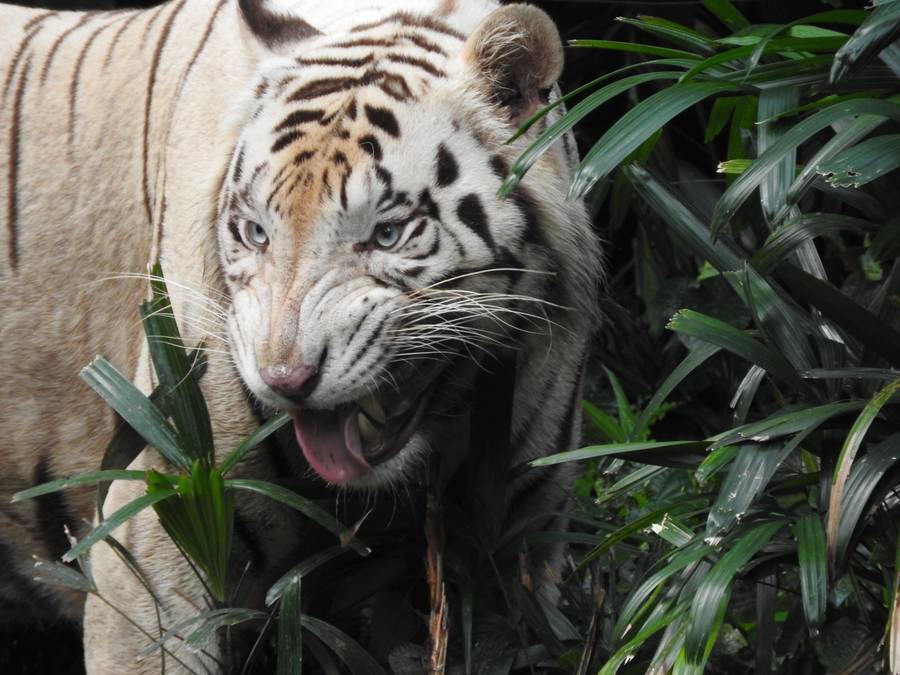
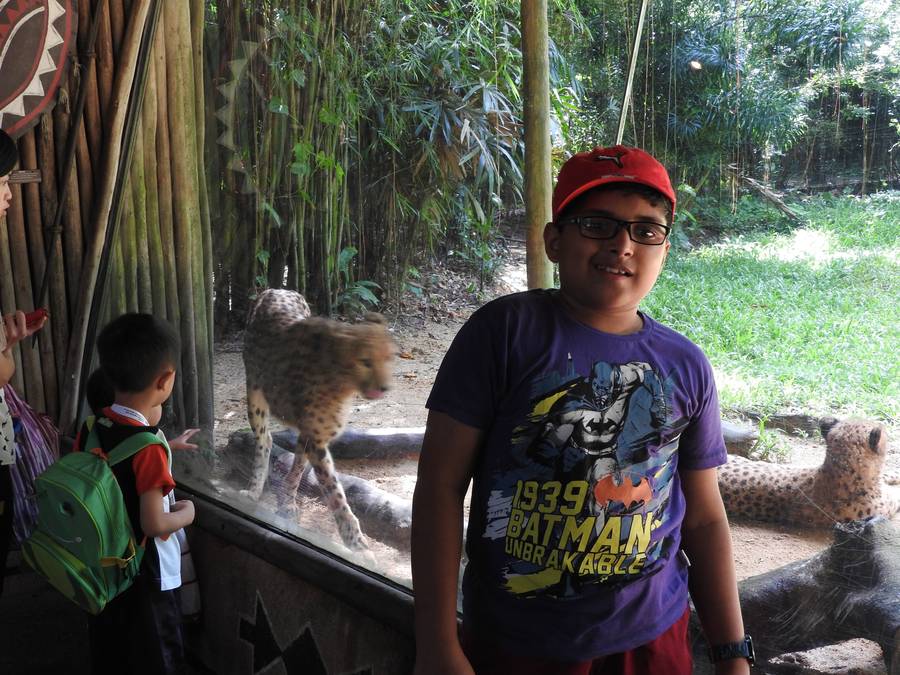
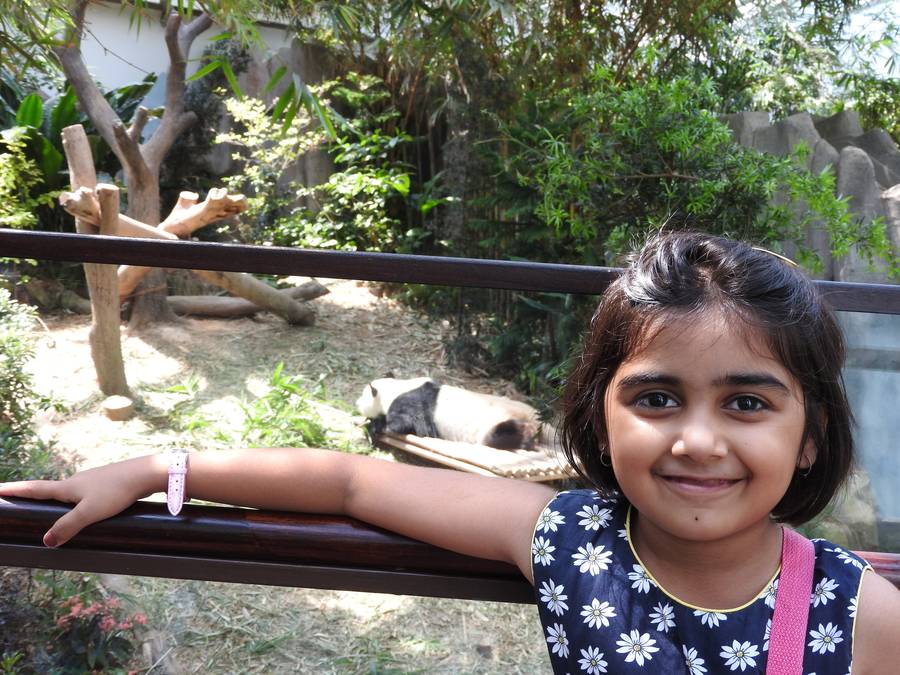
From the zoo we walked over to the River Safari: smaller, sheltered from the sun, and beautiful. Two to three hours is enough. The giant pandas were the stars, and the huge freshwater tanks were not far behind.
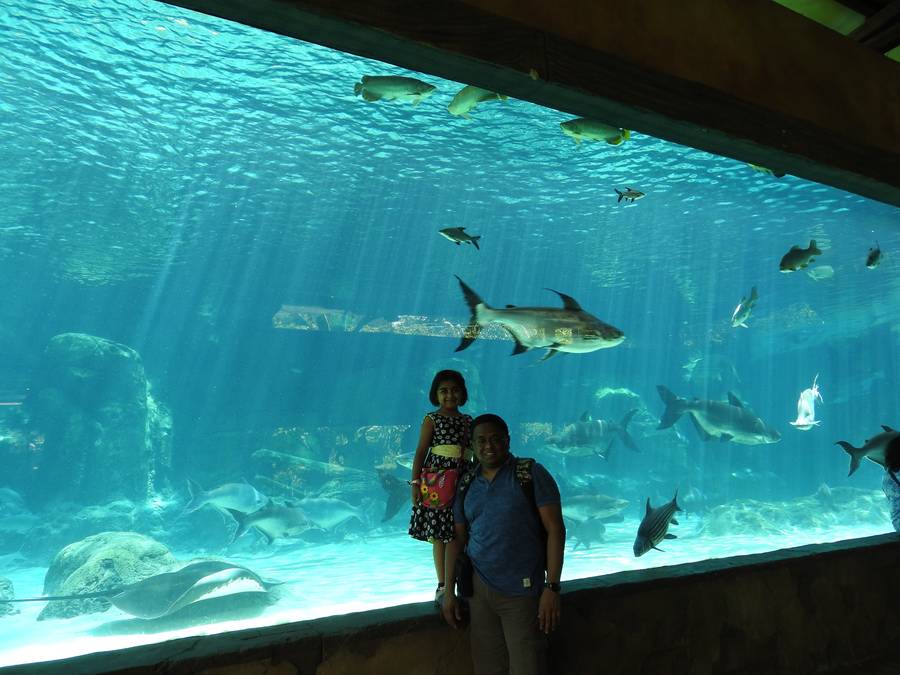
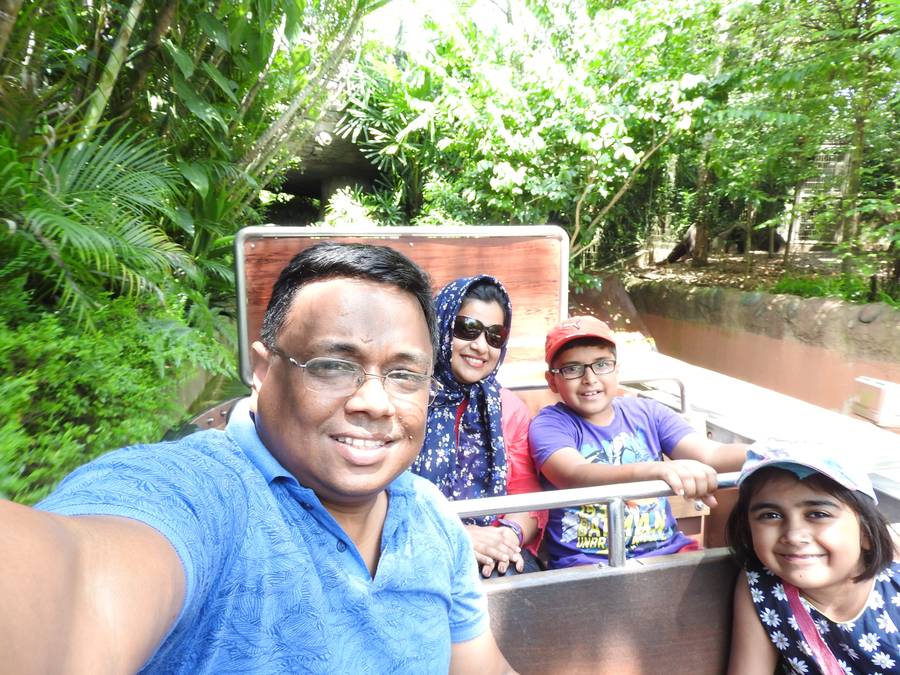
Doing both together had us done by mid-afternoon, so we went back to the hotel for two hours. That rest is not laziness. It is how a family survives five days of walking twelve kilometres a day.
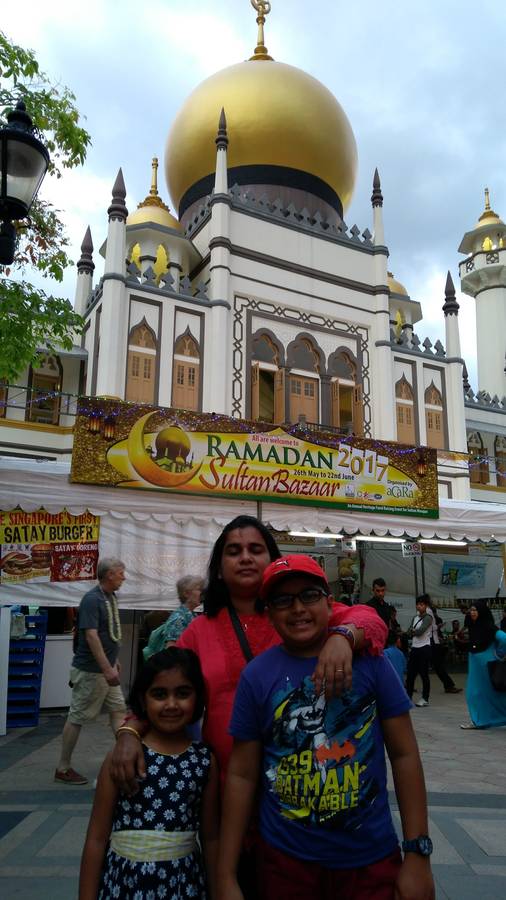
In the evening we wandered over to Sultan Mosque, with the Ramadan bazaar spread out in front of it, and down the painted walls of Haji Lane. Then the MRT to Lau Pa Sat, the old market hall near Raffles Place that turns into a food court at night, for dinner.
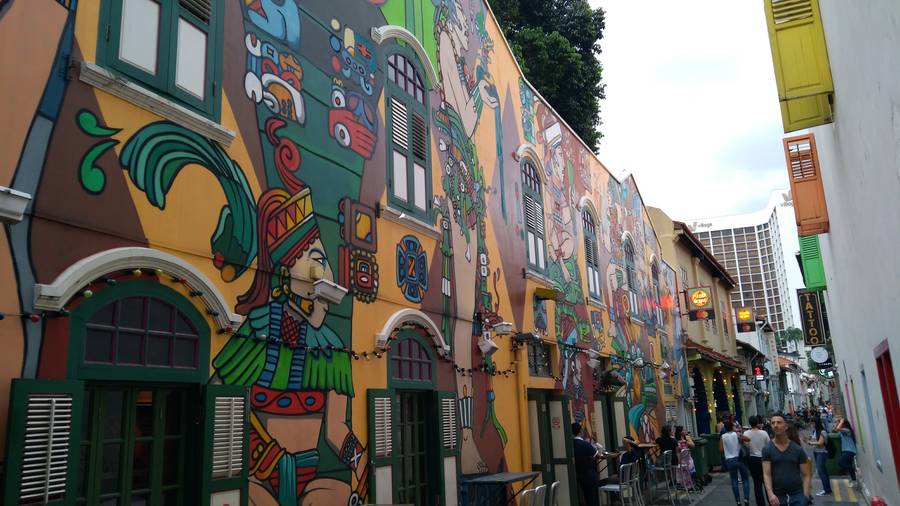
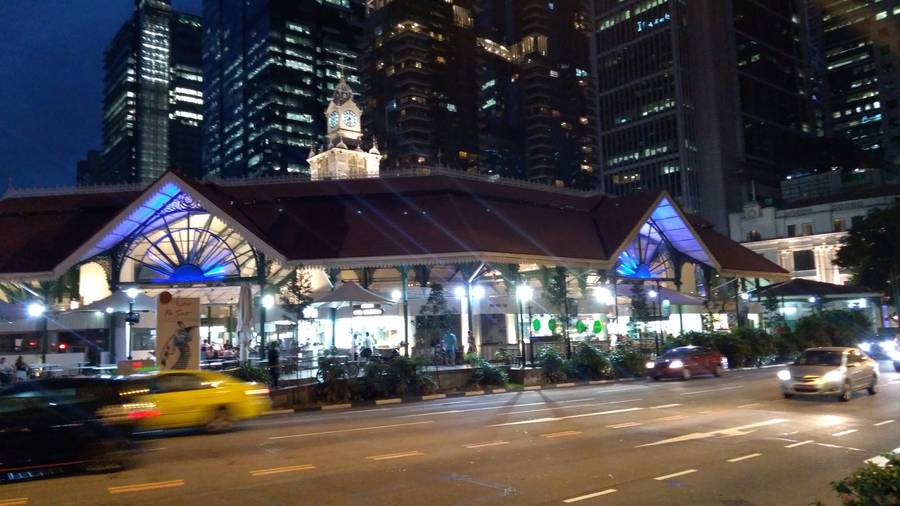
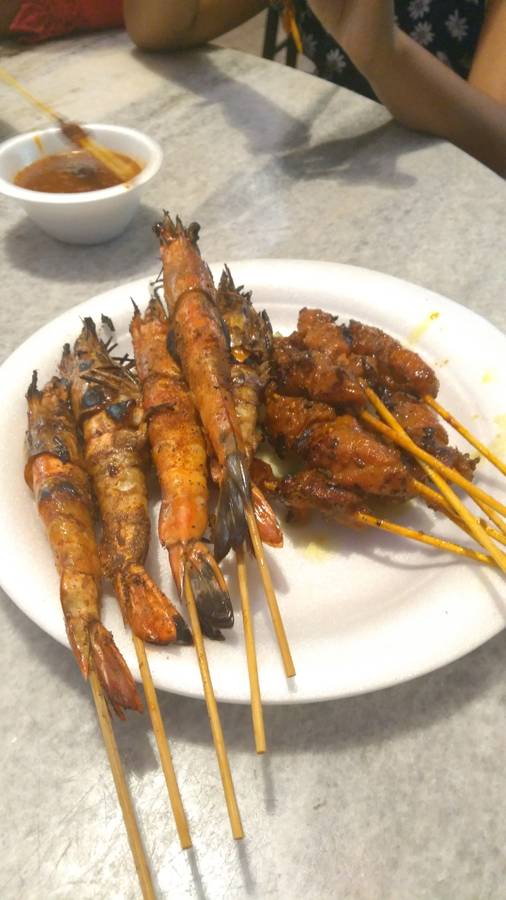
I did not recommend the Night Safari then, and I would not now. For us it was a waste of time and money; others love it.
Both parks now sit inside the Mandai Wildlife Reserve, and the River Safari is now called River Wonders. Non-resident gate prices are S$49 for the zoo (about ₹3,600) and S$45 for River Wonders (about ₹3,300) per adult; multi-park passes save money if you do two or more. Cash is not accepted at River Wonders, so carry a card.
Day 2 (Thursday): Universal Studios and the aquarium
We took the MRT to HarbourFront and walked across to Sentosa from VivoCity mall. The walk is free and takes about fifteen minutes; every other way in costs money.
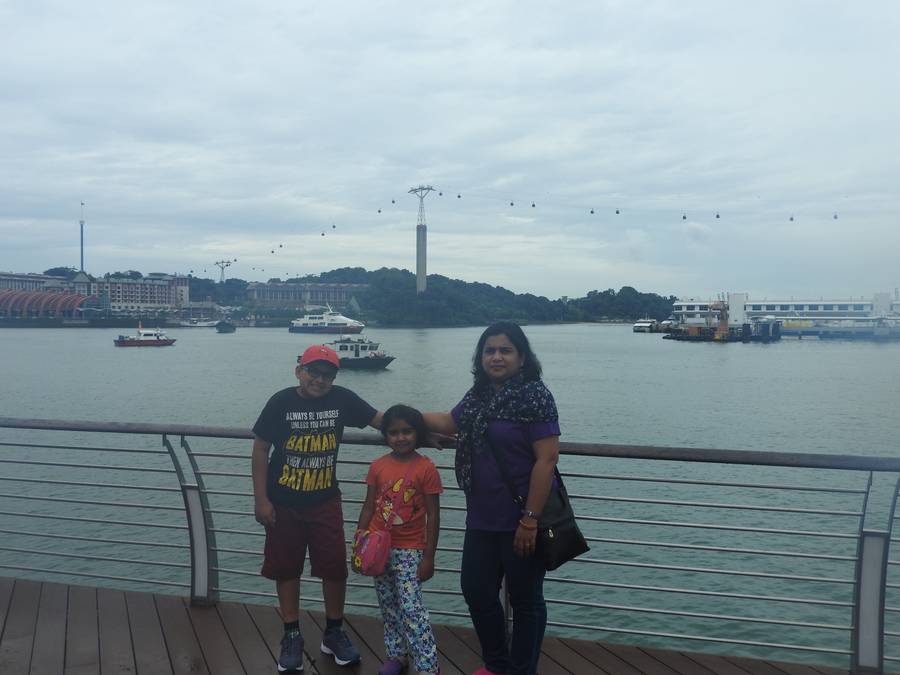
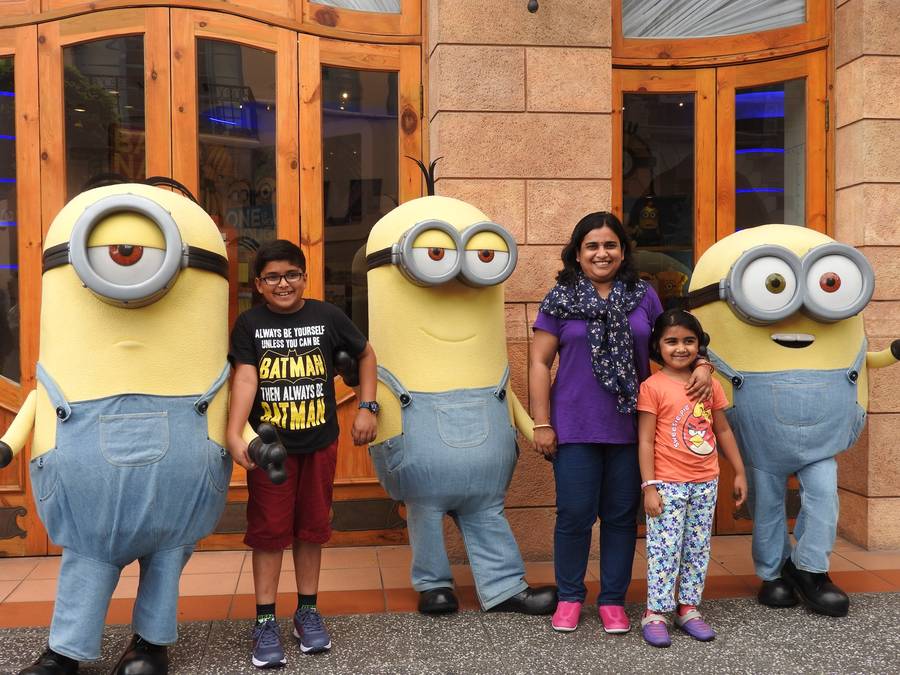
We went on a weekday and found the Express Pass unnecessary; we had done all the rides by early afternoon. Read up on the rides beforehand so you know which to do and which to skip. Don't miss the Minions, the Transformers ride and the WaterWorld show. You can step out for lunch and come back in, as long as your hand is stamped for re-entry. The food court had four stalls, including Indian food at sensible prices.
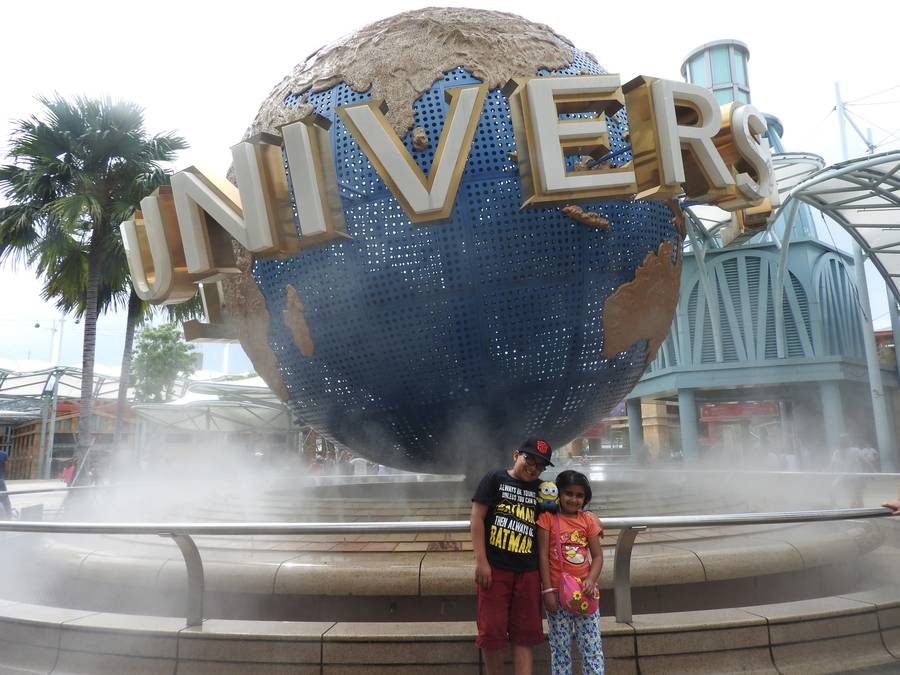
In the late afternoon we crossed over to the S.E.A. Aquarium, right opposite, and stayed until closing. Then it was back over the boardwalk to VivoCity, fast food in the mall, and the MRT home.
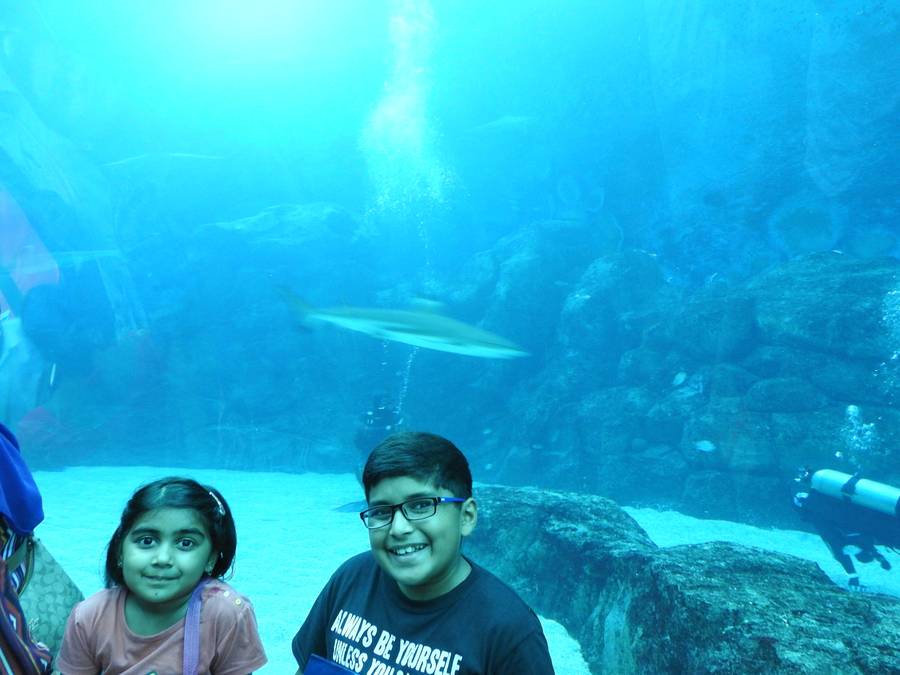
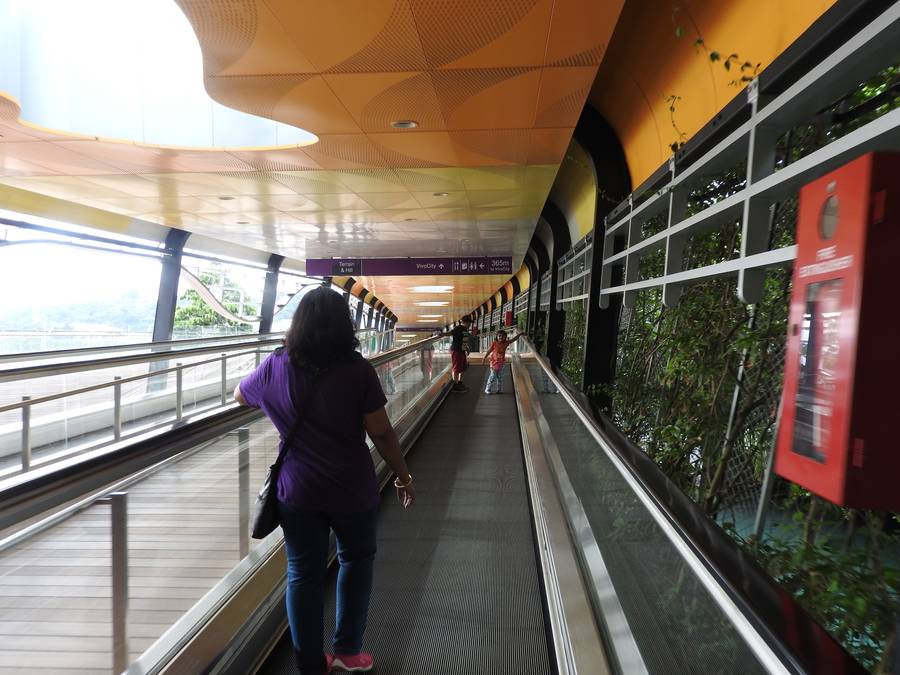
The S.E.A. Aquarium closed on 30 April 2025 and reopened in July 2025 as the Singapore Oceanarium, much bigger, with 22 zones and over 40,000 animals. Guides now suggest three to four hours there instead of two, so Universal and the aquarium in one day is harder than it was for us; consider splitting them. Universal Studios now starts at S$83 (about ₹6,100) per adult off-peak and S$86 at peak times; the Oceanarium from S$50 (about ₹3,650) on weekdays. The Sentosa Boardwalk is still free; the Sentosa Express monorail charges S$4 to get on to the island.
Day 3 (Friday): Chinatown and Marina Bay
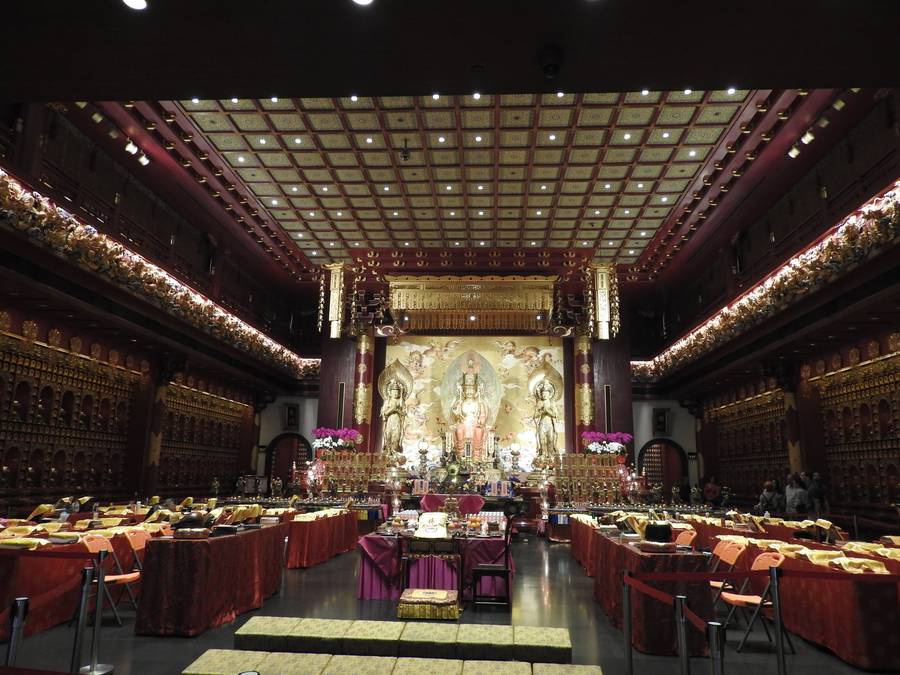
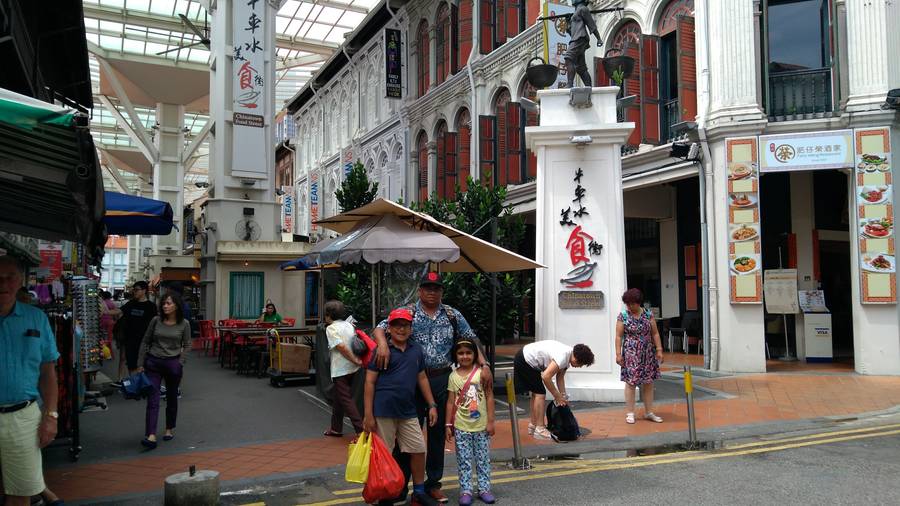
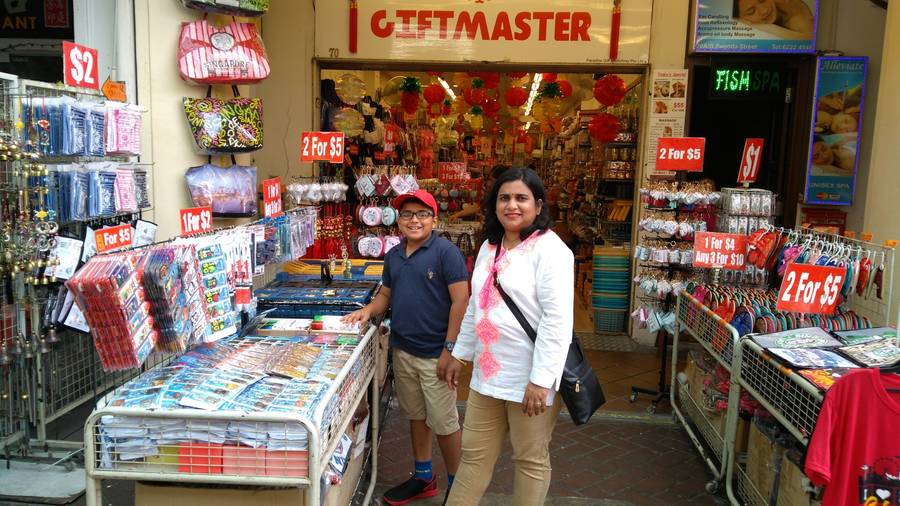
A deliberately slow day. We started with the hotel pool and breakfast, then took a bus to Chinatown for the late morning. We spent time in the Buddha Tooth Relic Temple, and the shops along Pagoda Street gave me the only shopping of the trip: curios and fridge magnets.
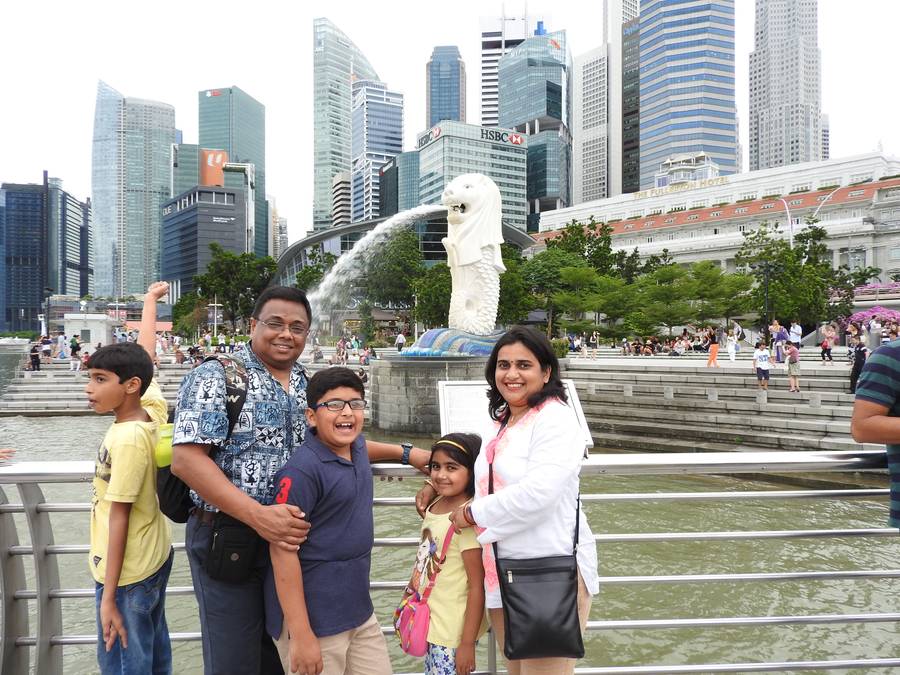
By late afternoon we set out for the Merlion and Marina Bay Sands. Take the MRT to Raffles Place and walk: past the Merlion, along the bay, past the Esplanade, across the Helix Bridge to Marina Bay Sands. If you can, do it on a Friday; there was a free musical performance at the Esplanade on our walking route, and the whole walk is beautiful. We reached Marina Bay Sands in time for the evening laser and water show on the bay.
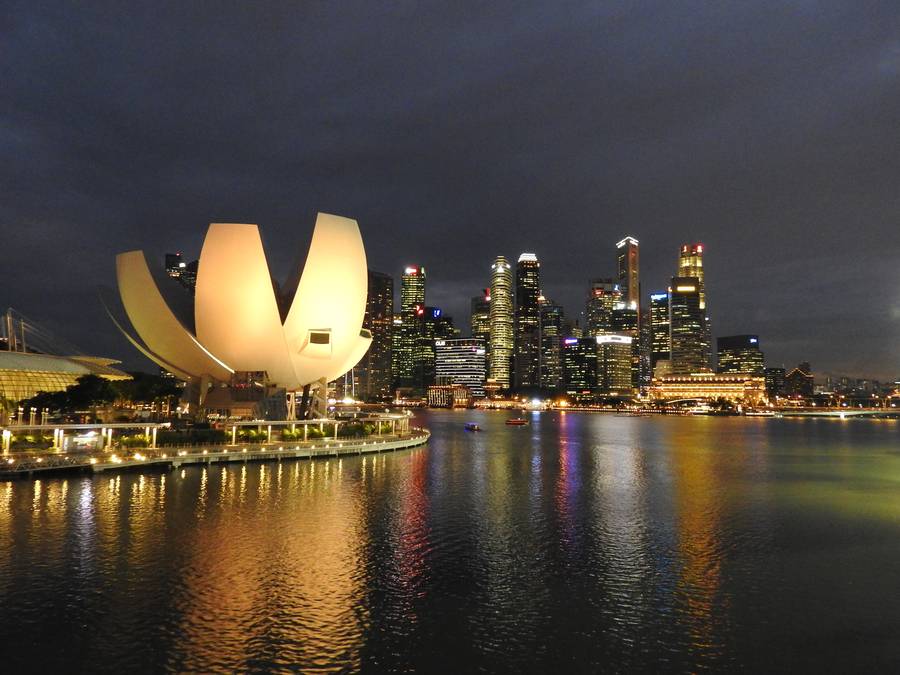
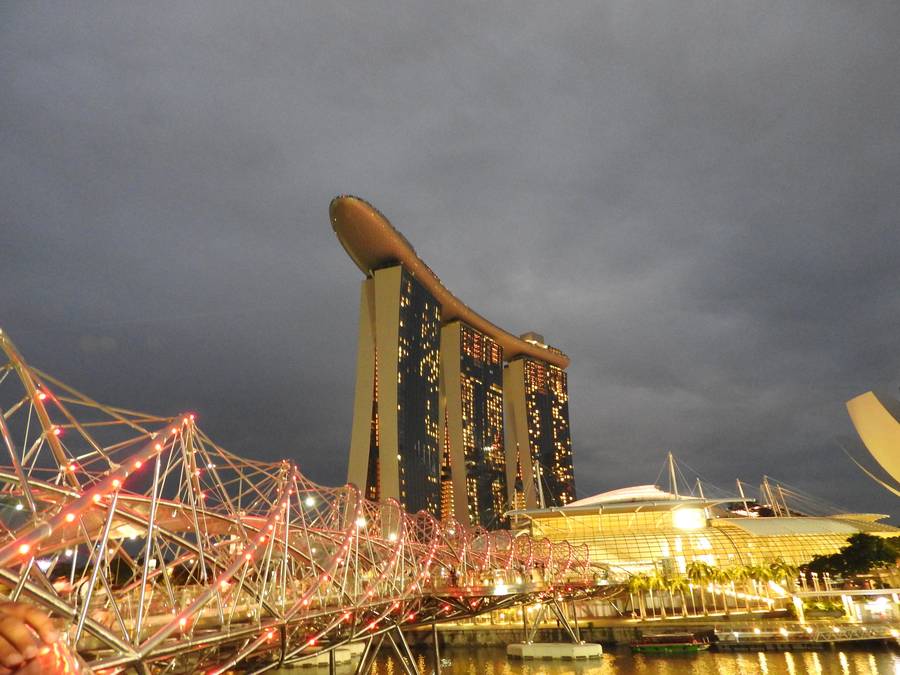
The Marina Bay Sands show is called Spectra and is still free: 8 pm and 9 pm every night, plus 10 pm on Fridays and Saturdays, about 15 minutes each.
Day 4 (Saturday): Jurong Bird Park and Clarke Quay
Early again, to reach the bird park as the gates opened. Like the zoo it involves walking, and the tram is not useful. The bird shows were amazing; get to the show area at least fifteen minutes early for a decent seat. Carry swimwear for the children: there was a wet play area, and ours did not need asking twice.
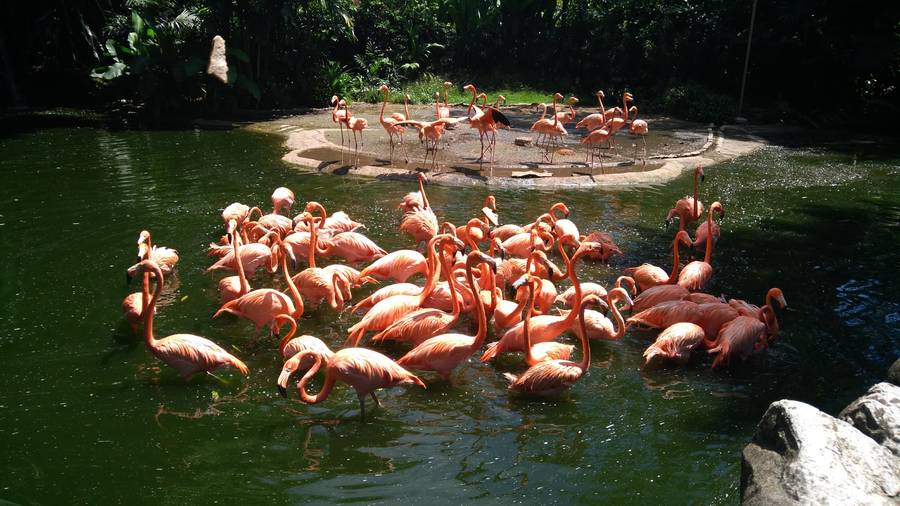
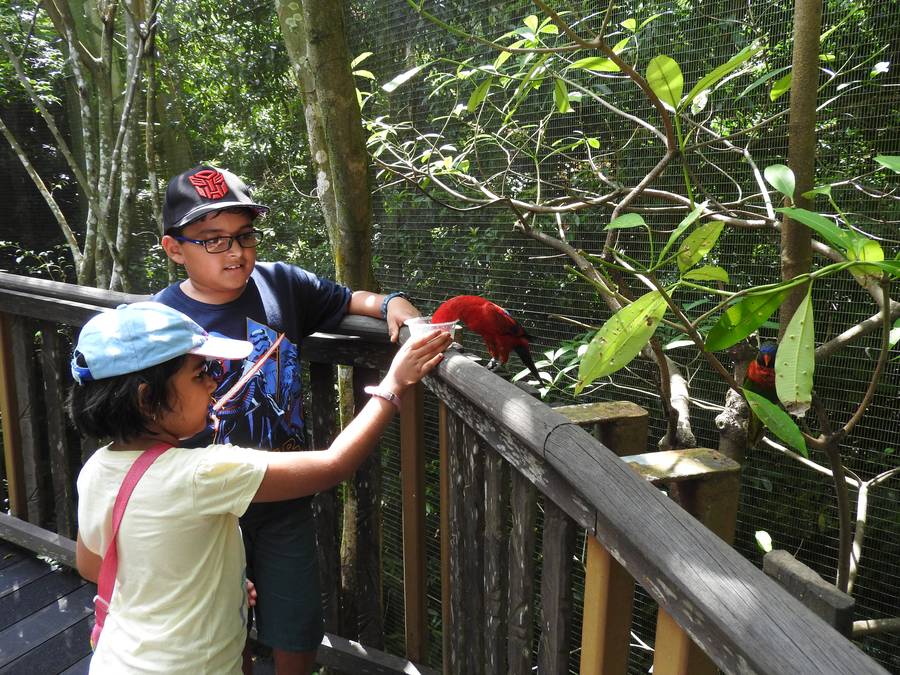
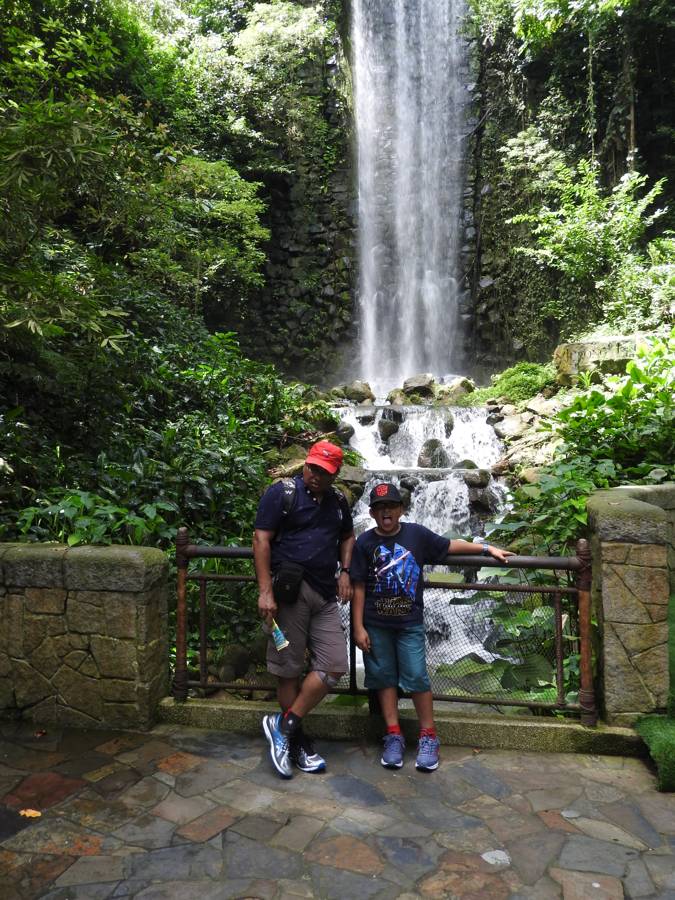
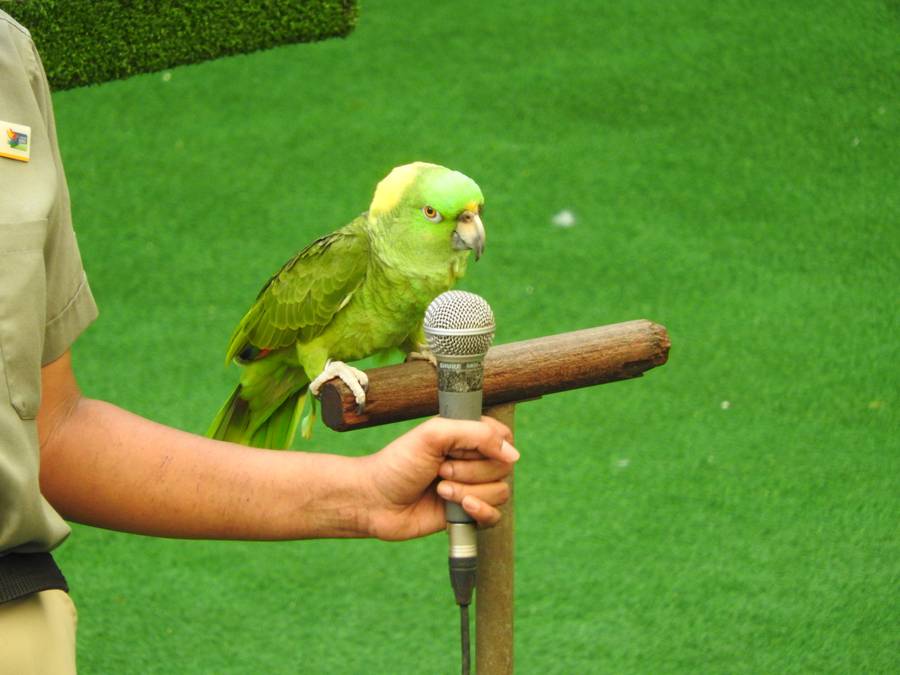
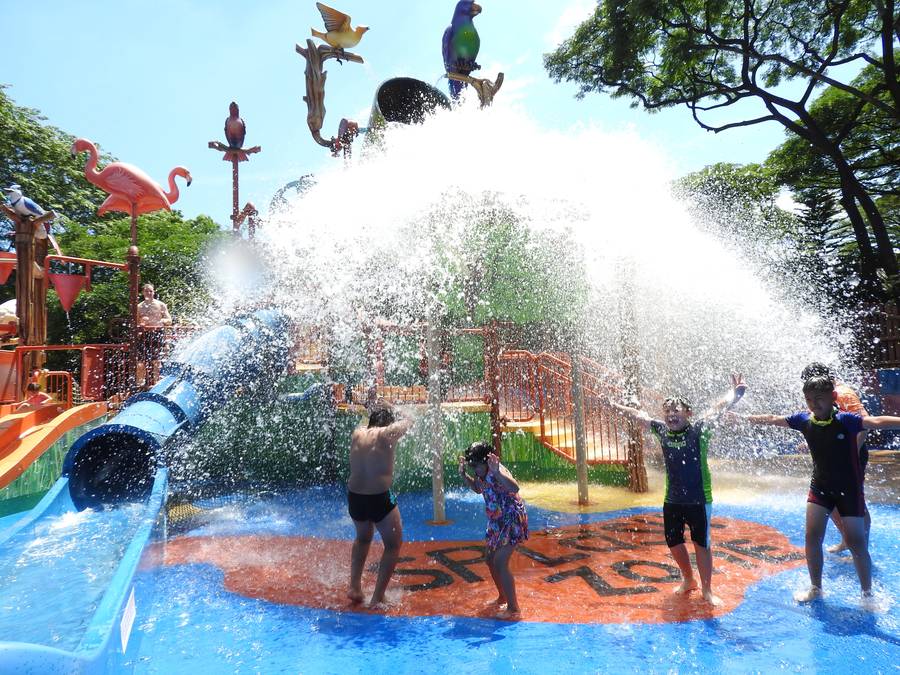
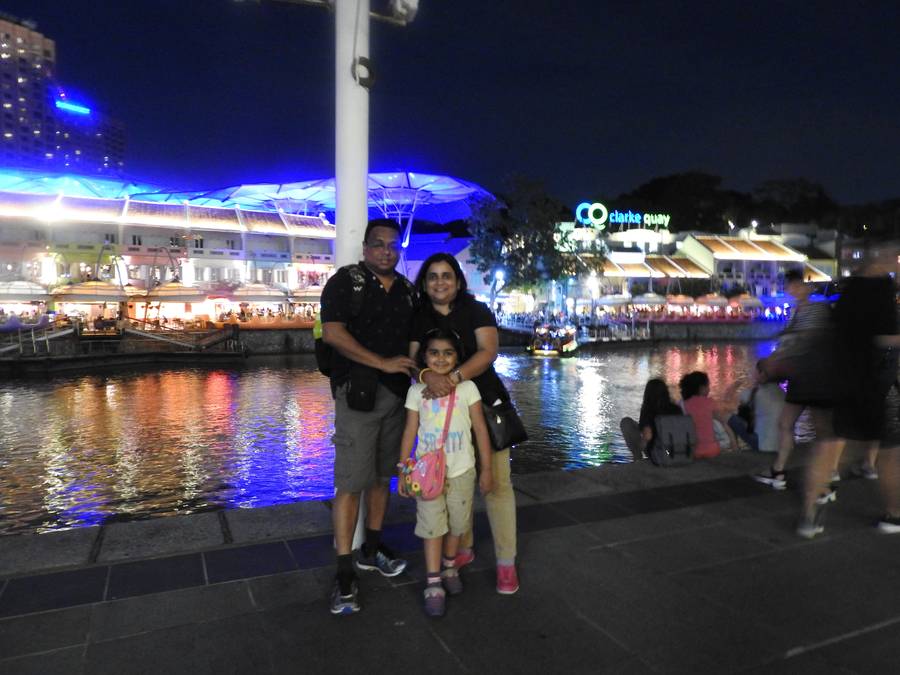
Afternoon rest at the hotel, then an evening by the river at Clarke Quay, all lights and bumboats.
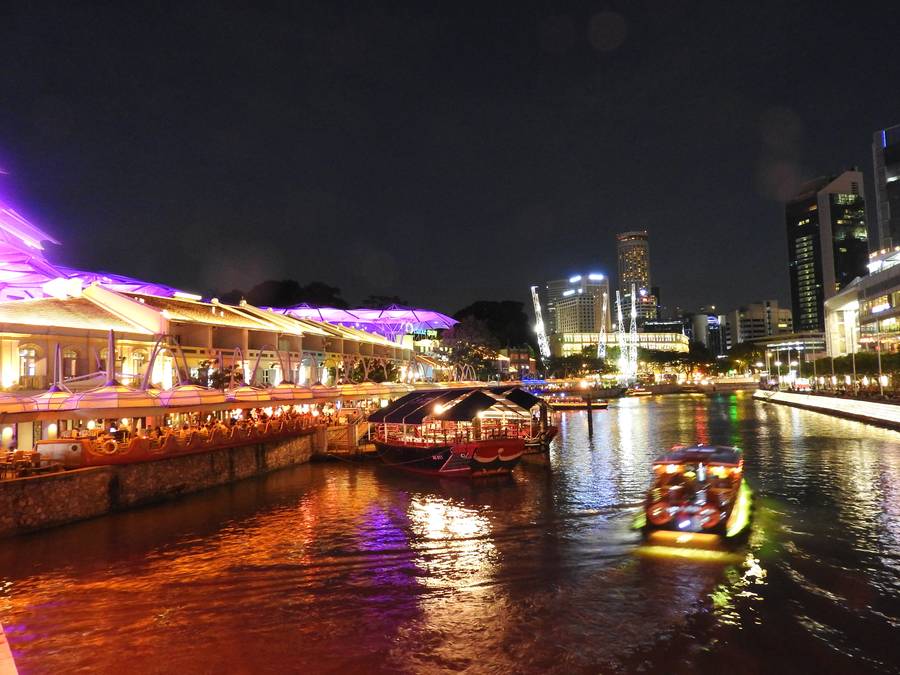
Jurong Bird Park no longer exists. It closed on 3 January 2023, its 52nd birthday, and the birds moved to Bird Paradise in the Mandai Wildlife Reserve, which opened on 8 May 2023: 17 hectares, about 3,500 birds of 400 species, in eight walk-through aviaries. The good news for planners: it is now next to the zoo, so the bird park no longer needs its own trip to the far west of the island. Adults pay S$49 (about ₹3,600).
Day 5 (Sunday): Little India, Mustafa and Gardens by the Bay
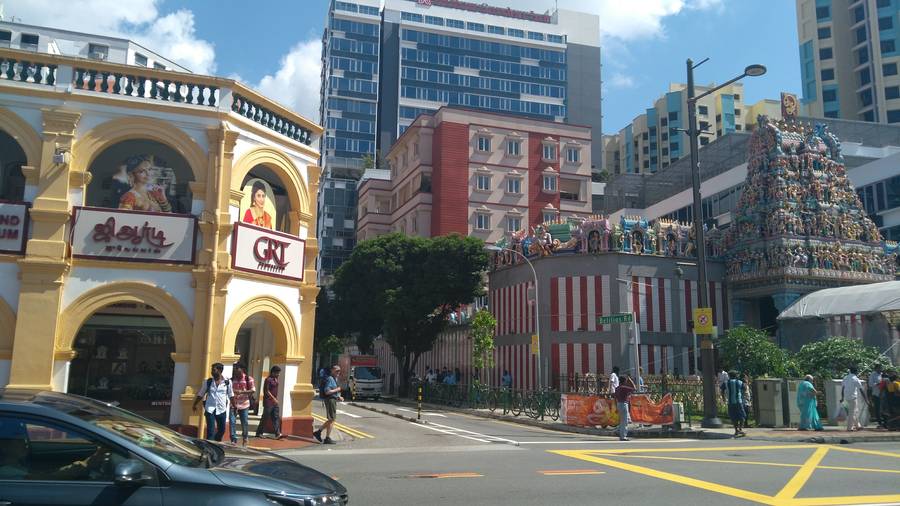
A late start, then Little India and the Mustafa Centre in the late morning. Afternoon rest. We reached Gardens by the Bay in the late afternoon, did both domes and the park, and stayed for the Supertree light show.
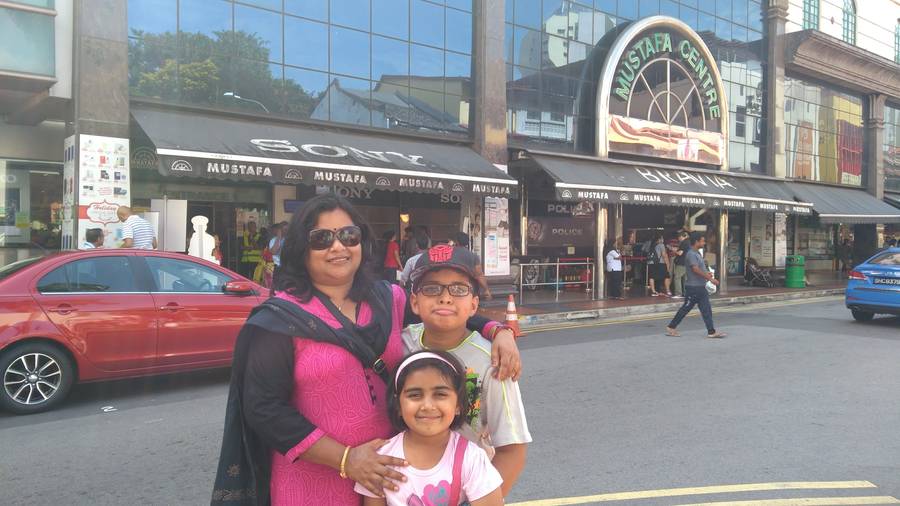
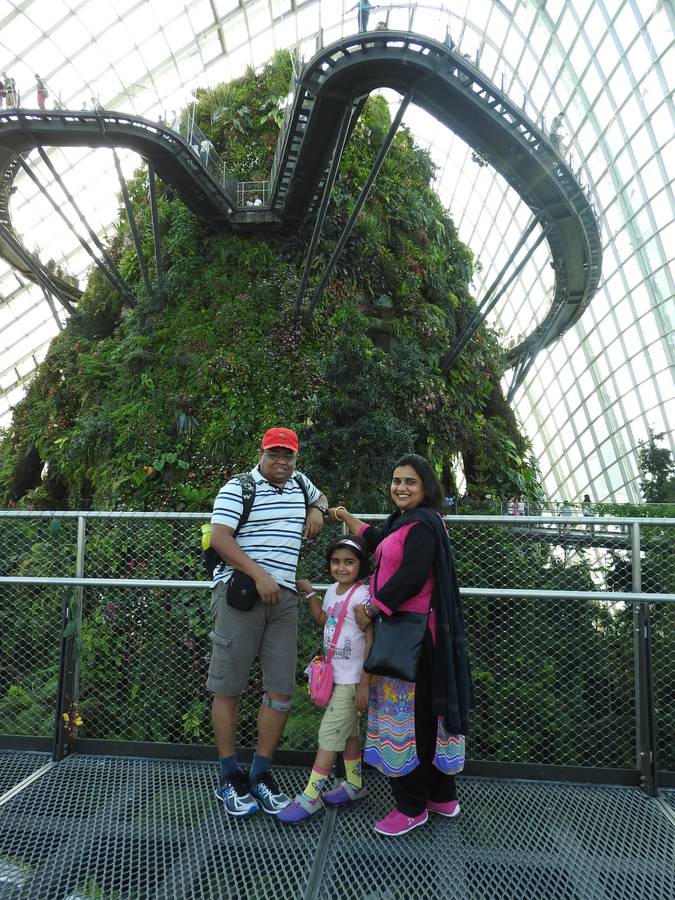
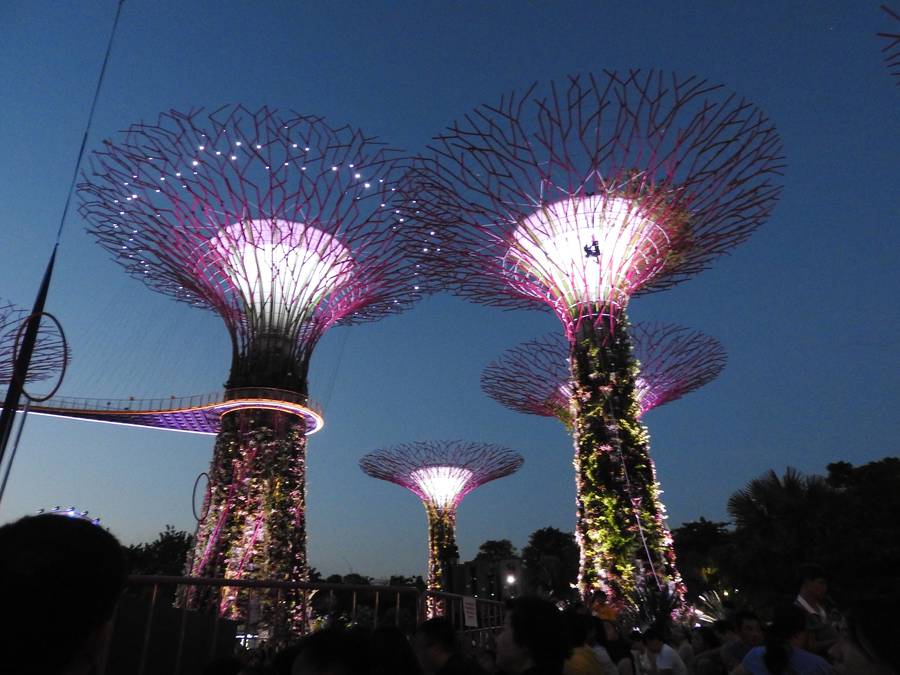
The Supertree show is called Garden Rhapsody: free, nightly at 7:45 pm and 8:45 pm. Mustafa Centre went back to opening 24 hours in September 2024, after years of shorter hours that began with the pandemic.
| Day | Morning | Afternoon | Evening |
|---|---|---|---|
| Wed | Singapore Zoo | River Safari, hotel rest | Sultan Mosque, Haji Lane, dinner at Lau Pa Sat |
| Thu | Universal Studios | Universal Studios | S.E.A. Aquarium, VivoCity |
| Fri | Hotel pool, Chinatown | Hotel rest | Merlion, Esplanade, Marina Bay Sands show |
| Sat | Jurong Bird Park | Hotel rest | Clarke Quay |
| Sun | Late start, Little India, Mustafa | Hotel rest | Gardens by the Bay, Supertree show |
Part 3: How we got around, ate and paid
Public transport
Singapore is a model of how to run public transport: on time, everywhere, all linked up. We did not take a single taxi the whole stay, not even with luggage. Lifts are everywhere because the system is built for wheelchairs, so suitcases are no problem. Many MRT stations and bus interchanges sit under or next to malls, so a small detour gets you a meal. I used the Citymapper app and found it very accurate; Google Maps is good too.
You could cross the island for under S$3, and the four of us reached the zoo, the furthest point of our trip, for under S$9. The one rule: use a card, not cash. A ride that cost 86 cents on a card cost S$1.90 in cash. In 2017 that card was a NETS FlashPay card, one per person, bought at the airport for S$12 with S$7 of travel value on it. Top-up machines at every station took cards (minimum S$10), and you could return the cards at the airport and get the balance back in cash.
It is simpler now. You can tap any contactless Visa or Mastercard, or a phone wallet, at the gates, with no registration. Foreign cards pay a S$0.60 admin fee per day of travel, and your bank's forex markup applies. If you prefer a separate card, a SimplyGo EZ-Link card costs S$10 (S$5 card fee plus S$5 of value). Adult card fares now run from S$1.28 to S$2.57 a journey; cash still costs more.
Food
Breakfast was in the room rate, so we started every day full. We carried snacks from India (chips, chocolates, cake, biscuits, a few cup noodles) to nibble on the way and avoid attraction prices. Fast food was not expensive: a KFC, Burger King or McDonald's meal for the four of us cost S$30–35, street food less, and the 7-Eleven shops everywhere sold decent food and had a microwave to heat it. A can of Coke was S$2. A food budget of S$100 a day for the family was enough, sometimes with change. Bottled water is expensive and tap water is perfectly fine, so we refilled one bottle all day.
Tickets: where we saved 20–25%
Buying attraction tickets is a small project, and it pays. Decide what you want to see, put the official gate prices in a spreadsheet, search the resellers and compare, and buy before you go, not at the gate. I bought everything through Klook and Voyagin, saved 20–25%, and showed the vouchers on my phone. Voucher holders had their own, much shorter queue. Most tickets carried a date but stayed valid for 30 days or more.
Klook is still a big reseller. Voyagin no longer exists under that name: Rakuten absorbed it in 2020 and renamed it Rakuten Travel Experiences in December 2021. Many tickets are now dated and need a time slot booked in advance, so check the conditions before you buy.
Shopping, phones and laundry
Personally, I found nothing worth buying in Singapore; the exchange rate cancels most of the savings. Chinatown is good for curios and magnets, and that is all we bought.
At least one phone needs data; share it by hotspot. Hotel wifi covered the rest. In 2017 I used Airtel's 10-day roaming pack; a local SIM from 7-Eleven for S$15 gave 1 GB of data and some call time. If you will pay online from India, keep roaming on so the OTPs reach you. (Roaming packs and eSIM plans have changed completely since then; check before you fly.)
Eleven days with a cruise at the end means laundry. I found a 24-hour self-service laundrette on Google Maps and used it twice: five unmanned washers and four dryers, S$5 a wash load (14 kg) and S$1 for six minutes of drying. Everything was clean before we boarded.
Other tips
- The weather is about 34° by day and 24° at night all year. Cargo or knee-length shorts, T-shirts and walking shoes. Caps, yes; we never needed an umbrella.
- A small backpack, and a belt pouch for passports, cash and cards.
- Carry medicines and wet wipes.
- Use Google Street View to get to know the streets around your hotel before you arrive.
- Do your homework on each attraction. Walk in with a rough plan or you will miss things.
- Don't cram too much into a day. A tired family is a slow family the next morning.
Part 4: Four nights at sea
In 2017 cruising had not really caught on in India. Most cruise lines did not sail from Indian ports, so you first had to get yourself to a departure port, which costs extra days and money. Singapore was the most affordable start for us. The US has far more cruises, but getting there costs more than the cruise.
Choosing and booking
I used cruise.com to compare. Broadly, medium-sized ships reach more ports, and the giants have more to do on board. After a lot of reading I chose Royal Caribbean, one of the best operators, with a huge fleet.
- What the fare includes: your cabin, all meals (and then some), most activities and the shows.
- What it does not: drinks beyond the juices at meals and the free tea and coffee, the spa, internet and the speciality restaurants.
- When to book: five to six months ahead, when fares are lowest. I booked through Avoya, an agent with a better rate than booking direct. A deposit holds the booking, and the balance is due about 75 days before sailing; until then you can cancel free, after that the charges are heavy.
- Cabins, from cheapest: interior (no window; a double or two singles, often a sofa bed or Pullman beds that fold down from the ceiling, so four to six people can fit), then cabins with a porthole, then balcony cabins, then suites. Some newer ships give interior cabins a "virtual balcony", a live screen of the view outside.
- Gratuities are compulsory on most ships, at a fixed rate per person per day, on top of the fare. In return you need not tip anyone on board; they leave an envelope in case you want to give more.
- The onboard account: the card you link when booking becomes your onboard account. Everything extra goes on it, you can see the running bill on the cabin TV every day, and the card is billed at the end. No queue at check-out.
- Onboard credit: agents and promotions often add credit to your account. We got US$95.
We booked a balcony cabin: US$1,920 for the four of us, plus US$216 in gratuities (four people for four nights at US$13.50 a day), less the US$95 credit.
Royal Caribbean's gratuity has been US$18.50 per person per day for standard cabins (US$21 for suites) since 1 November 2024, so a family of four on a four-night cruise now pays about US$296 instead of our US$216. The same Singapore–Penang–Phuket loop still sails: Navigator of the Seas is based in Singapore from October 2026 to March 2027 with three-, four- and five-night trips, and Quantum of the Seas takes over from October 2027. Advertised four-night fares for 2027 run from roughly US$540 to US$730 per person including taxes, depending on date and cabin.
Visas for the ports
If the ship calls at other countries, get those visas before you leave home; the cruise line can arrange them but charges more. In 2017 Royal Caribbean told us Malaysia counted us as transit passengers, so Penang needed no visa, but Thailand did, and I got that in India.
Much easier. Malaysia lets Indians in visa-free for up to 30 days until 31 December 2026 (check after that date). Thailand has allowed Indian tourists 30 days visa-free since 15 September 2026, after a confusing few months in which the earlier 60-day exemption was withdrawn. These rules have changed several times in two years, so check both embassies' websites just before you book.
Boarding day (Monday)
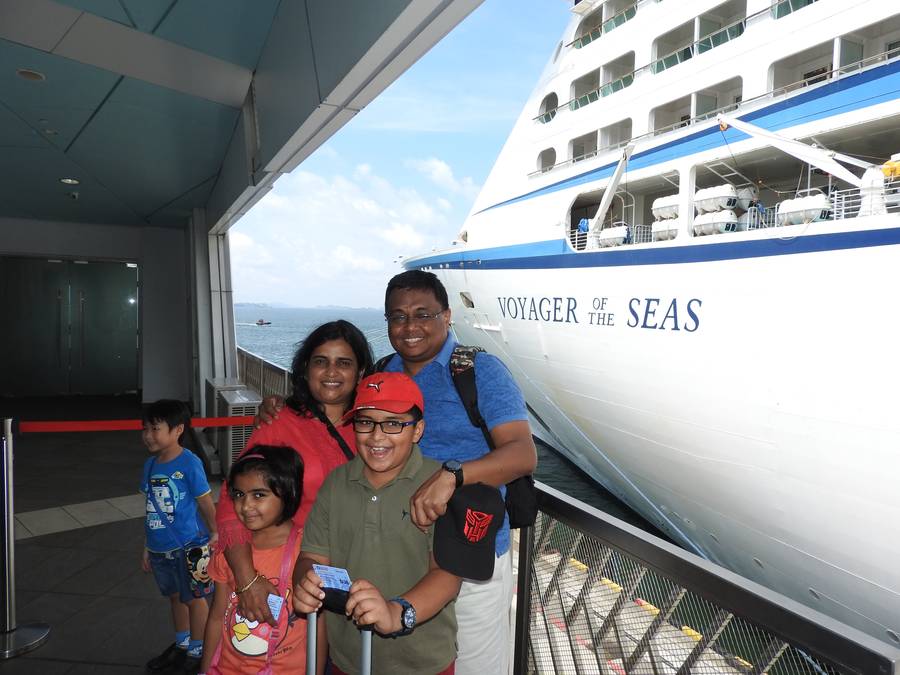
Royal Caribbean's website lists what to do before sailing; do the online check-in and print the SeaPass and luggage tags at home. Your cabin type sets your arrival time at the terminal. Ours was late morning, so we took the MRT from Bugis to the Marina Bay Cruise Centre, bags and all.
Boarding feels like leaving a country. You hand over your luggage, check in with the cruise line, get a SeaPass card for each person (cabin key and onboard credit card in one), go through immigration and walk on. Royal Caribbean also collected our passports on the way in; they came back, stamped and ready for Singapore, on the last night. It was smooth and quick, and we were on board by midday.
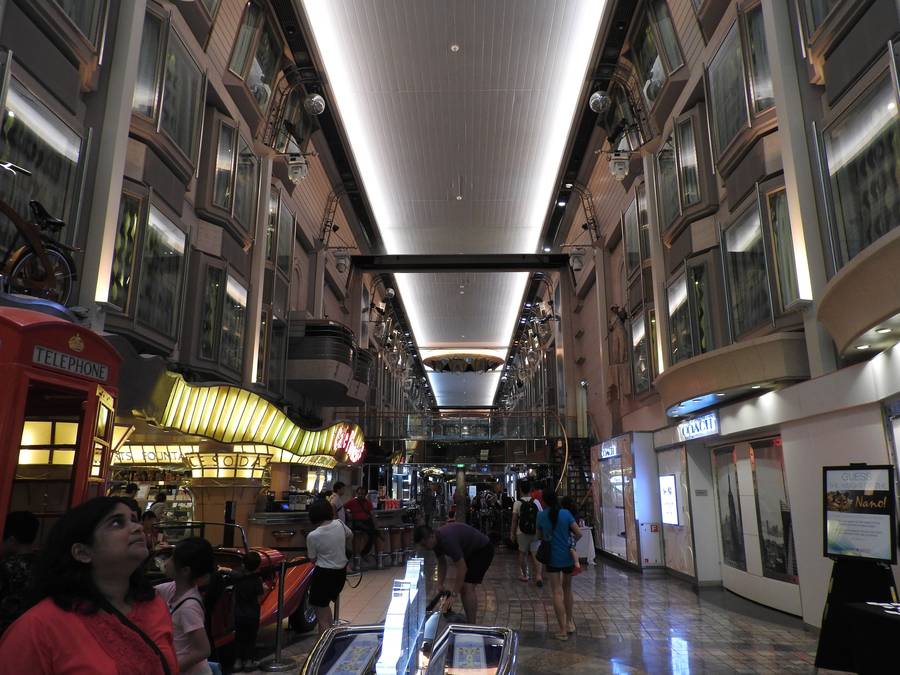
Cabins opened an hour later, so we headed for Deck 5, the Royal Promenade, a long indoor street of shops and cafes running down the middle of the ship. The 24-hour cafe served free snacks: pizza for the children, tea and coffee for us.
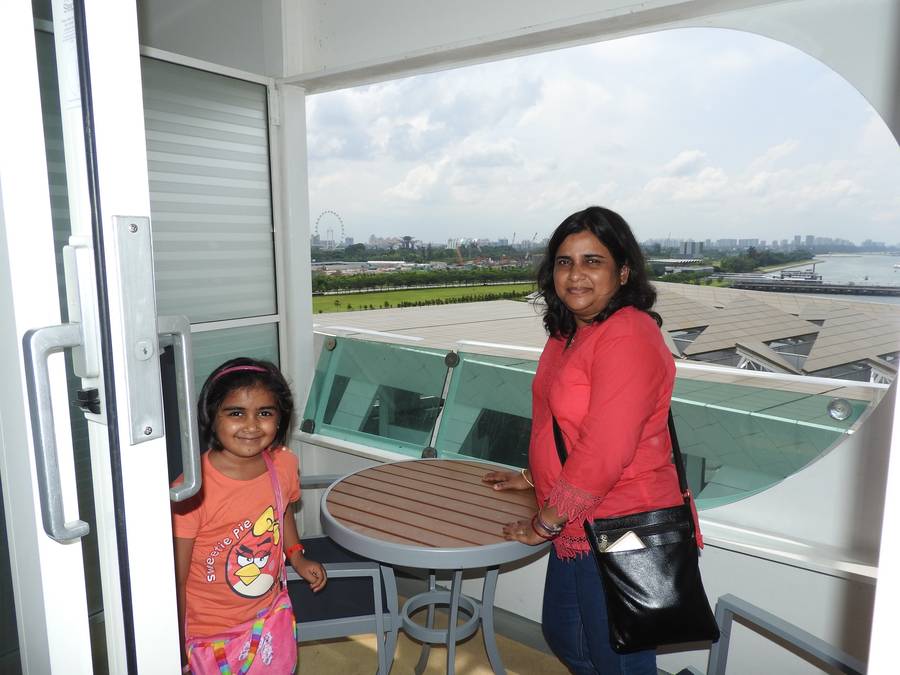
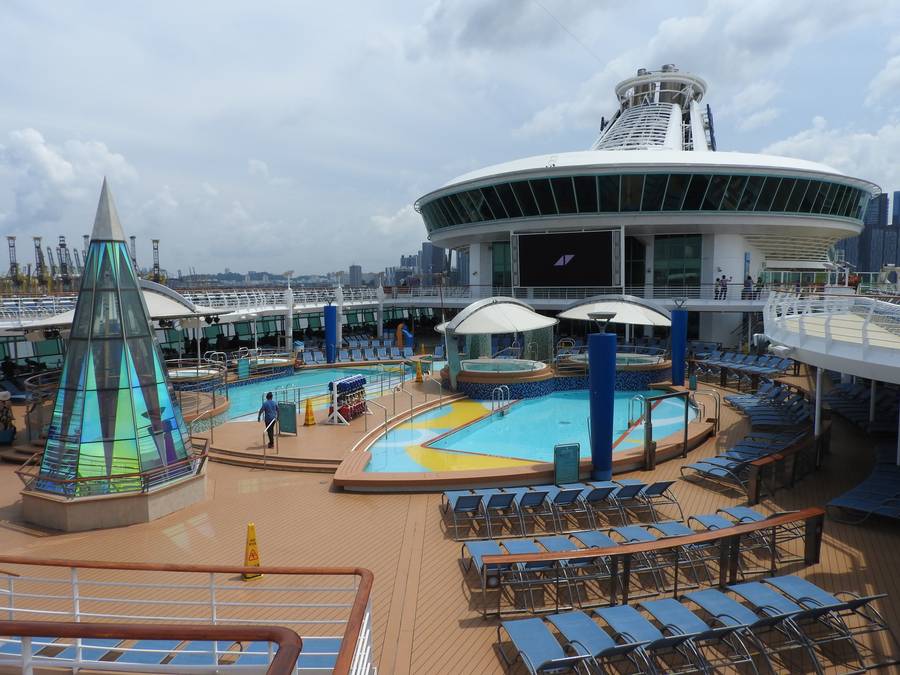
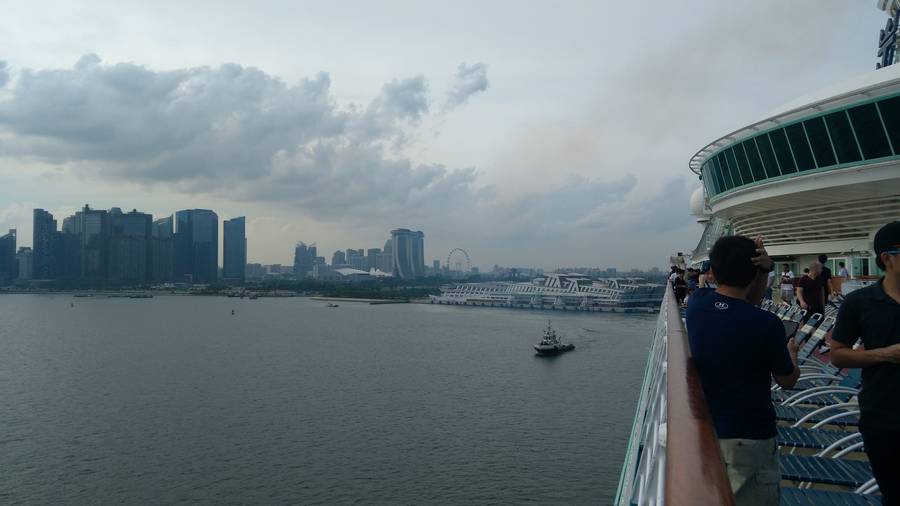
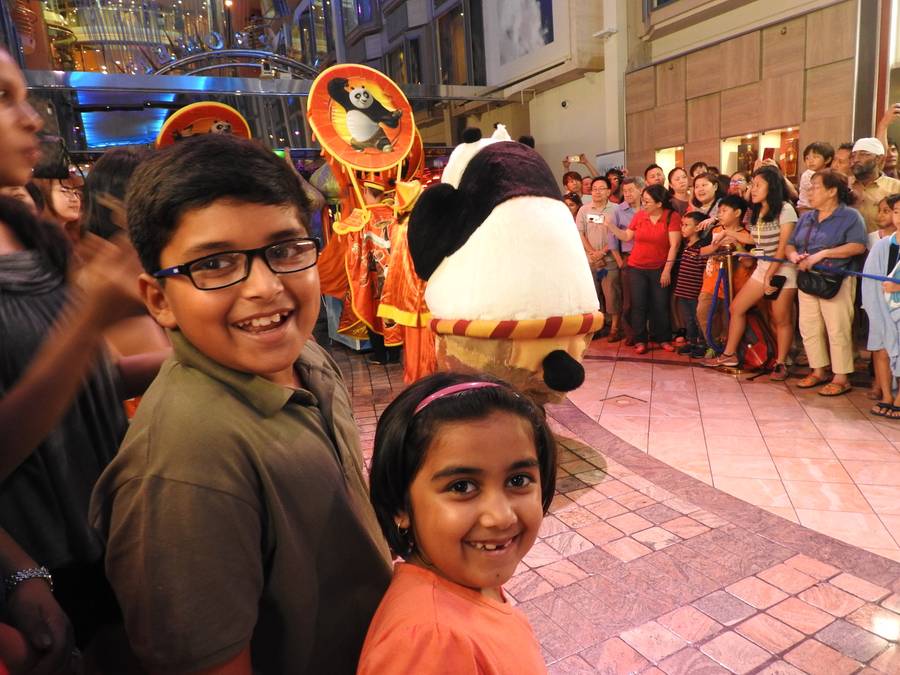
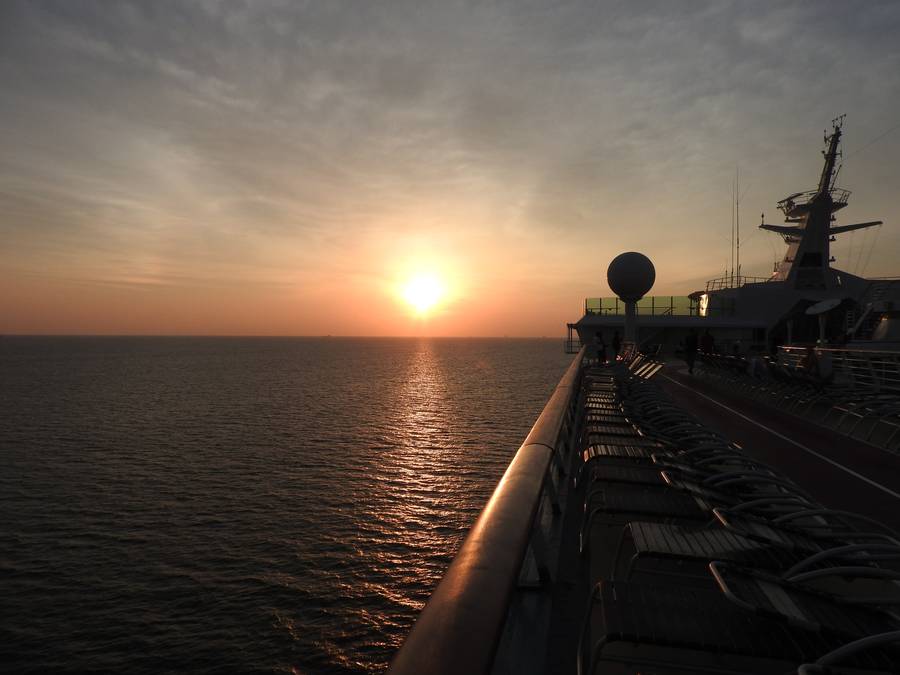
Then the safety briefing, then up to the pool deck for the sail-away party, and the cruise began. The skyline we had walked for five days slid past the rail. That evening there was a parade down the Royal Promenade, and the sun went down over the Strait of Malacca.
Life on board
From the first afternoon to the last breakfast, it was one big party: plush interiors, a festive mood and a crew who went out of their way for us. Handling over three thousand guests is no joke, and everything ran without a hitch, from getting on and off at the ports to the main dining room and the Windjammer buffet.
- The shows were top class: a real theatre with stage tricks, curtains, lighting and big sound. The ice show had international skaters, props and special effects, and the Broadway-style show was the kind of thing I had only seen on TV.
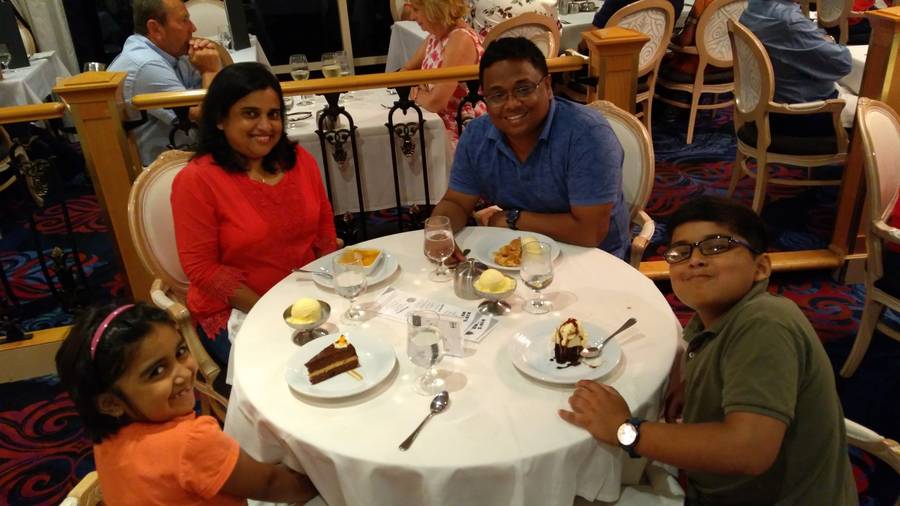
- The food never stops: great quality and great variety, and the only limit is your stomach. Food is available round the clock, the soft-serve machines run 24 hours, tea and coffee are there whenever you like, and there are no rules about carrying food around the ship.
- The main dining room spans three decks, with about 650 seats on each and some 70 waiters per deck. Four-course meals with full formal service. You can reserve or walk in.
- Pools and hot tubs are open 24 hours: salt water in the pools, fresh water in the hot tubs. Towels are free and unlimited; just return them.
- The cabin was like a five-star hotel room. With the door shut you heard nothing, not even the sea, and we were too high for spray. The TV ran movies all day, with paid ones too.
- Spending: most things are included, and there was no pressure to buy the rest. I bought two soft-drink packages for the children for US$81, which came out of our onboard credit, so they were effectively free. A few small purchases at the duty-free shops and onboard sales, and the bill was on the TV every day.
- Who was on board: to my surprise, over 700 Indians, the second-largest group after about 1,900 guests from Singapore.
- The sea was calm the whole way, and the ship mostly cruised at 15–19 knots.
The next morning, at sea on the way to Penang, the ship's ice rink opened for guests, and our two put on skates and helmets and went out on the ice. Up on the top deck, others queued for the FlowRider surf machine and took turns being thrown off it.
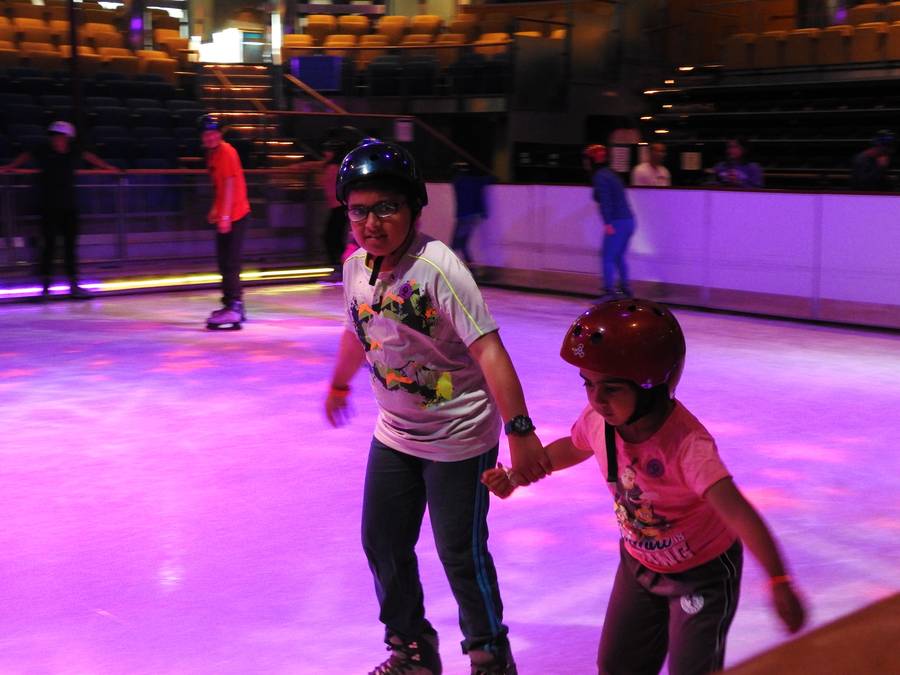
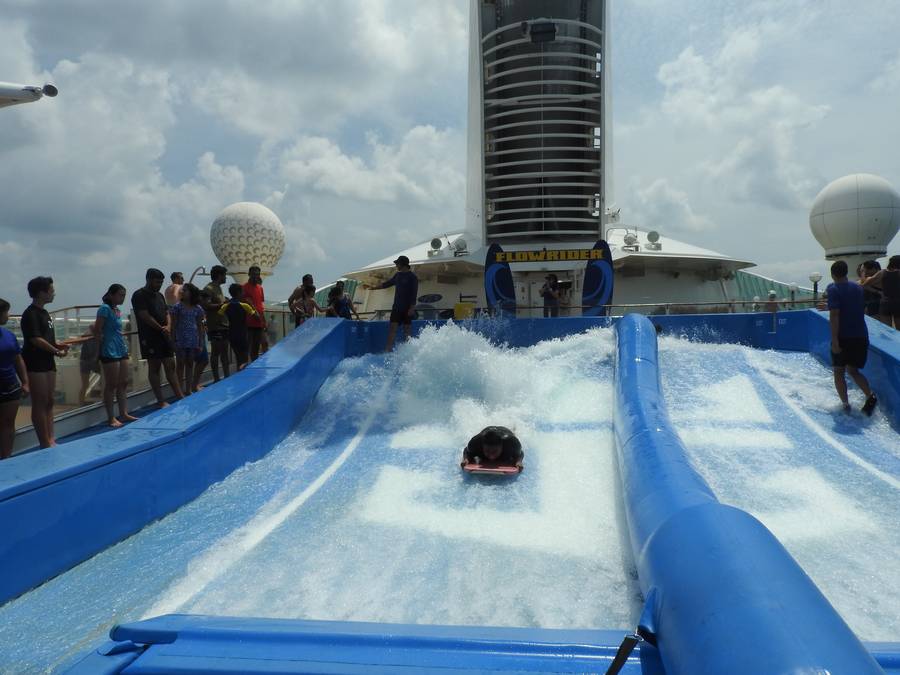
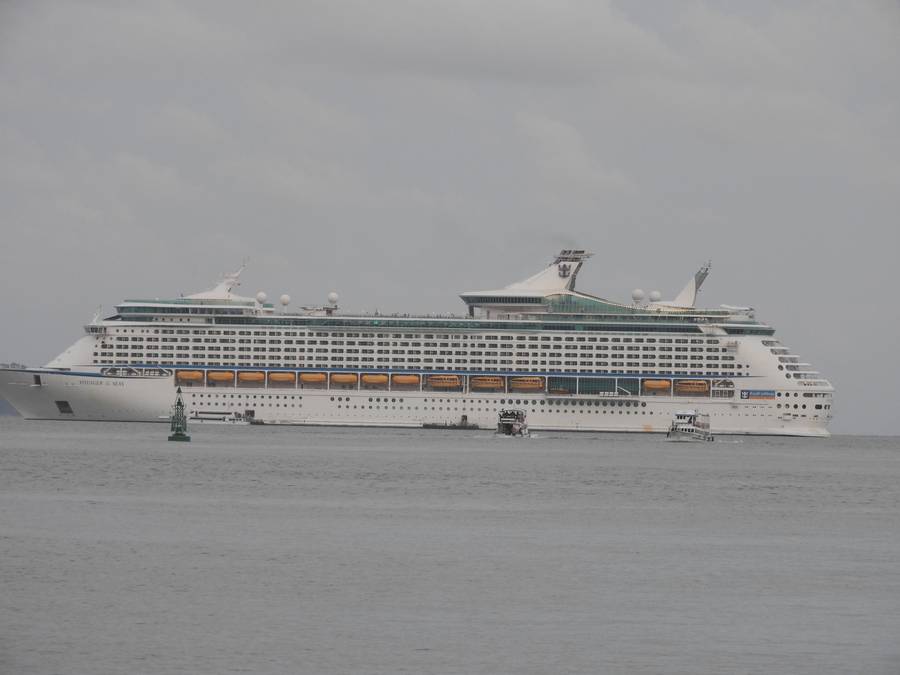
Royal Caribbean's first Voyager-class ship, launched in 1999. When she set out on her maiden voyage on 21 November 1999 she was the largest cruise ship in the world. She was the first ship with an ice rink at sea (Studio B) and the first with the Royal Promenade, the indoor "main street" that later Royal Caribbean ships copied. About 138,000 gross tonnes, 311 m long, 15 decks, room for about 3,100 guests at two to a cabin.
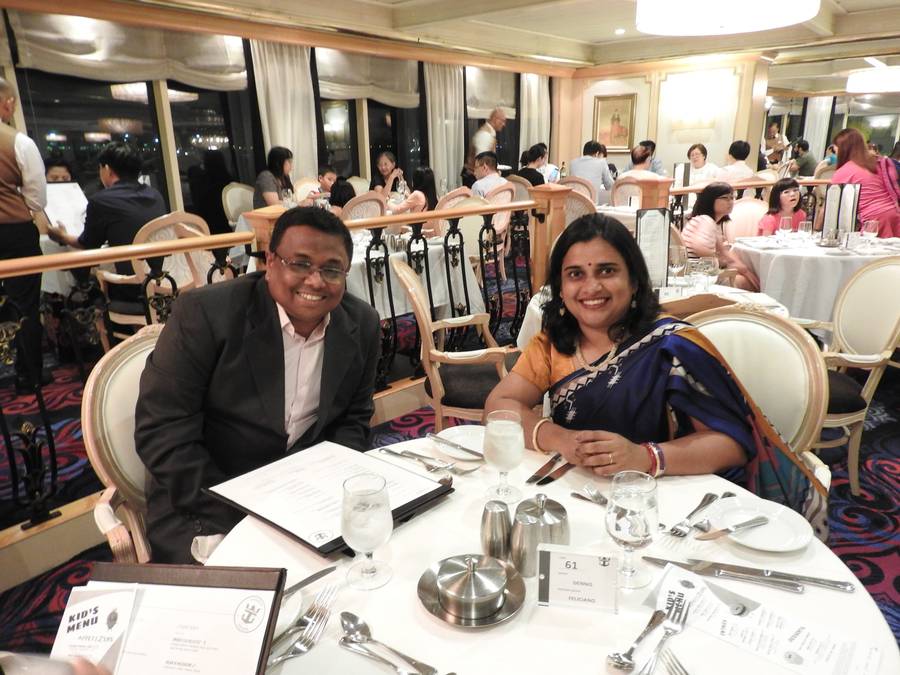
One thing embarrassed me. On formal night, despite clear notice of the dress code, a few families from home walked into the dining room in their sleeping clothes. Pack one smart outfit each; it is one evening, and the dining room is worth dressing for.
Penang (Tuesday)
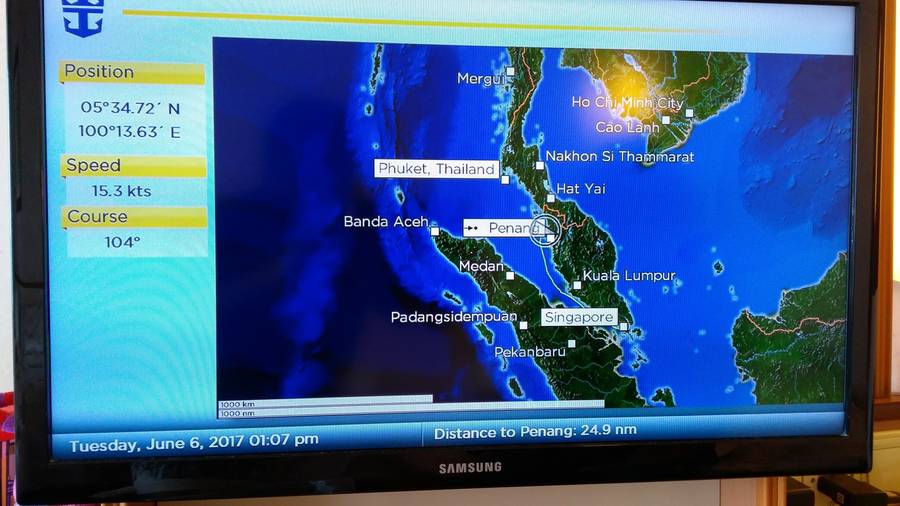
The cabin TV showed where we were all day. By lunchtime the map said 24.9 nautical miles to Penang, and by afternoon we were alongside Swettenham Pier, in George Town. The ship was in port until late evening, so after the morning's adventures we went ashore in the late afternoon and walked into the old town, which starts almost at the foot of the gangway.
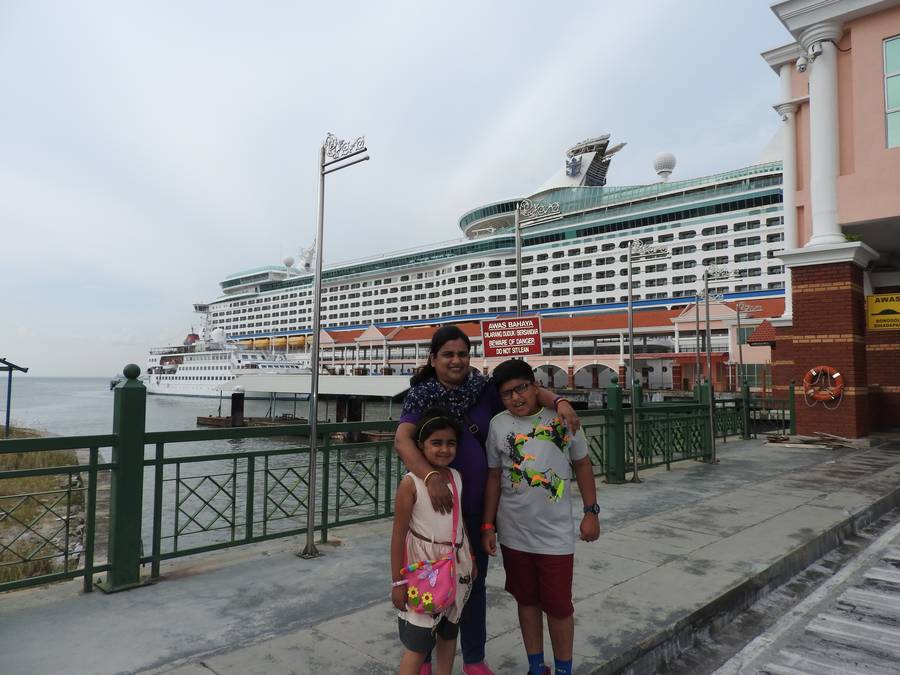
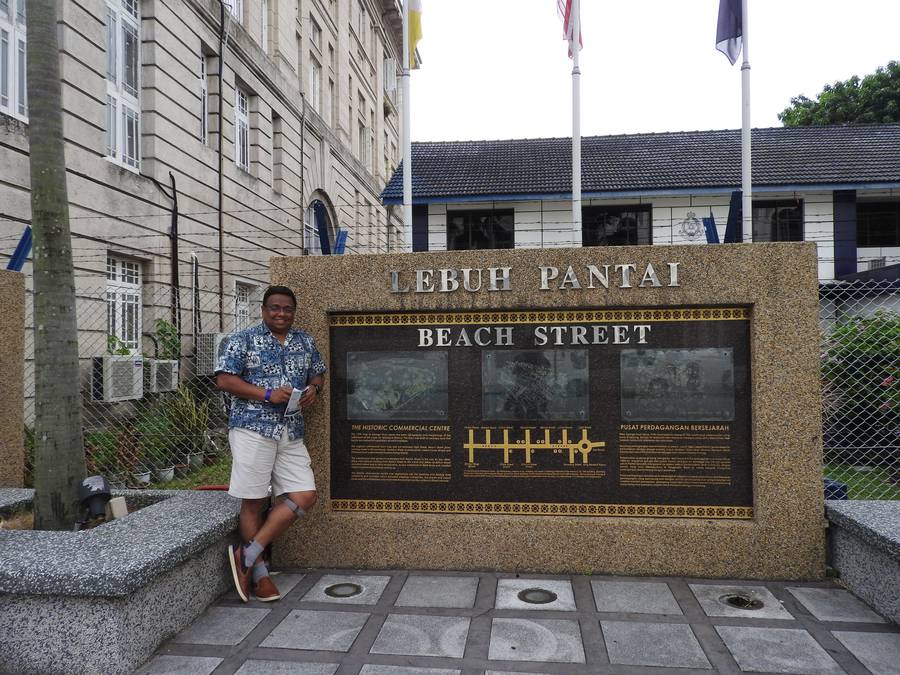
Cruise ships dock at Swettenham Pier, established in 1904 on the George Town waterfront and rebuilt as a cruise terminal in 2009. In 2017, the year we called, it overtook Port Klang as Malaysia's busiest cruise port. The pier sits inside George Town's historic core, listed by UNESCO in 2008 together with Melaka as the Historic Cities of the Straits of Malacca.
Phuket (Wednesday)
We were off Phuket by morning. Voyager anchored in the bay and tender boats ran us ashore. We hired a taxi for the afternoon, had lunch, and went to Wat Chalong, the island's biggest temple, and then to Patong for the beach, where the waves were big enough to knock a child over. All day the ship lay at anchor off the island, a white wall on a grey sea.
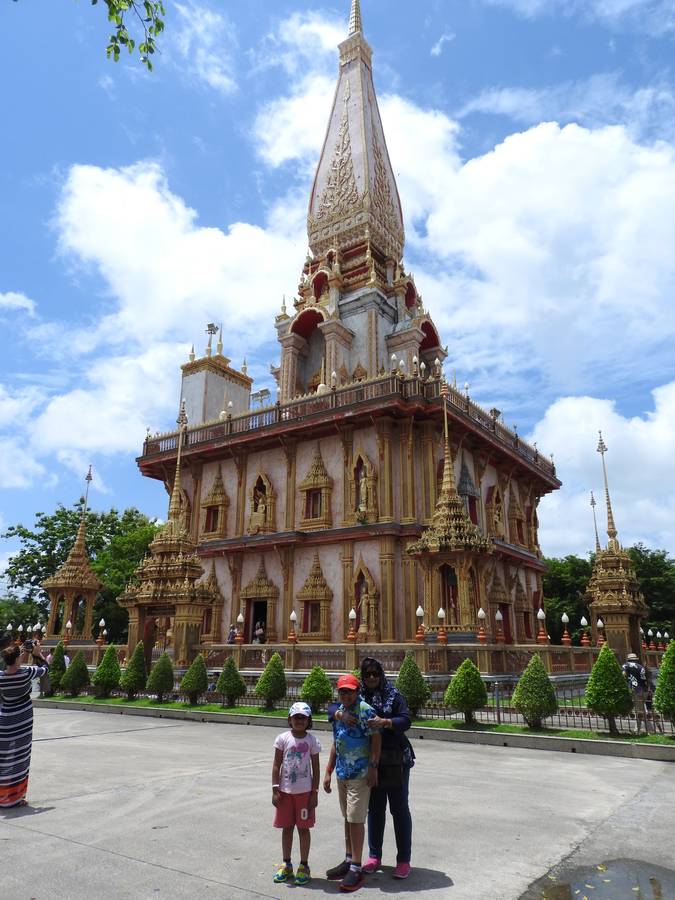
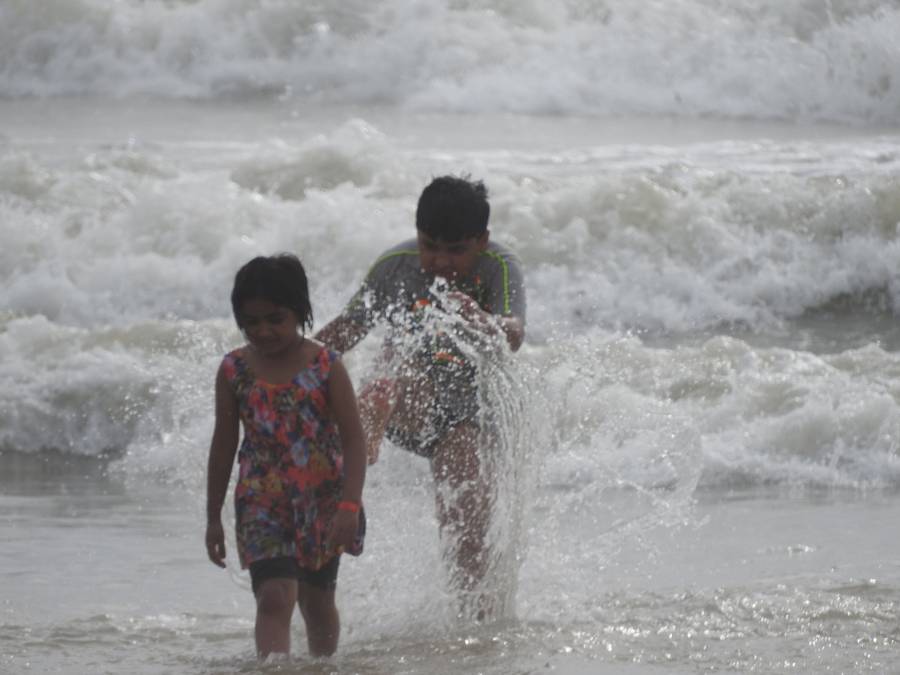
Wat Chalong, officially Wat Chaiyathararam, is the largest and most revered Buddhist temple on Phuket, in the south of the island. Its centrepiece is the 60-metre Phra Mahathat Chedi, built between 1991 and 2001, which holds a fragment of bone said to be the Buddha's, brought from Sri Lanka.
A day at sea (Thursday)
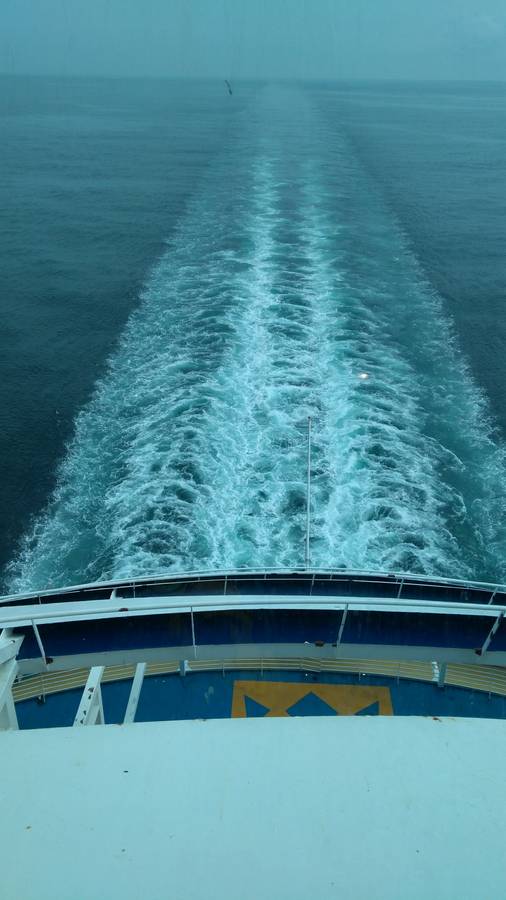
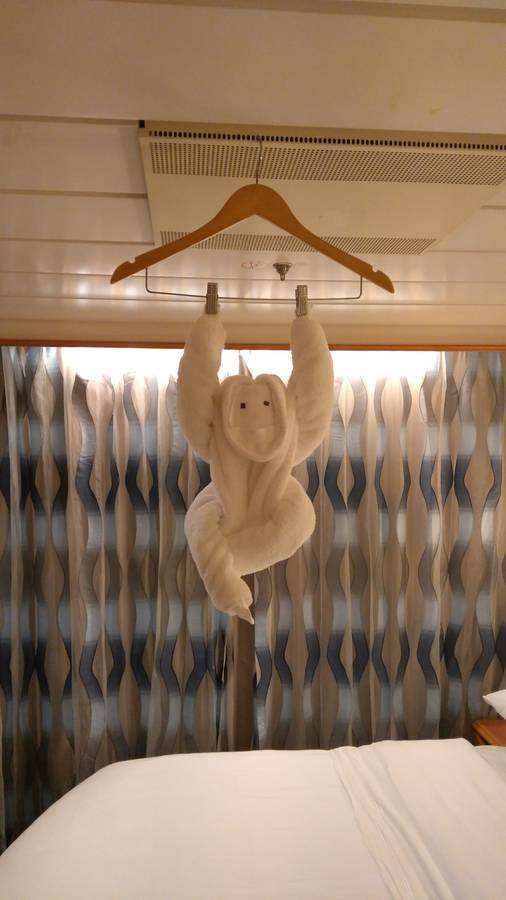
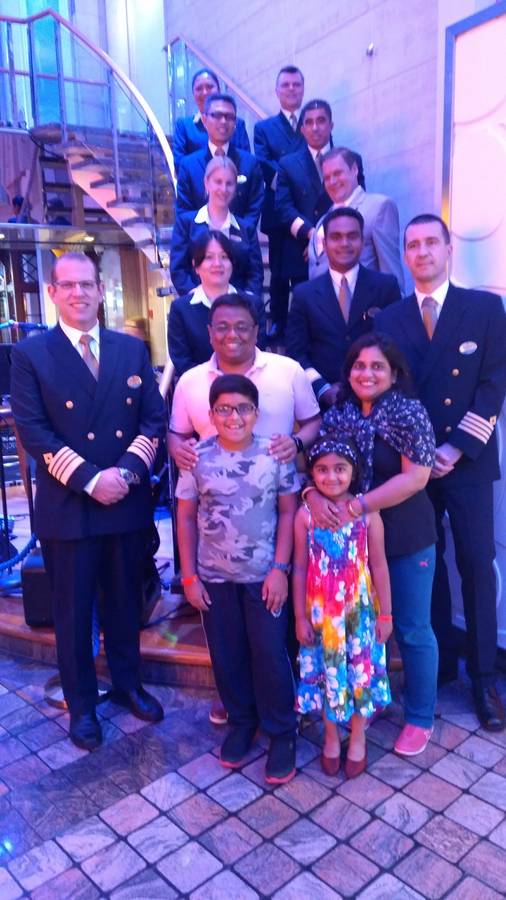
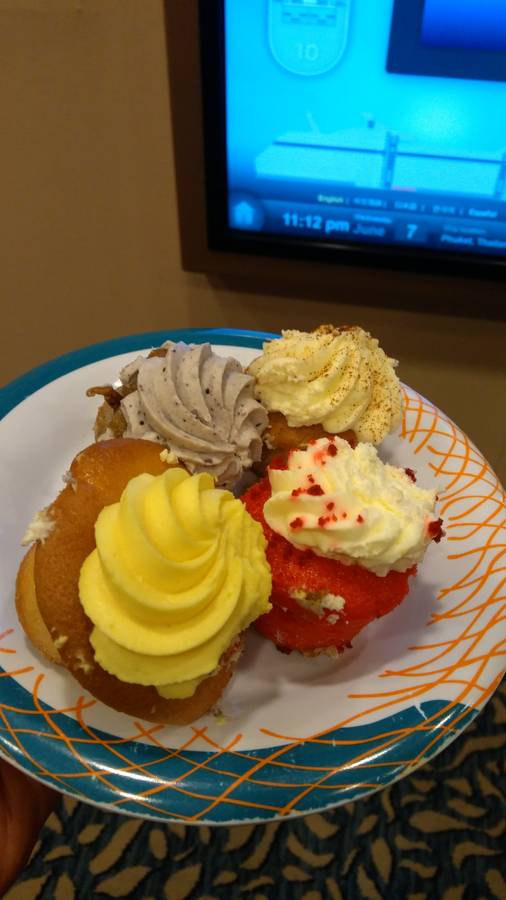
The last full day was all ship. We watched the wake from the back, saw the ice show in the afternoon, and in the evening a group of the ship's officers posed for a photo with us. The cabin attendant left a towel monkey hanging from the hanger, and the Windjammer laid out a dessert spread that tested my claim that the stomach is the only limit.

The last morning (Friday)
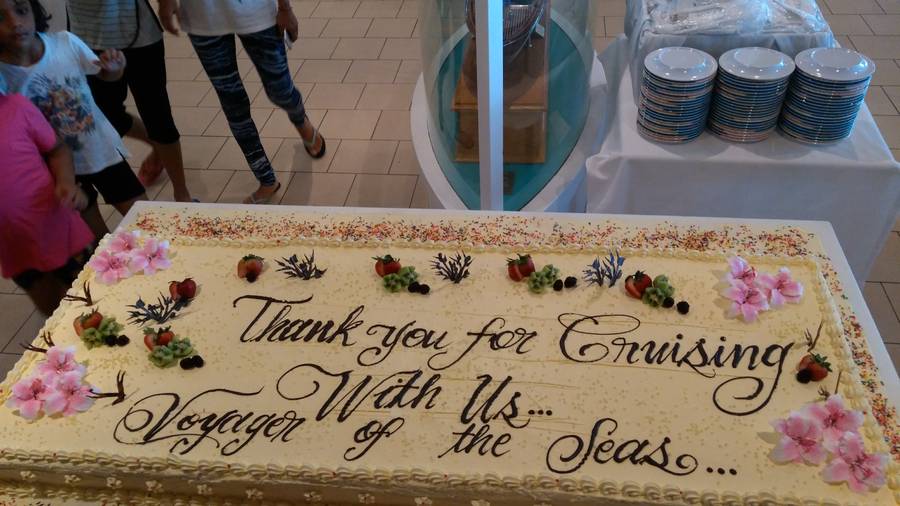
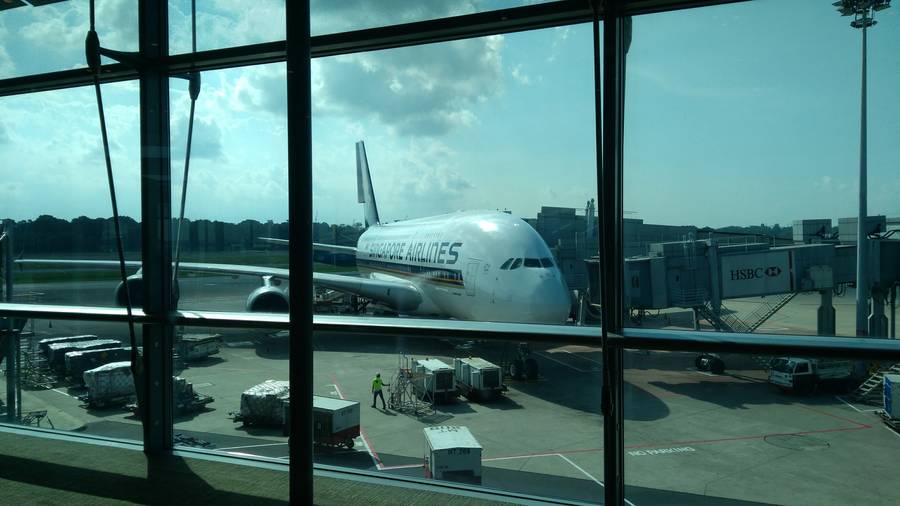
We were back alongside at Marina Bay early on Friday morning. Immigration was almost invisible, because the cruise line had done it all; all we needed was the SeaPass and the passports returned the night before. We spent the morning with distant relatives who live in Singapore, in the east of the island, then took the MRT to Changi and flew home in the evening.
Was it worth it?
Every penny. We never felt short-changed; we felt we got more than we paid for. Those four days outshone most of my holidays: an amazing amount done, eaten and seen. A happy side effect was what it did for the children. In four days they met people from many countries and tried things they had never done, and that widened their world. You have to cruise once to understand what I mean.
Part 5: What it cost
| Our 2017 budget, family of four (at ₹50 to the dollar) | 2017 |
|---|---|
| Return flights, Singapore Airlines | about ₹1 lakh |
| Stay, food and local travel, 6 nights | about ₹1 lakh |
| Attractions and miscellaneous | about ₹50,000 |
| Singapore total | about ₹2.5 lakh |
| Cruise: balcony cabin for four, 4 nights | US$1,920 |
| Cruise gratuities (4 × 4 nights × US$13.50) | US$216 |
| Less onboard credit | −US$95 |
My rule of thumb in 2017 was about ₹20,000 a day for the family, all inclusive, and ₹15,000–20,000 per adult to see most of the big attractions; I set aside ₹40,000 for tickets.
| Some of the same things in 2026 (per adult, gate price, at about ₹73 to the dollar) | 2026 |
|---|---|
| Singapore visa | ₹2,100 + ₹1,000–1,300 agent charge |
| Singapore Zoo | S$49 (≈ ₹3,600) |
| River Wonders (was River Safari) | S$45 (≈ ₹3,300) |
| Bird Paradise (was Jurong Bird Park) | S$49 (≈ ₹3,600) |
| Universal Studios, off-peak | S$83 (≈ ₹6,100) |
| Singapore Oceanarium (was S.E.A. Aquarium), weekday | S$50 (≈ ₹3,650) |
| MRT or bus, one adult journey by card | S$1.28–2.57 |
| Cruise gratuities, family of four, 4 nights | US$296 |
Those five attractions alone come to about S$276, roughly ₹20,000, per adult at gate prices. Child tickets are cheaper, and resellers and multi-park passes still cut the bill. It is not a precise budget, but it shows where the money goes.
Six days on a transport card, four nights on a ship, two children who skated on ice in the tropics, and a bucket-list item finally ticked. If you go, go in that order: the city first, then the sea. It is a very good way to end a holiday.