By the middle of June we had been in the United States for a month. We had walked Manhattan until our feet filed a complaint, lived in a motorhome for twelve days and watched a good part of the American West go past the windscreen. San Francisco was the last big sightseeing stop of the whole trip, and it turned out to be a very good one to finish on: the sights, the food and the feel of the place were all special, and the old streetcars gave it a sense of history that most of the trip had not had.
We were based in Sunnyvale, with friends, and went into the city by train on both days, with a night in Oakland, with the family of one of my Indian Navy course mates, in between. This is how those two days went. The overview post has the plan for the whole 42 days.
Day 1 · 17 June — Trains, Trams, GoCars and a Boat
Caltrain, then a streetcar
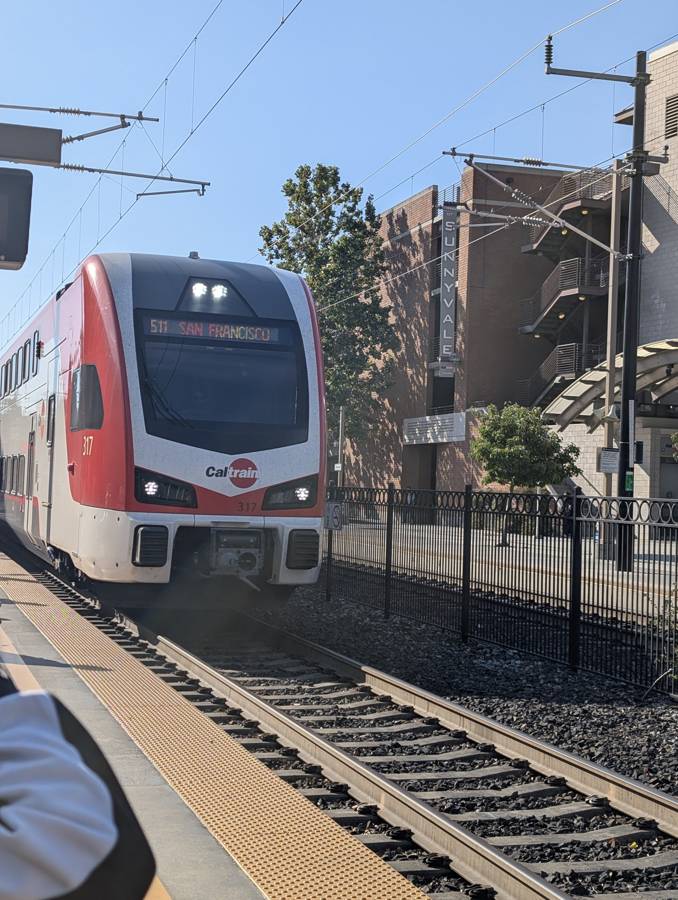
The day began on the platform at Sunnyvale station, with backpacks and a four-person selfie. The train to San Francisco is Caltrain, and since August 2024 it has been an electric one, a double-decker that rolled in looking more like something from Europe than from the California of my imagination. The ride into the city took about an hour.
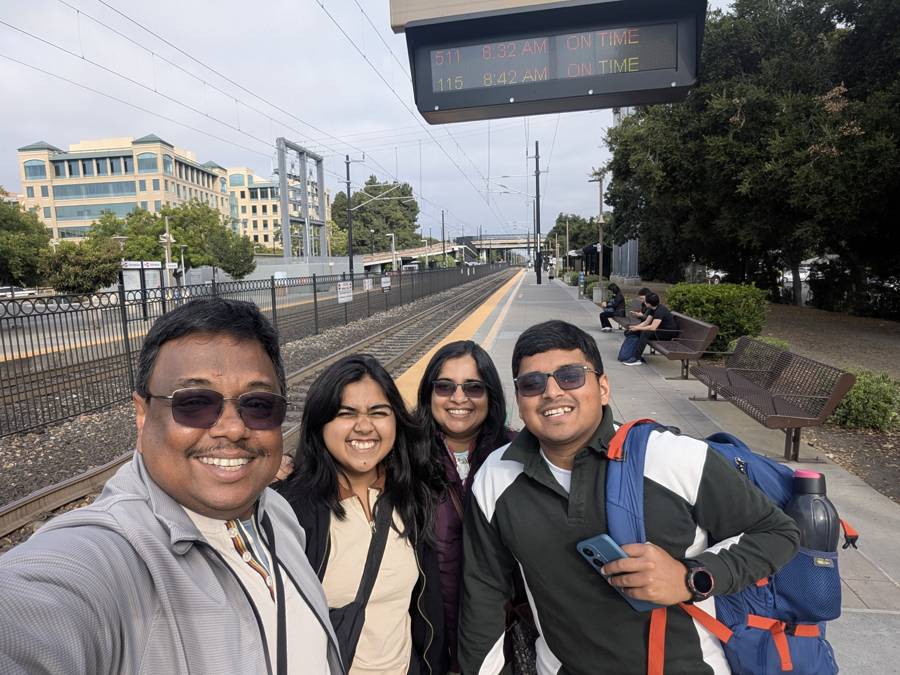
The line runs about 51 miles (82 km) from 4th and King in San Francisco down to Tamien in San Jose. Electric trains began carrying passengers in August 2024: Stadler double-deck trainsets, which cut the all-stops run between Tamien and San Francisco from 115 minutes with the old diesels to 83. Source: Caltrain Modernization Program, via Wikipedia.
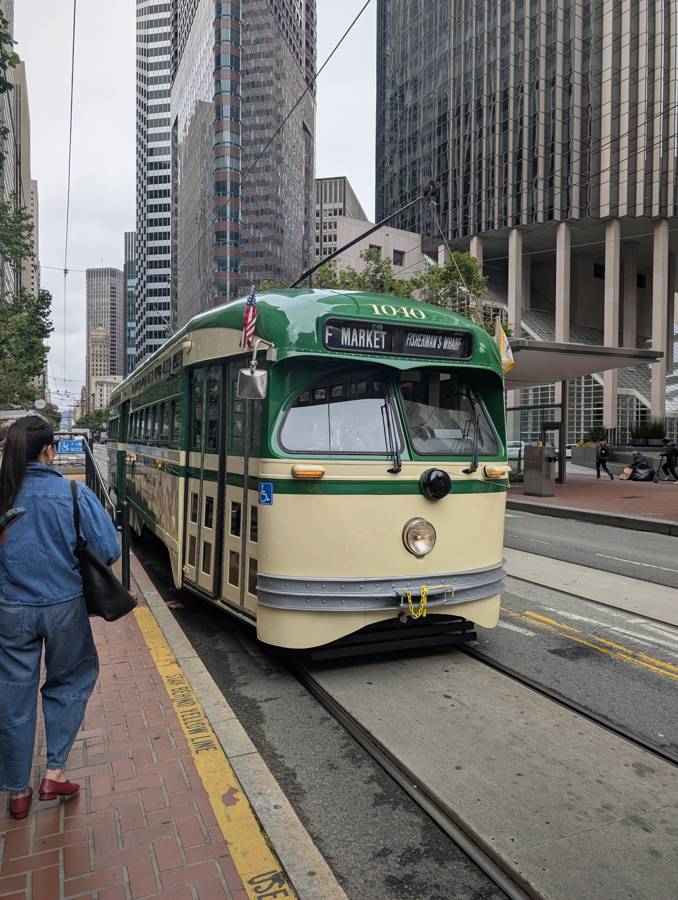
From San Francisco’s 4th and King station we took Muni to the Embarcadero, and there, on the street, was the thing I had been secretly waiting for: an F-line streetcar, green and cream, number 1040, with a destination board reading F Market – Fisherman’s Wharf. The F-line is a living museum. The trams that run on it are historic ones, bought from other cities and kept in service, and riding one down the waterfront felt exactly like what it was: a slow, charming way to move around a city that has always been on the move. The trams added history to the whole trip.
Muni’s F Market & Wharves line started in September 1995 and was extended to Fisherman’s Wharf in March 2000. Its fleet of about 26 vintage cars includes 1928 “Peter Witt” cars from Milan and PCC streetcars, most of them from Philadelphia. Source: SFMTA, Historic Streetcars.
The Wharf, and what we skipped
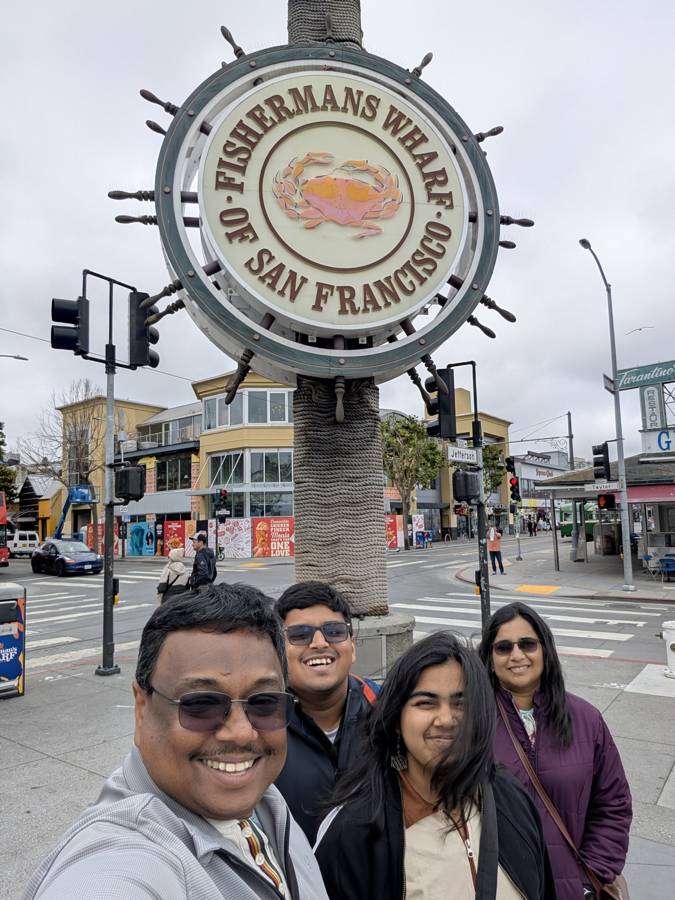
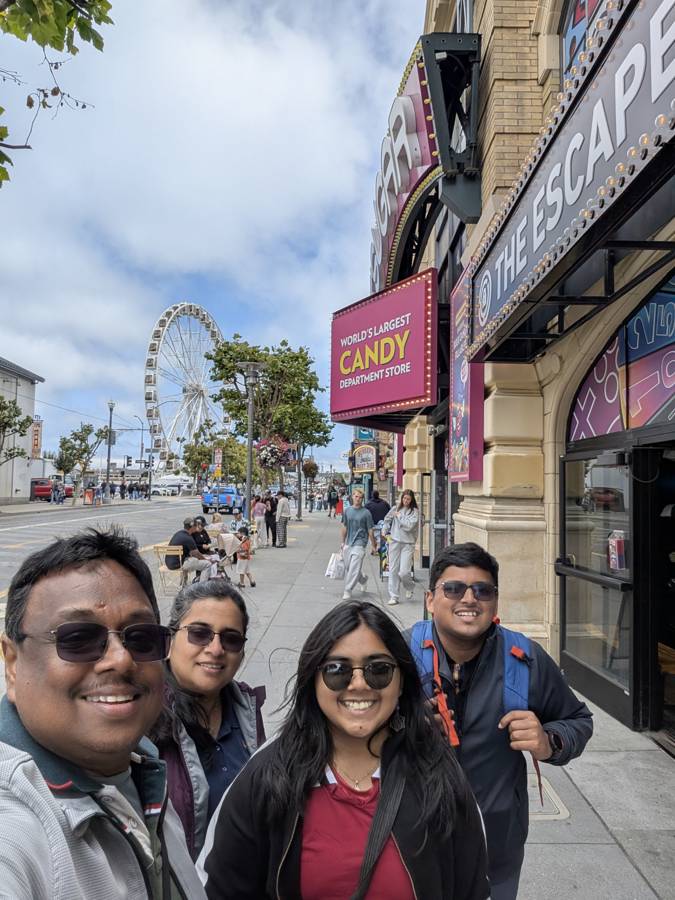
The tram dropped us at Fisherman’s Wharf, where the first job is the same for everyone: a selfie under the big sign with the crab on it. The day was grey and cool, with the low cloud San Francisco does so well in June, and we were in jackets.
On paper the morning also held the SF Flyer, a 7D ride and the USS Pampanito submarine. We did none of them, which is a very San Francisco way of saying we have a reason to come back.
Two GoCars and a one-hour rule
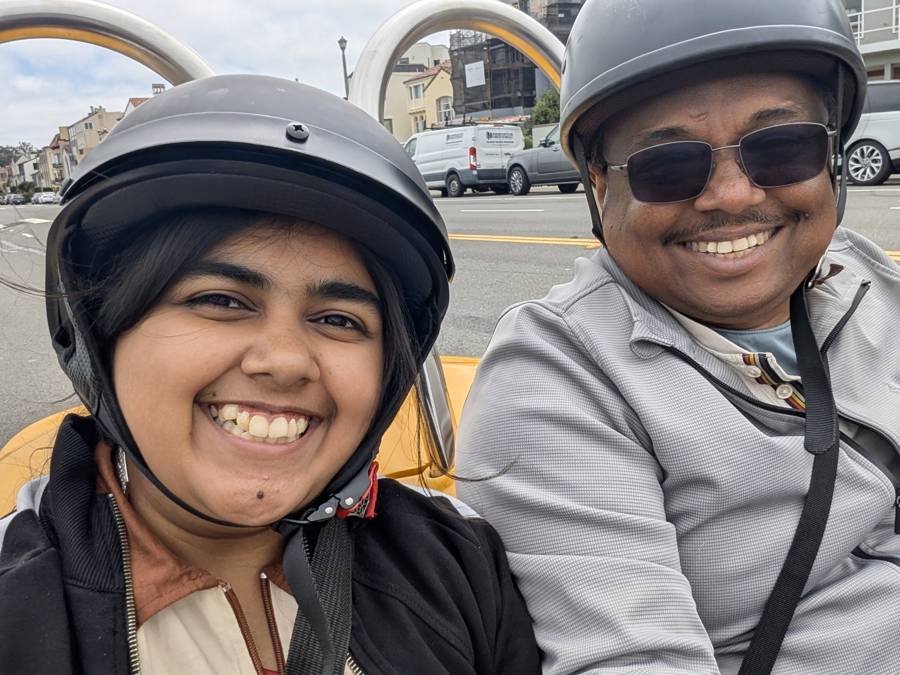
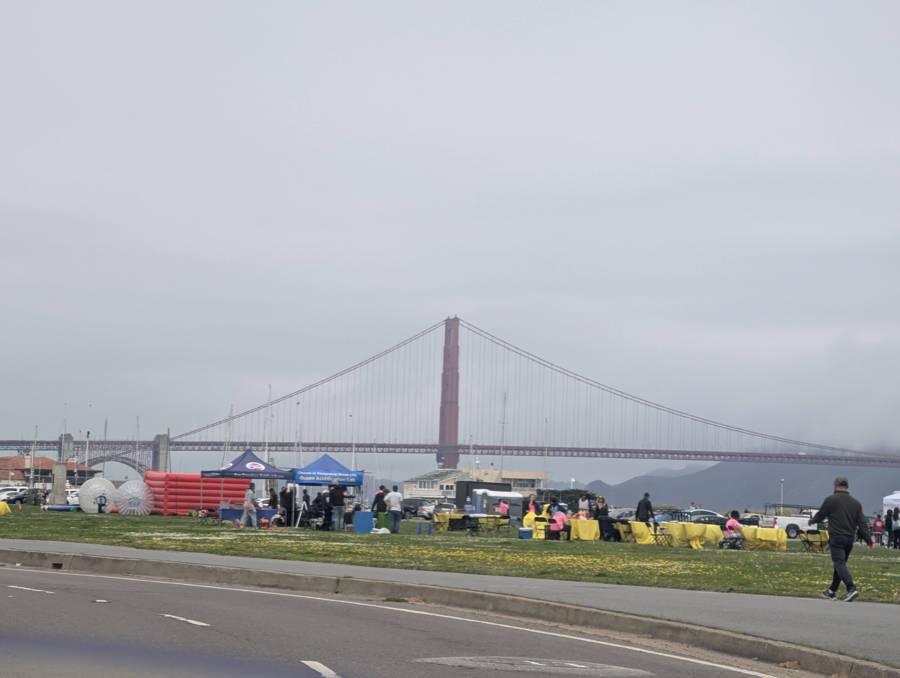
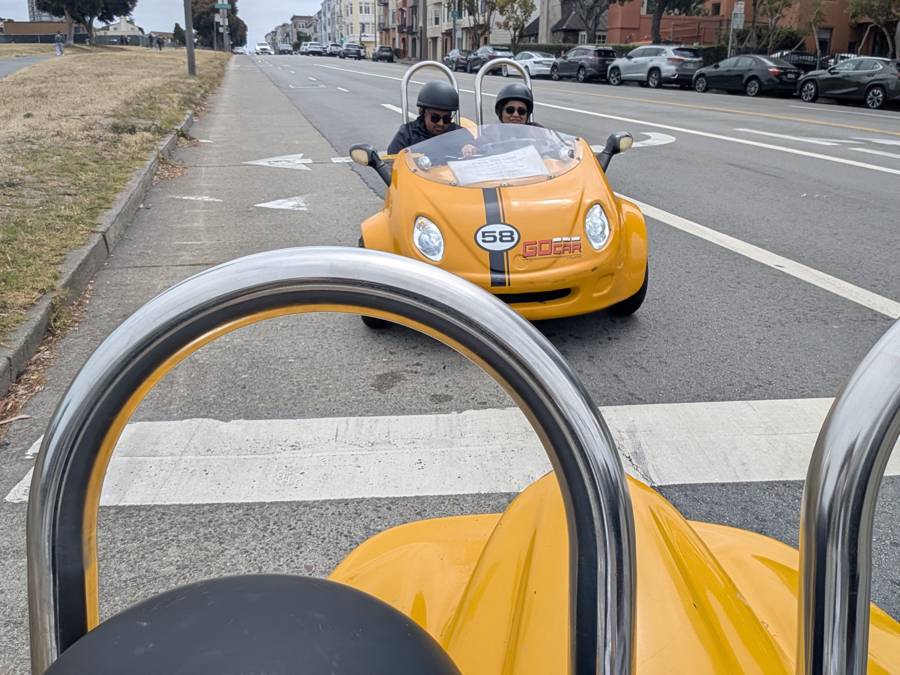
Our transport for the late morning was a pair of small yellow GoCars: my daughter and I in one, my wife and our son in the other. After twelve days at the wheel of a motorhome, a GoCar felt like a skateboard with opinions. We followed the one-hour route along the Marina waterfront, past big houses with pink and brick faces, and on through the Presidio’s tall dark trees towards the Golden Gate Bridge. We did not stop anywhere, because stopping would have made us late. The sky was low and grey over the Marina, but the bridge itself was clear.
Lunch at the Wharf
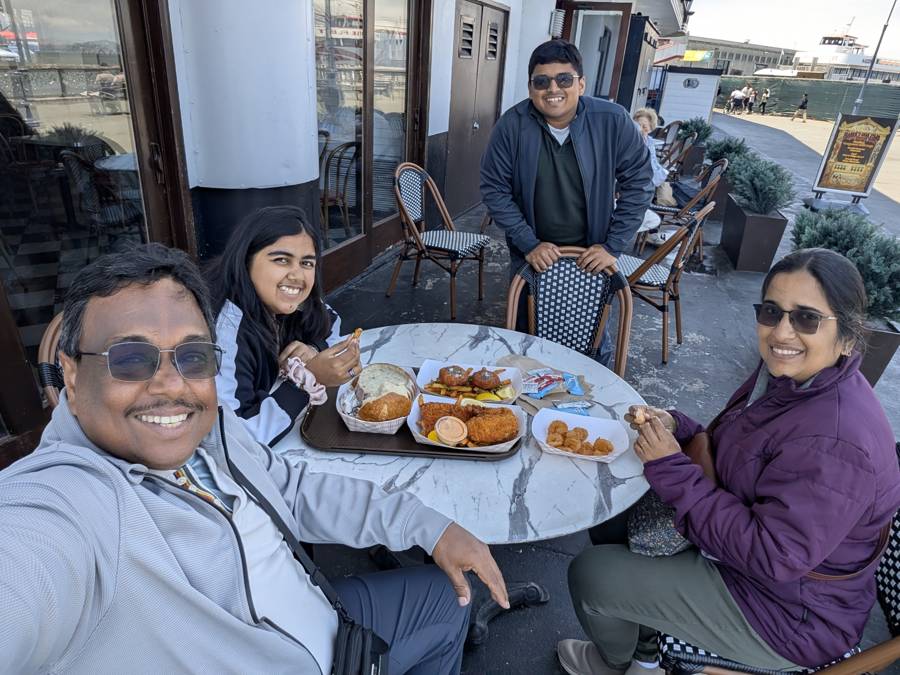
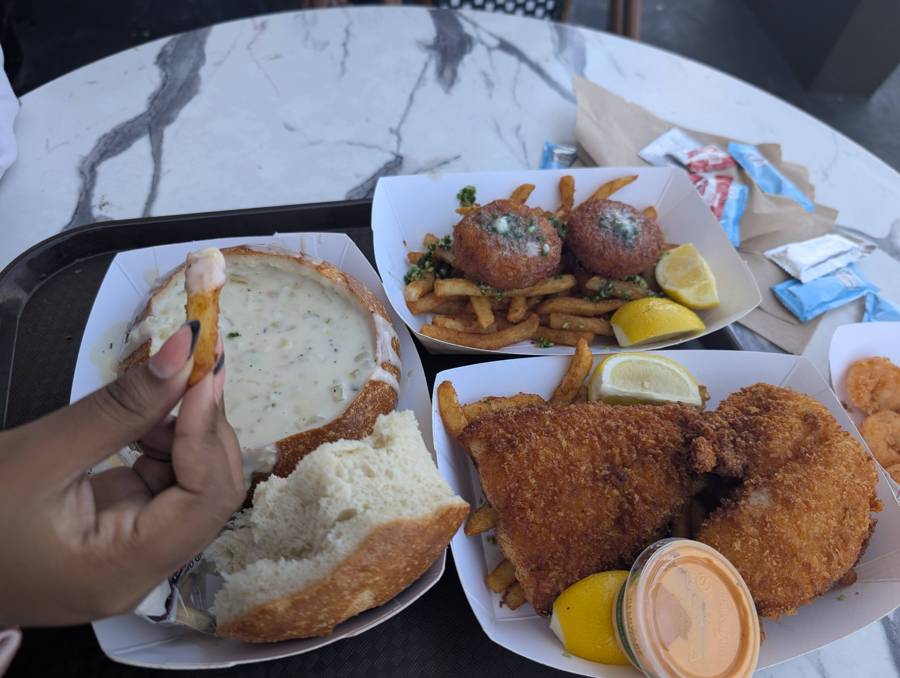
Lunch was at the Franciscan Crab Restaurant, at an outdoor table on the Wharf, with clam chowder in a bread bowl and a basket of fish and chips. Both were fantastic, which is not an adjective I use lightly after a month of eating on the road.
Sea lions and a carousel
From the Wharf it is a short walk to Pier 39, and the sea lions. They lie piled up on floating wooden docks with the air of people who have nowhere to be, and they bark at each other as if the matter were urgent. We took a selfie with the whole noisy bunch behind us and watched them for a while, and then we found the carousel.
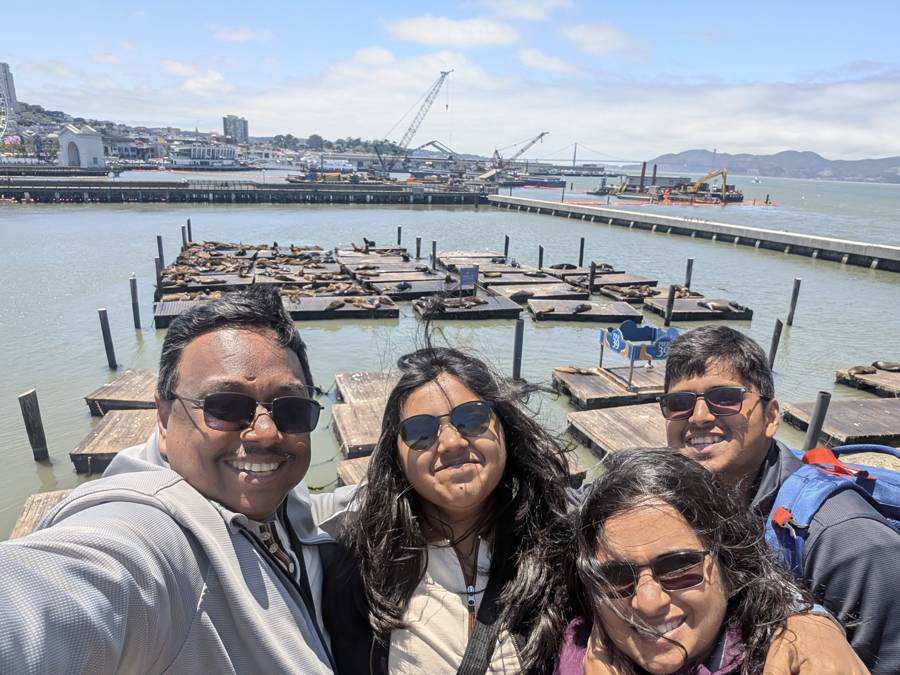
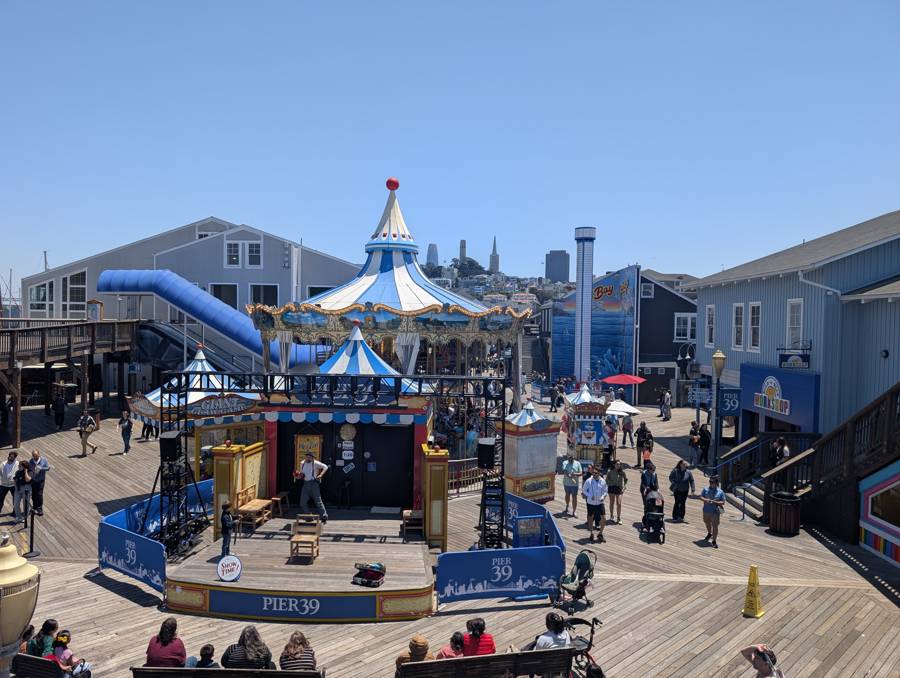
The sea lions first moved on to the docks at Pier 39 in September 1989, when the marina’s boats had been cleared out for a refurbishment. Nobody knows exactly why they came; the most popular guess is that the Bay felt safer. Up to about 1,700 have been counted there at once (Thanksgiving week, 2009), and they tend to leave in the autumn and come back in spring. Pier 39 itself opened on 4 October 1978. Source: Wikipedia, Pier 39.
Out on the bay
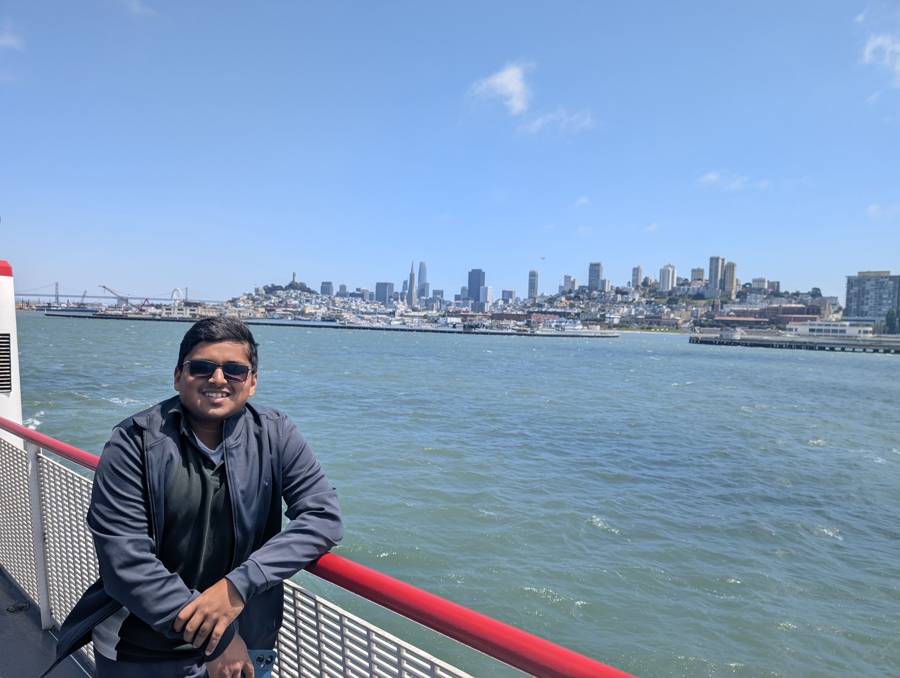
The afternoon belonged to the water. We took a bay cruise, and the weather, which had been grey all morning, cleared into patches of sun and a strong wind. The boat went out under the Golden Gate Bridge, and there are more windswept selfies from that hour than from any other part of the trip. It was a different bridge from the one we would see the next day.
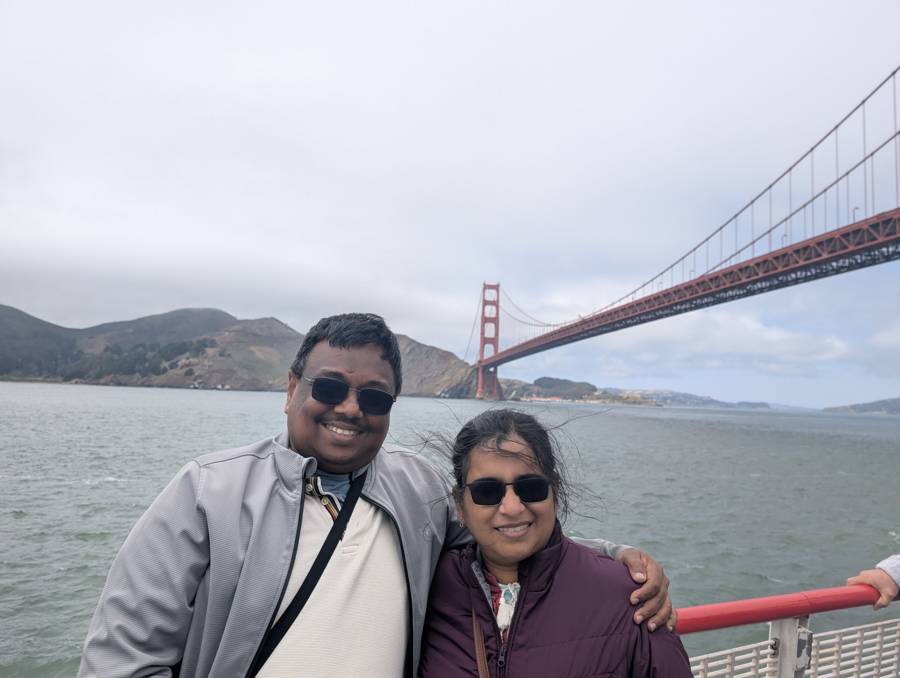
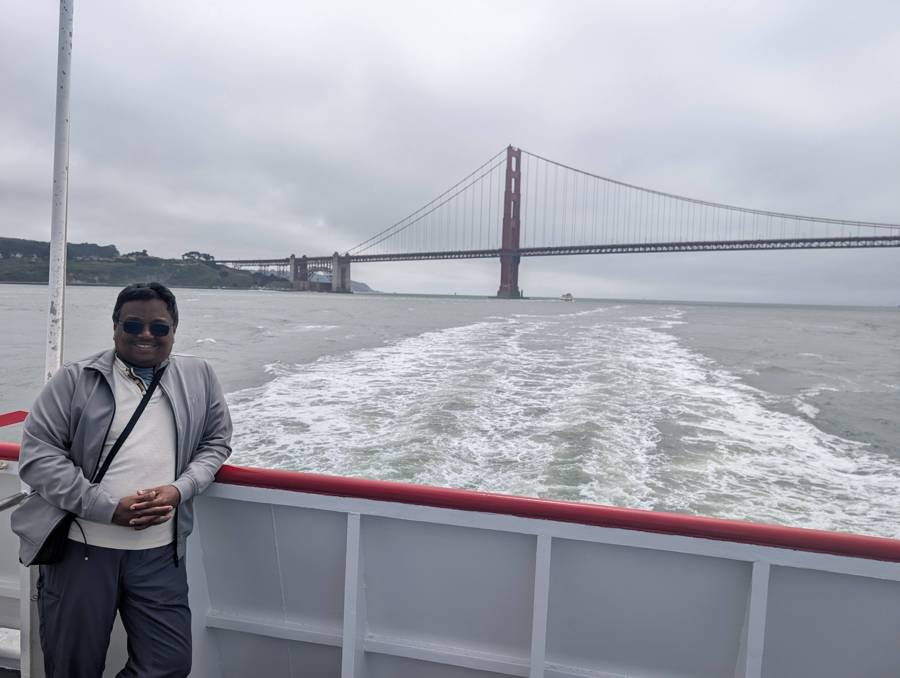
It opened on 27 May 1937 and is about 1.7 miles (2.7 km) long, with towers 746 feet (227 m) tall. The colour is called International Orange, chosen partly because it shows up well in fog — which turned out to matter on the second day.
The aquarium, a biscuit and a fruit stall
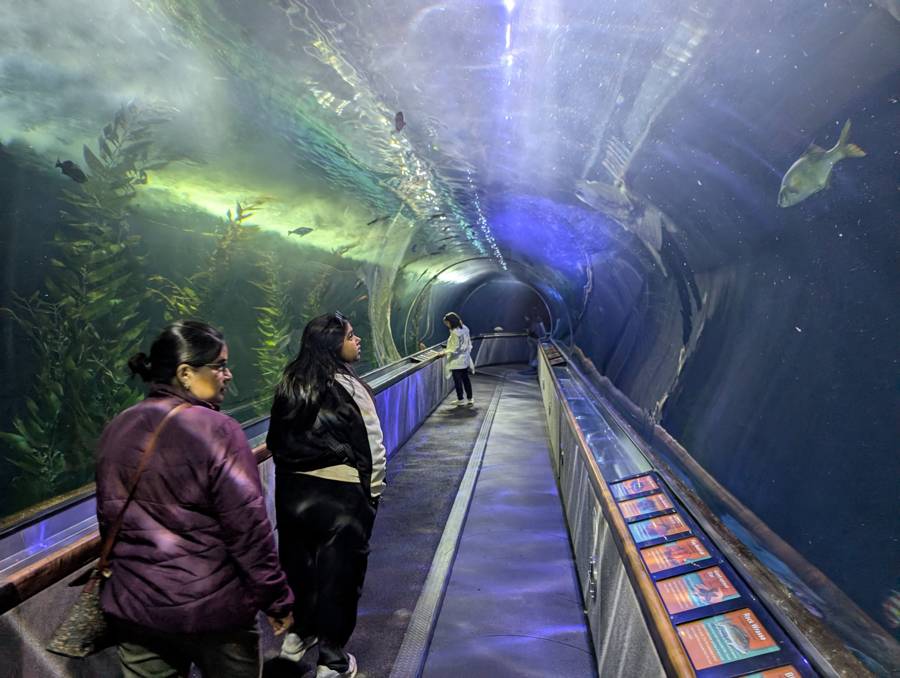
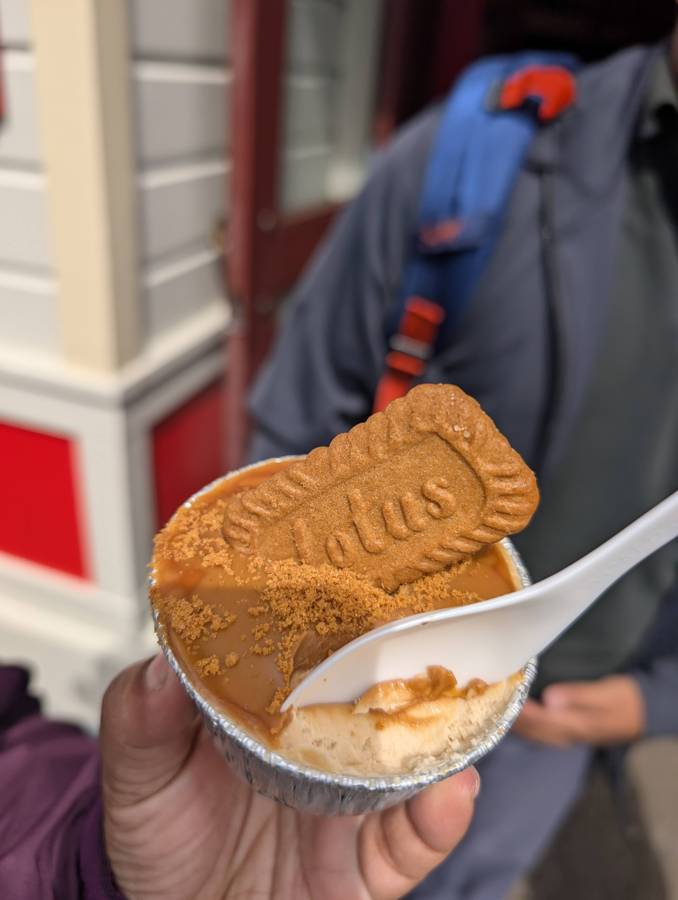
Back at Pier 39 we went through the glass tunnel at the Aquarium of the Bay, where my wife and our daughter walked through a tube of green water with fish going over their heads. There was a cup of something sweet topped with a Biscoff biscuit, which counts as a food group on holiday, and a pair of couple photographs at the Pier 39 entrance, one of my wife and me and one of our son and daughter. There was a fruit stall with a sign that read Chocolate for dipping, which I consider the most honest advertising in California.
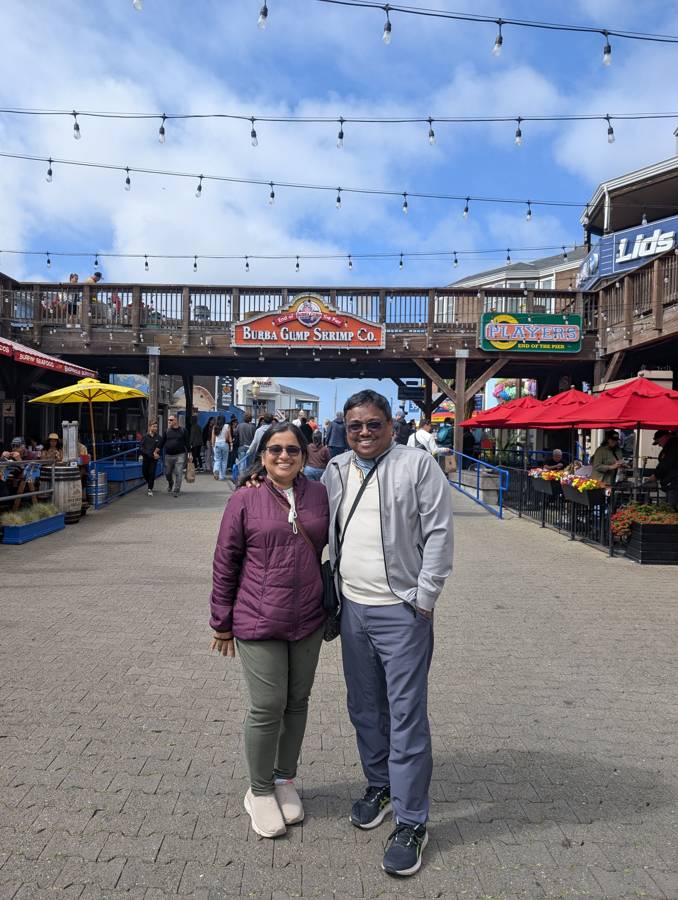
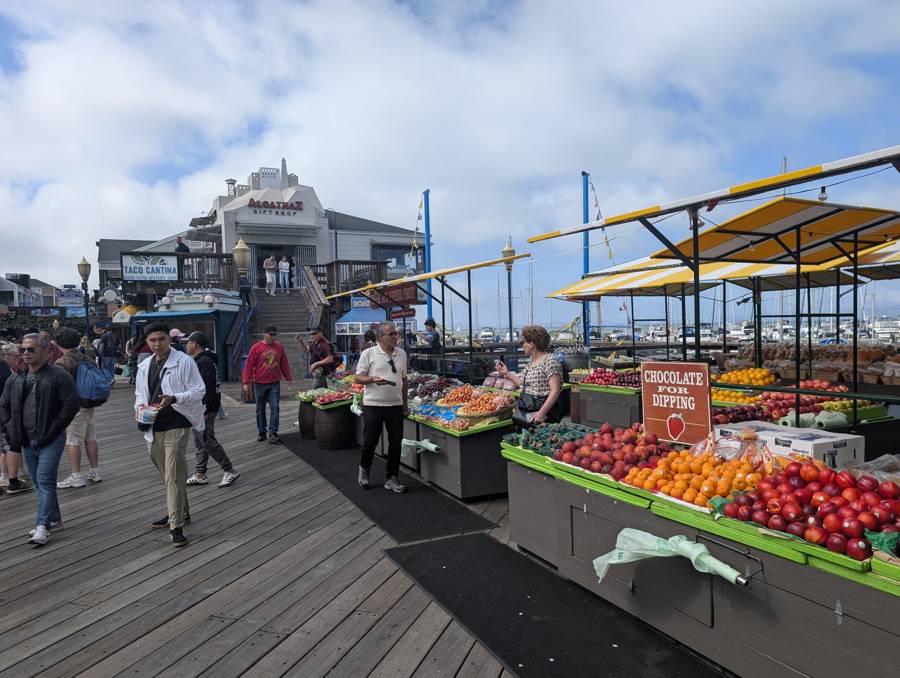
Along the Embarcadero, then BART to Oakland
By late afternoon we walked along the Embarcadero to the Ferry Building, where there is a metal mermaid sculpture on the plaza and a clock tower that looks exactly as tall as advertised. The light was good and the clouds were big and white.
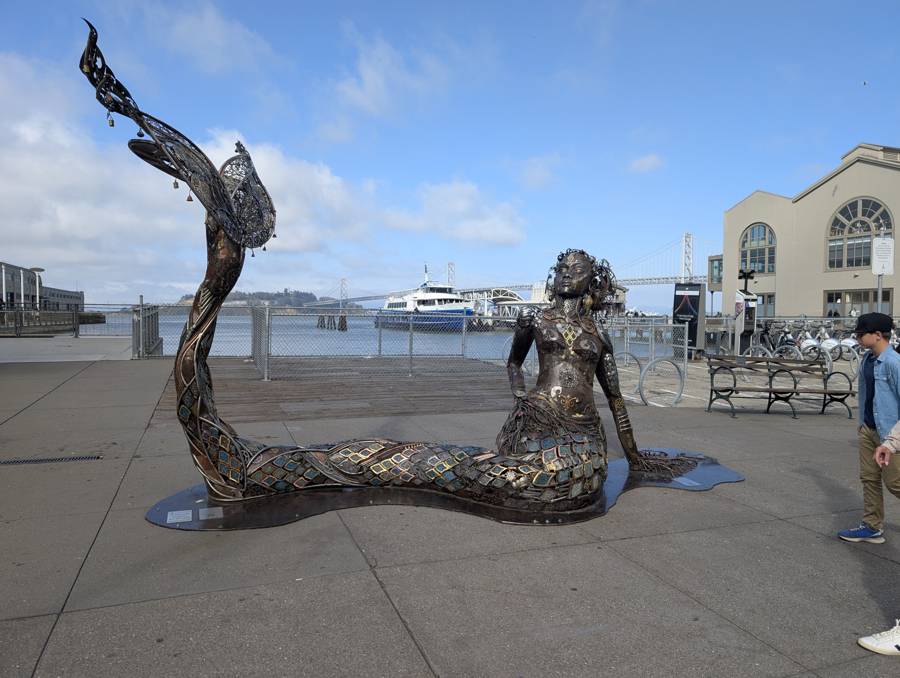
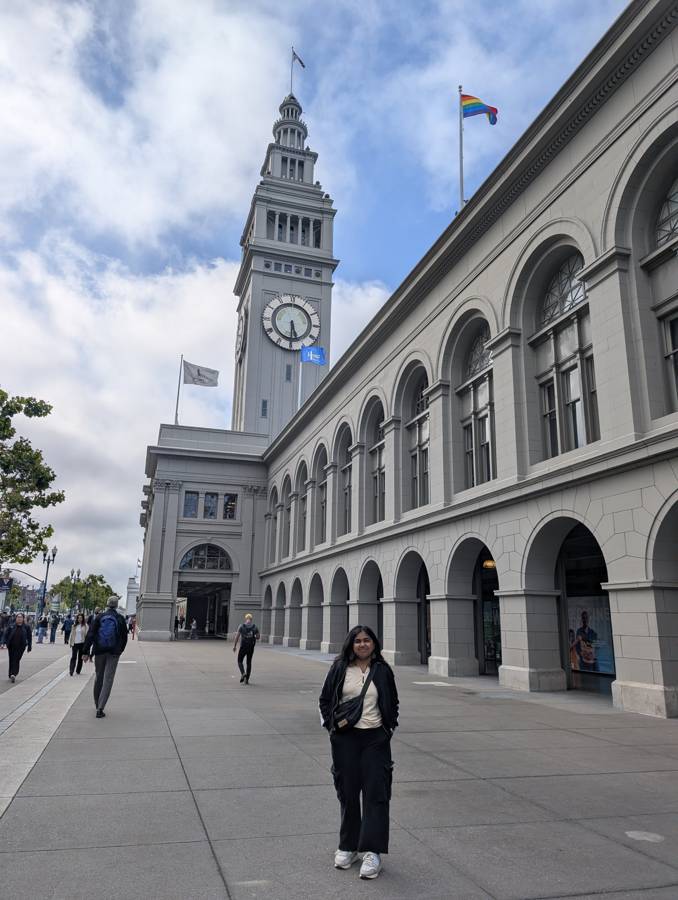
The clock tower is 245 feet (75 m) high and the building opened in 1898; each of its four clock faces is 22 feet across. The building came through the 1906 earthquake with little damage, and until the bridges opened in the 1930s it was the second-busiest transit terminal in the world, behind London’s Charing Cross. Designed by A. Page Brown. Source: Wikipedia.
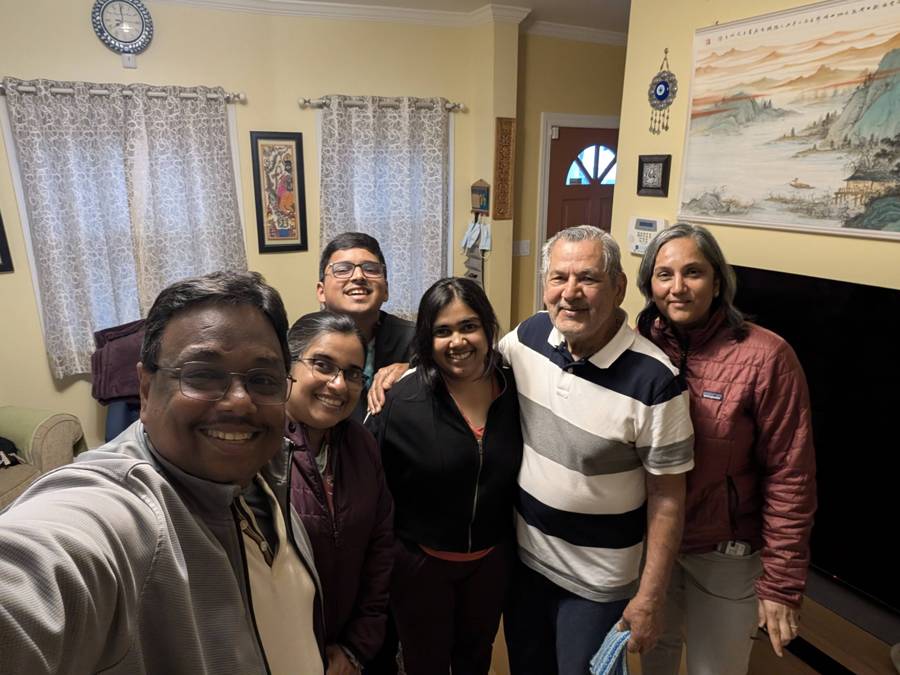
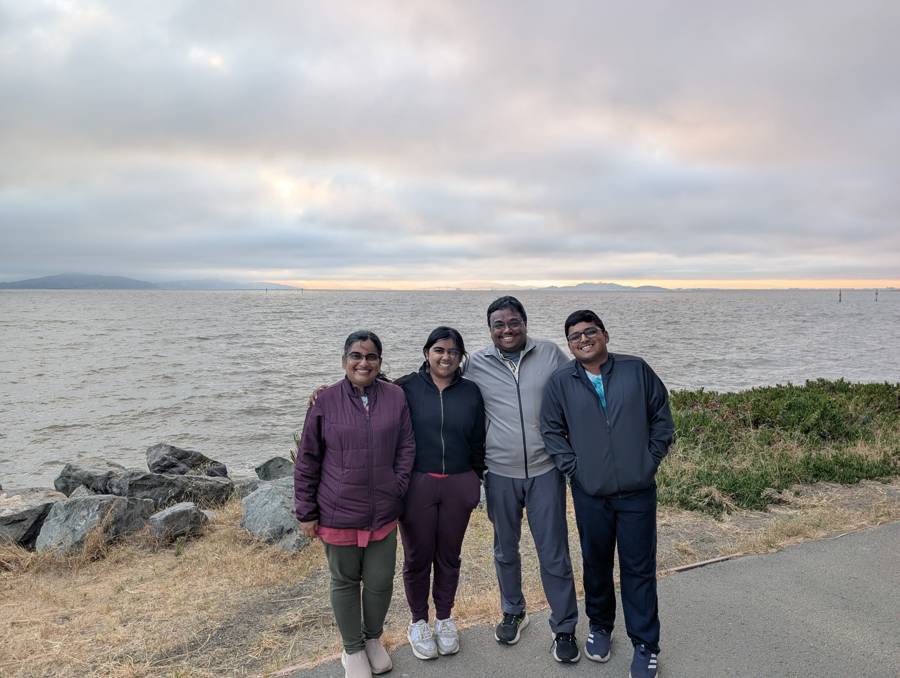
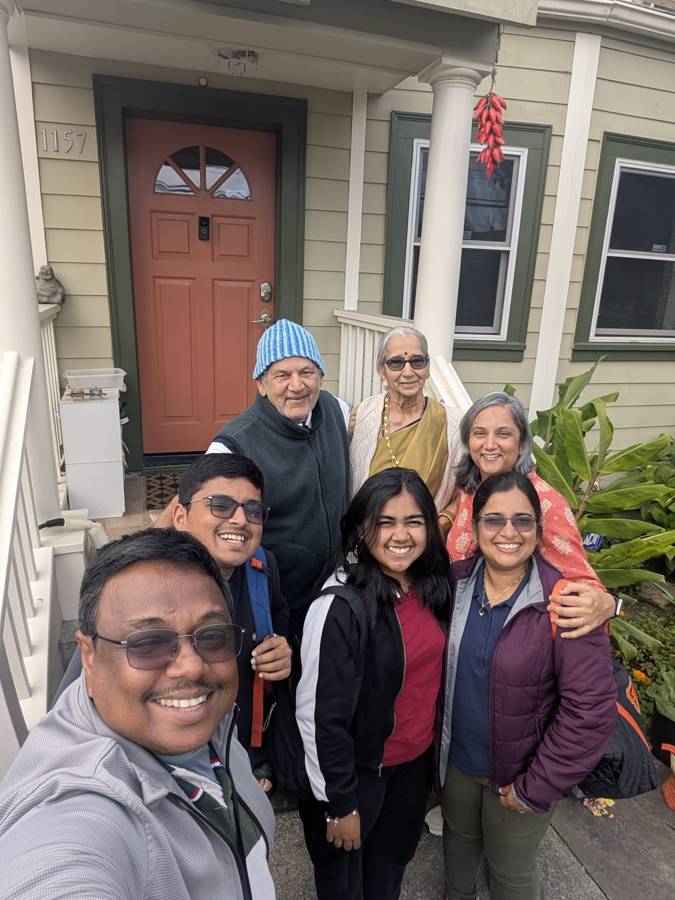
From the Embarcadero we took BART across the bay to Oakland, where one of our hosts was waiting at the station to pick us up. Our hosts were the family of a course mate of mine from the Indian Navy: his parents and his elder sister, who had kindly put us up for the night. The evening was spent at home with them. Before the light went we also went for a walk to the water, where the sky over the bay was pale and the sun was going down behind the clouds.
Day 2 · 18 June — An Open-Top Bus, a Foggy Bridge and a Steep Street
Goodbye to our hosts
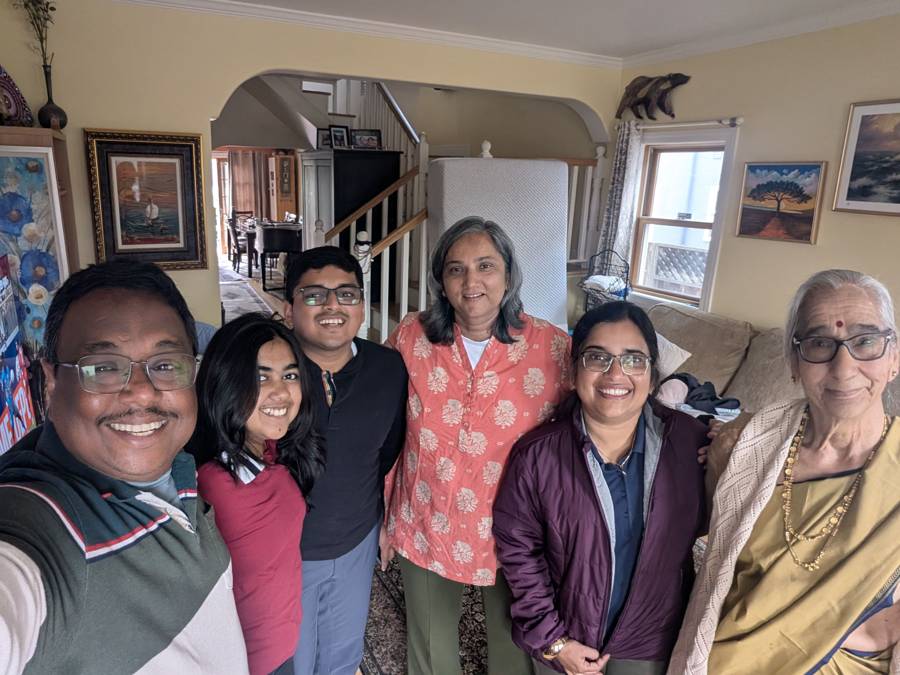
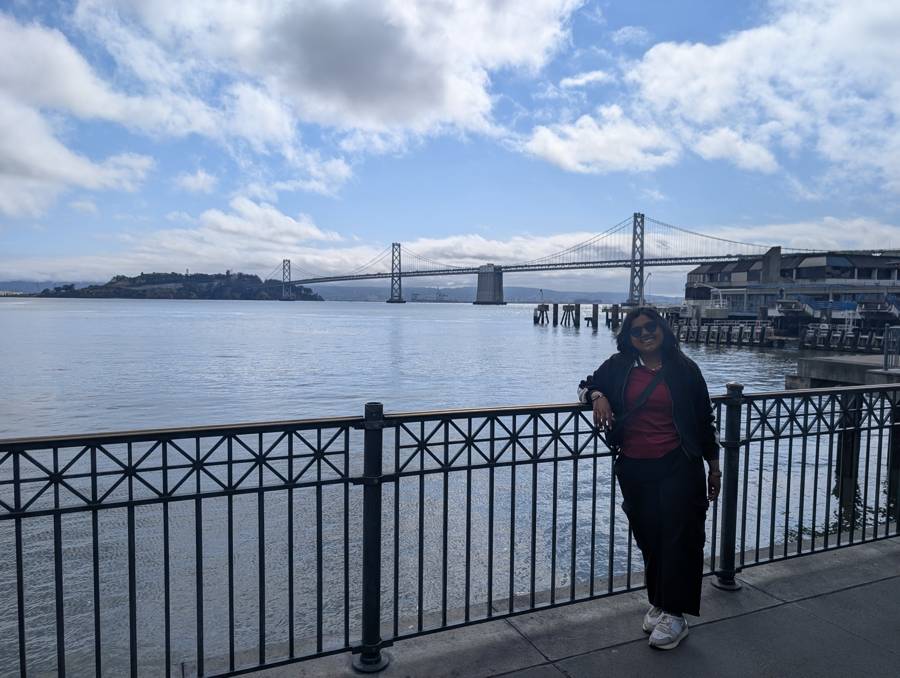
We said goodbye to my course mate’s parents and sister the next morning with a group selfie in the living room and another on the front step, and then took a bus to MacArthur station and BART back across the bay to the Embarcadero. At the waterfront there are photographs of our daughter on the Embarcadero and by the railing, with the Bay Bridge across the water under a sky of broken cloud.
The bus that was already paid for
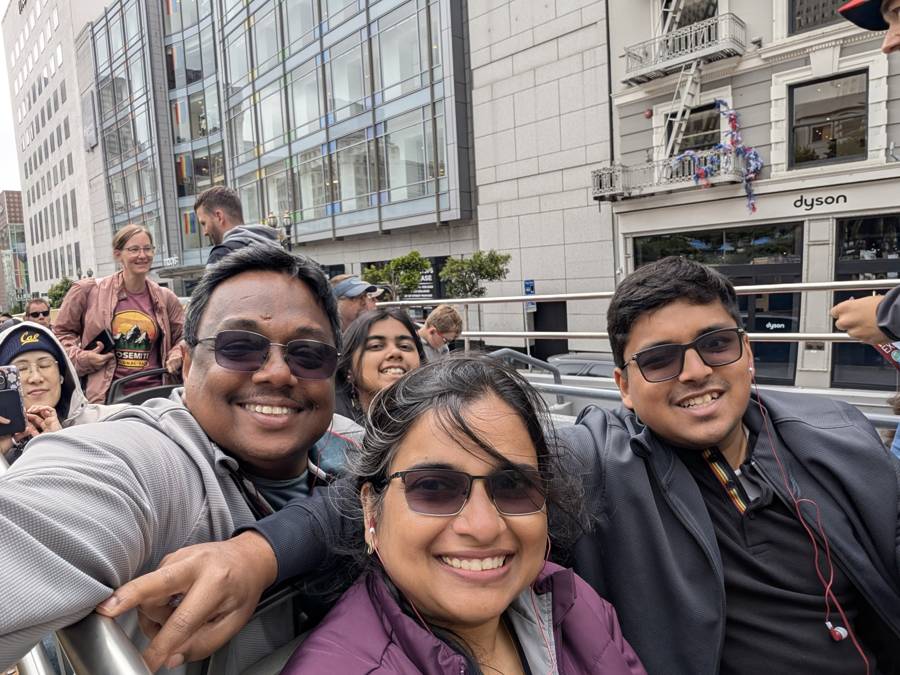
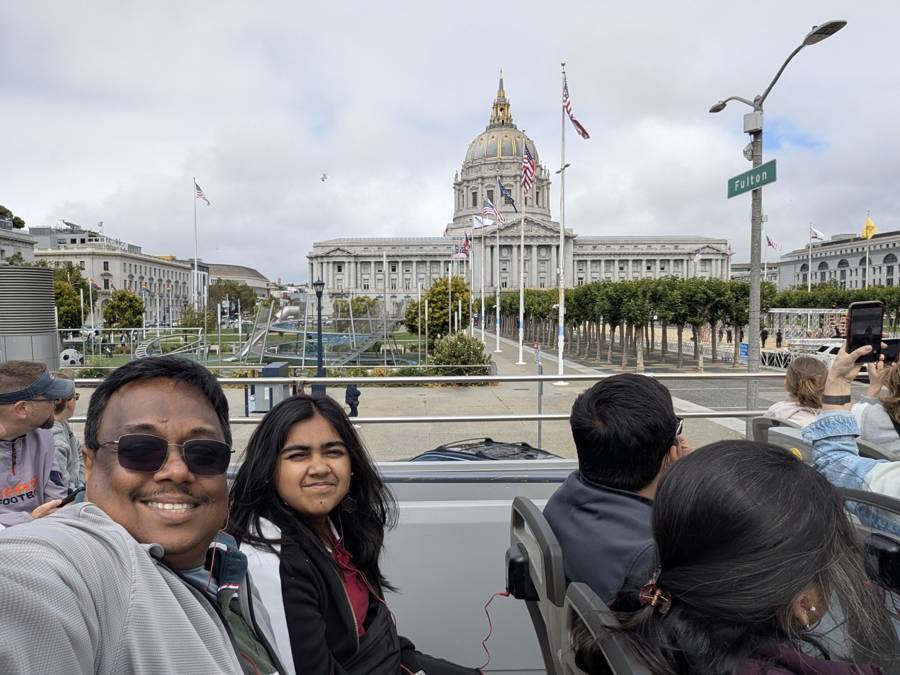
A sightseeing pass that was on offer covered the hop-on hop-off bus for two days, so we used it on the second day. We sat on the open top deck, which meant a morning of wind in the hair and selfies at every opportunity. The route took us through Union Square and past City Hall and its great dome, and on towards the Golden Gate Bridge.
The weather that had been so kind to us from the water the day before was less so from the road. By the time we reached the bridge, the fog had come in so thick that its far end had disappeared. At the welcome plaza we stopped for a few photographs, and then the bus took us across the bridge, with a tower just beside us and the grey all round. It was a good reminder of why the bridge is painted International Orange.
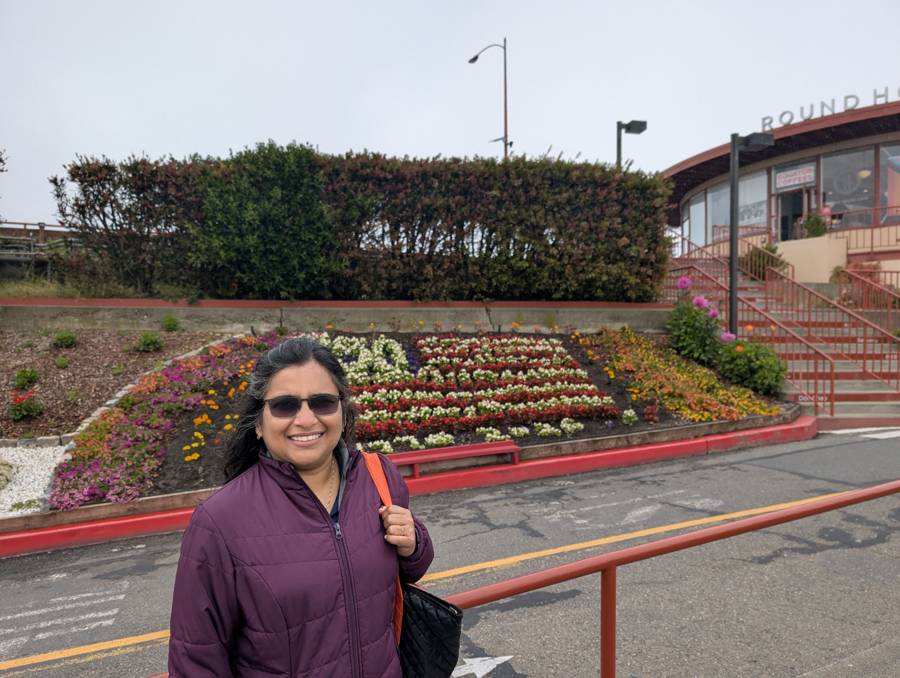
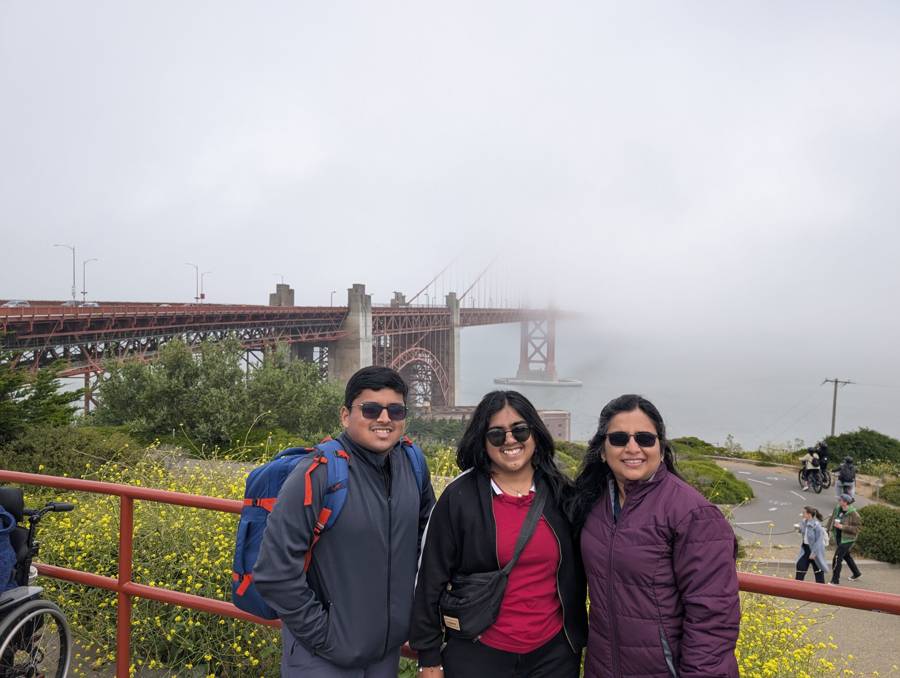
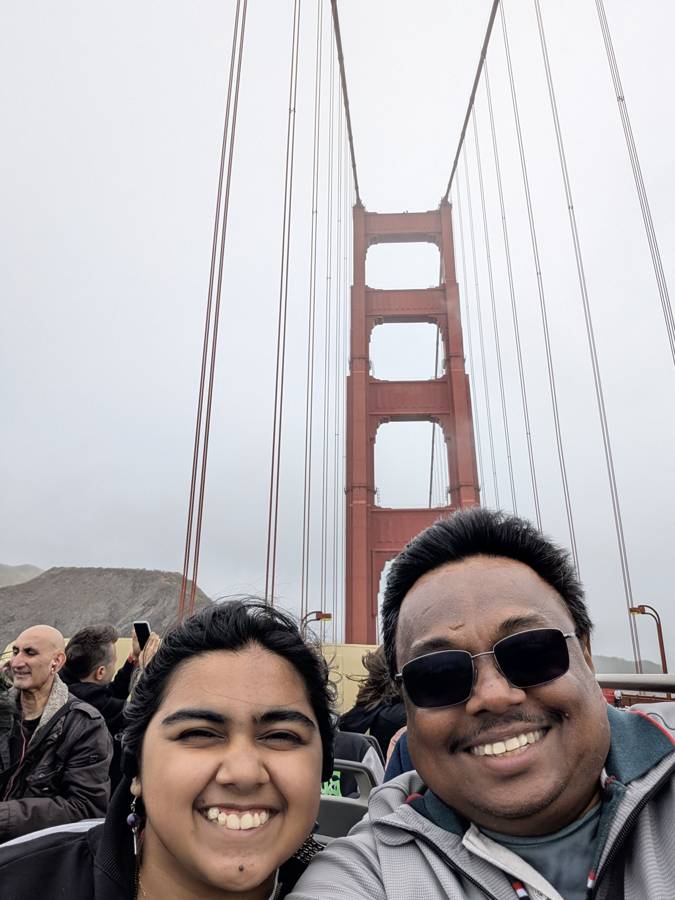
The Palace of Fine Arts
We got off at the Palace of Fine Arts, a rosy rotunda on a lagoon that is meant to look like a Roman ruin. There is a photograph of my wife and our son by the water and a four-person selfie, with the lagoon behind and the colonnade curving round it.
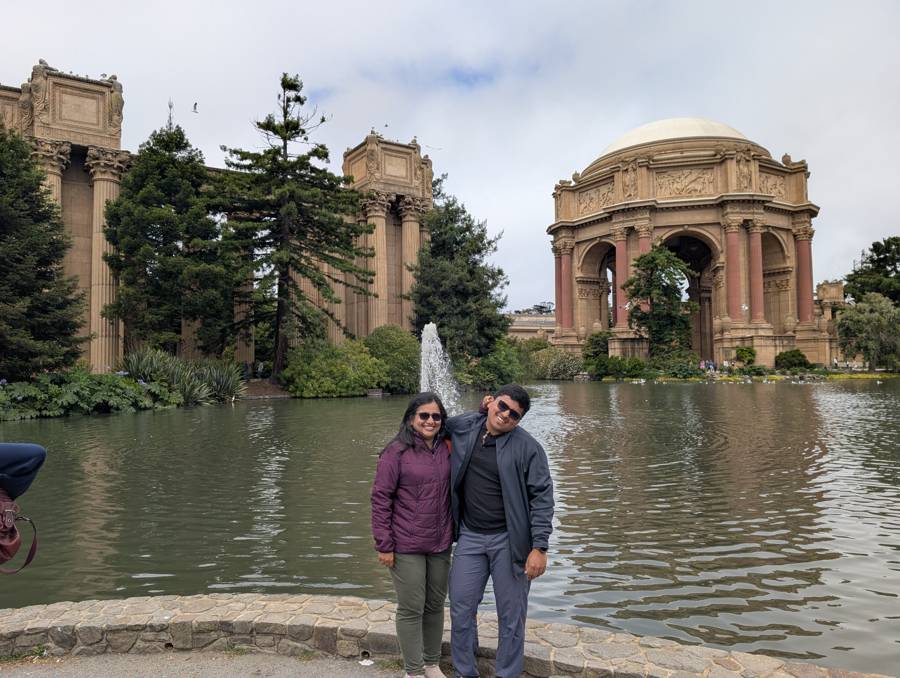
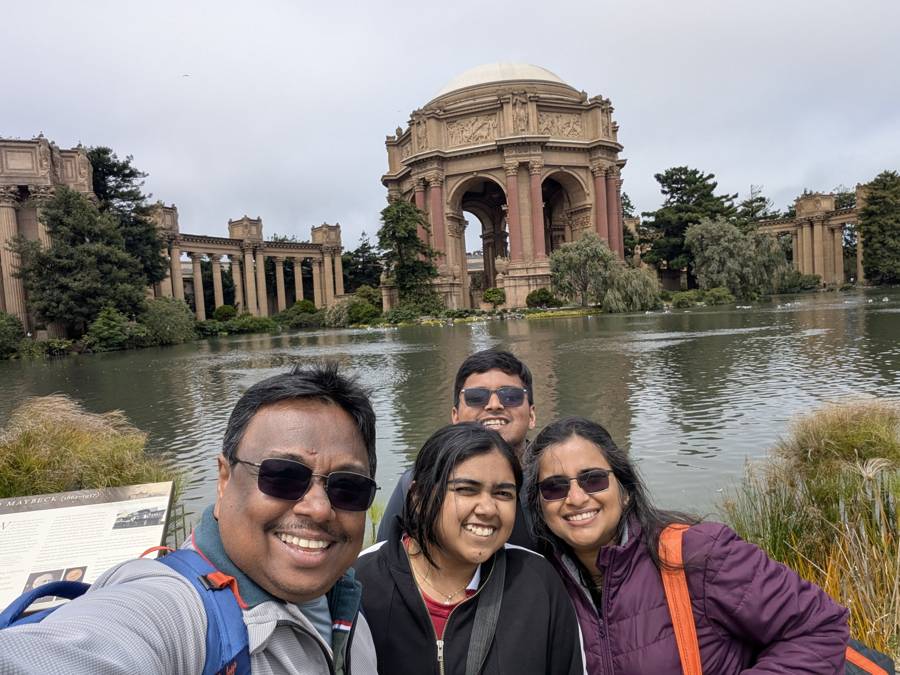
It was designed by Bernard Maybeck for the 1915 Panama–Pacific International Exposition. It was built of wood and a plaster-and-fibre mix, and by the 1950s it was crumbling, so it was rebuilt in permanent concrete between 1964 and 1974. The rotunda is 162 feet (49 m) tall, and the pergola around the lagoon is about 1,100 feet (340 m) long. Source: Wikipedia.
Lombard Street, on foot
From there we walked on towards Lombard Street, past steep blocks, and reached the famous crooked block on foot. It runs one-way, downhill, with eight sharp turns, because a straight road down that hill would be far too steep for a car. We took the photographs, admired the hydrangeas and left the driving down it to other people.
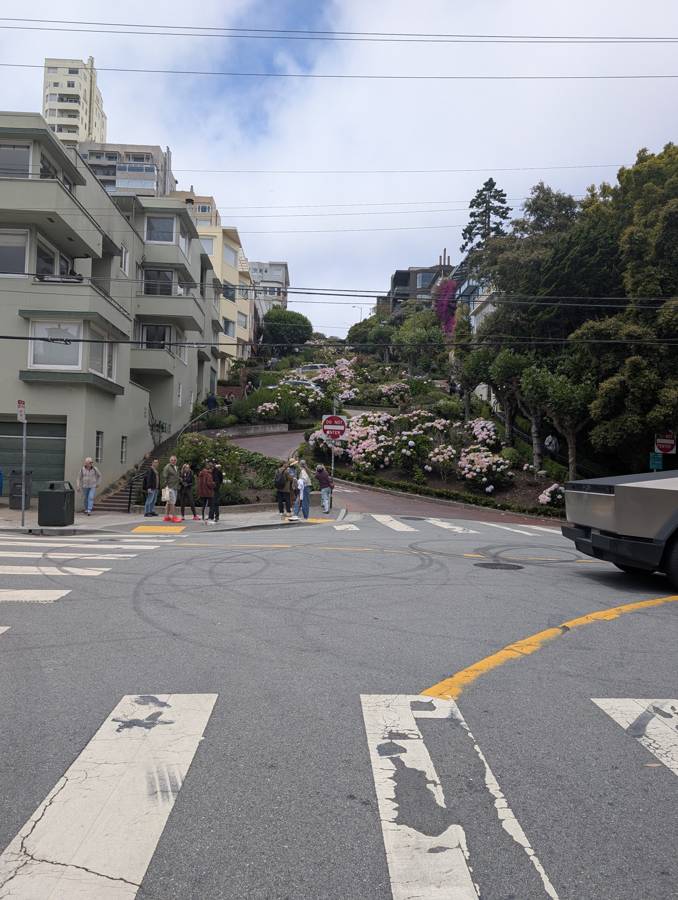
The crooked block is between Hyde and Leavenworth streets, on Russian Hill. It was built in 1922 to tame a natural grade of about 27 per cent, and it has eight hairpin turns. The suggested speed at the top is 5 mph (8 km/h), and it draws about two million visitors a year. Source: Wikipedia.
Chowder Hut, and home
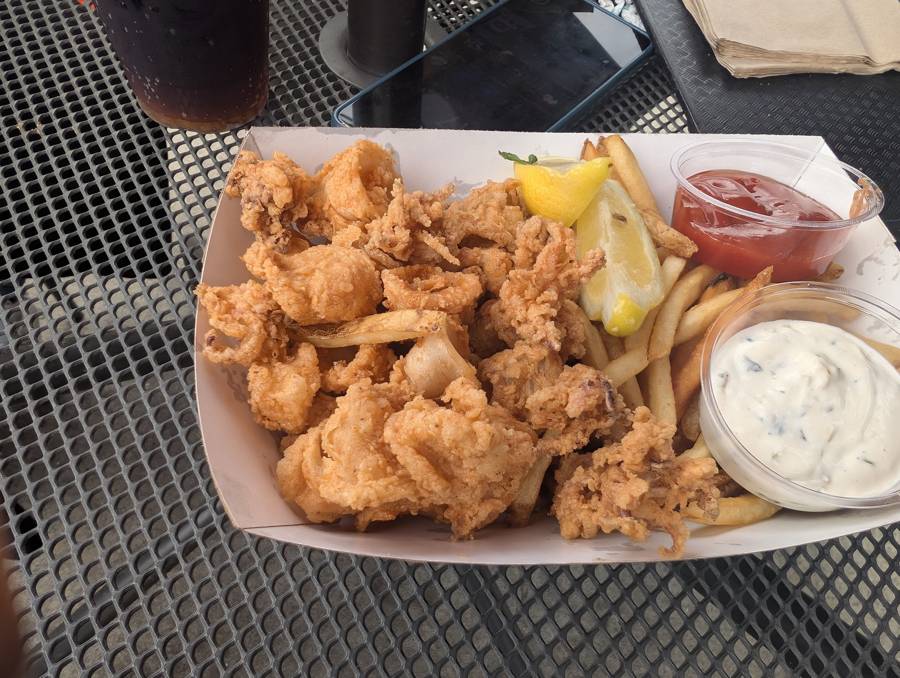
Lunch was at the Chowder Hut, back on the Wharf, with a paper boat of fried calamari and chips, and again, it was fantastic. After that we had done most of what we had come for, so we took Caltrain back to Sunnyvale in the afternoon, with a ride from the station to the house.
Plan versus what happened
Here is how the plan compared with what happened.
| Plan | What happened |
|---|---|
| SF Flyer and 7D | Not done |
| GoCar tour, the one-hour route | Done, two cars, no stops |
| Aquarium of the Bay | Done, mid-afternoon |
| USS Pampanito | Not done |
| Lunch at Pier 39 | Franciscan Crab Restaurant, on the Wharf |
| Bay cruise | Done, sunny and windy |
| Hop-on hop-off bus, first afternoon | Moved to the next morning |
| North Beach and Tony’s Pizza | Not done; lunch was at the Chowder Hut |
| Lombard Street | Done, on foot |
| Golden Gate Park and Haight-Ashbury | Not done |
The verdict
By the time we got to San Francisco we were tired. A month of the United States, with twelve days of that in a motorhome, had left a mark, and our tiredness was apparent in the photographs. By each evening we wanted to go back. That is a point in the city’s favour: we were nearly out of energy, and it still gave us two good days.
San Francisco is a city that is hard to compare with anywhere else we went. The sights are unusual, the food was very good, and the feel of the place — the fog, the water, the old trams rattling down Market Street — is its own. It was the right place to end the big sightseeing of the trip.
What it cost
The spending for the two days, in US dollars. The sightseeing pass was paid for in advance, so it is shown separately.
17 June — Fisherman’s Wharf day
| Category | Detail | $ |
|---|---|---|
| Transport | Caltrain to San Francisco (family) | 27 |
| Transport | BART / Clipper fares | 12 |
| Food | Biscoff Coffee Corner | 20 |
| Food | Candy Baron SF | 9 |
| Food | Wharf Central | 9 |
| Food | Franciscan Crab — lunch | 77 |
| Grocery | Village Market SF | 18 |
| Attraction | Red & White Fleet ferry | 3 |
| Total, 17 June | 175 | |
18 June — return day
| Category | Detail | $ |
|---|---|---|
| Transport | BART / Clipper fares (return) | 19 |
| Food | Chowder Hut at Boudin — lunch | 64 |
| Transport | Caltrain, San Francisco to Sunnyvale area | 27 |
| Transport | Uber × 2 | 27 |
| Total, 18 June | 137 | |
San Francisco, grand total
| Item | $ |
|---|---|
| Spent on the road, 17 June | 175 |
| Spent on the road, 18 June | 137 |
| Pre-paid SFO day pass | 414 |
| Grand total, San Francisco | 726 |