Ancient Egypt has been writing about itself for five thousand years, mostly on walls, so a travel blog is a modest addition to the record. The places, the photographs and the facts here are real, and every number was checked against a source. The jokes are ours, and the pharaohs are in no position to object.
The briefing
This was a group tour: thirteen of us from five families, one itinerary, one tour operator and one very large pile of luggage. Four of us were the Bose family, and the others were the Puraniks, the Malanis, the Majumdars, and Anisha and Angad. Two of the families flew in through Kuwait, so the group assembled in Cairo in instalments, like a pharaonic jigsaw that arrives from several quarries.
The plan ran in a neat line down the Nile. We would start at the Pyramids and the new Grand Egyptian Museum, fly south to Aswan, work our way north by road through the temples to Luxor, take a day on the Red Sea, and finish with the Cairo of sultans and saints. That is roughly four thousand years of history, tidied into ten days with breakfast included.
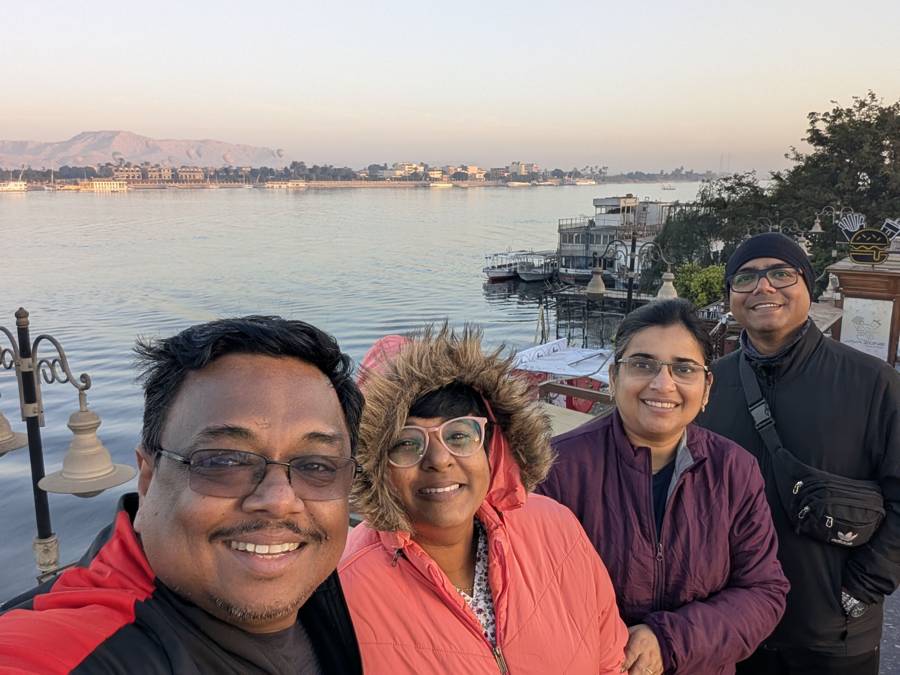
One thing you will notice early is the clothing. This is Egypt in winter. There were jackets on the hotel roof at dawn, hoods up beside the river in Luxor, and a surprising number of puffer jackets in the land of the sun god. The days are also short: from Giza to Luxor the sun was up for about ten and a half hours, which is a lot less than the long American days of the RV trip, and it clocked off well before dinner every evening.
Day 1: Friday 26 December. Delhi to Cairo, a little late
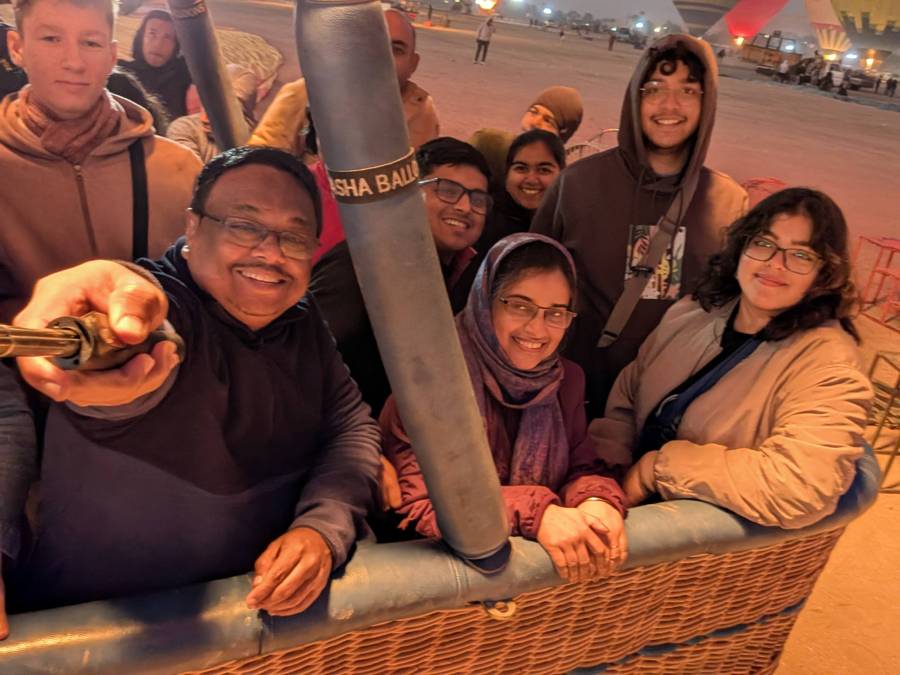
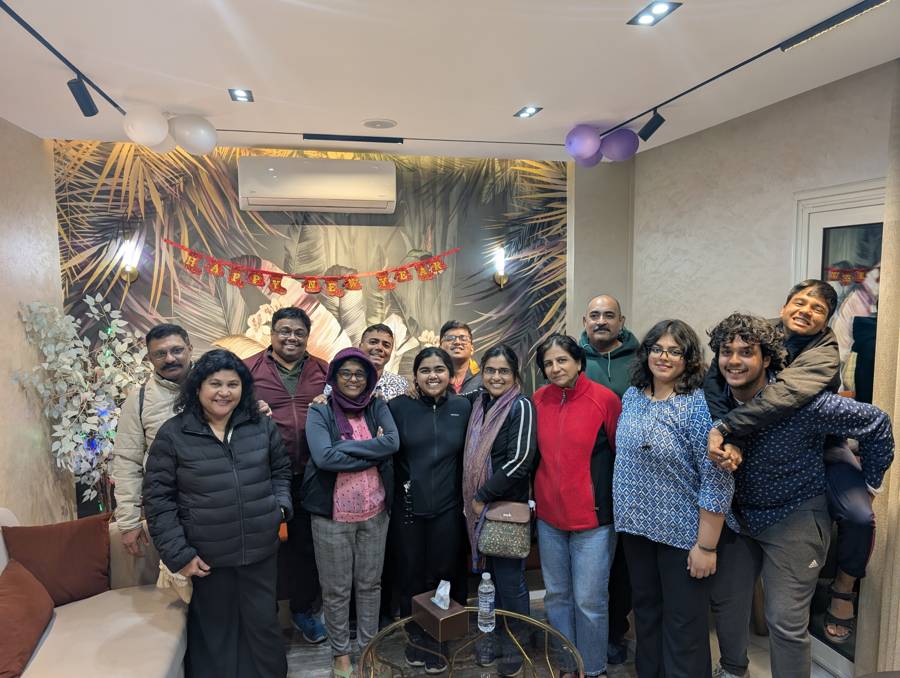
We left Delhi under a very large Christmas tree and boarded a flight that behaved like a pharaoh: it left when it was ready. Cairo is three and a half hours behind Delhi in winter, so we gained the time back on paper and gave it straight to the delay on the ground. By the time we posed under the aircraft the light had gone, and we wore the sort of smiles that say we have finally arrived.
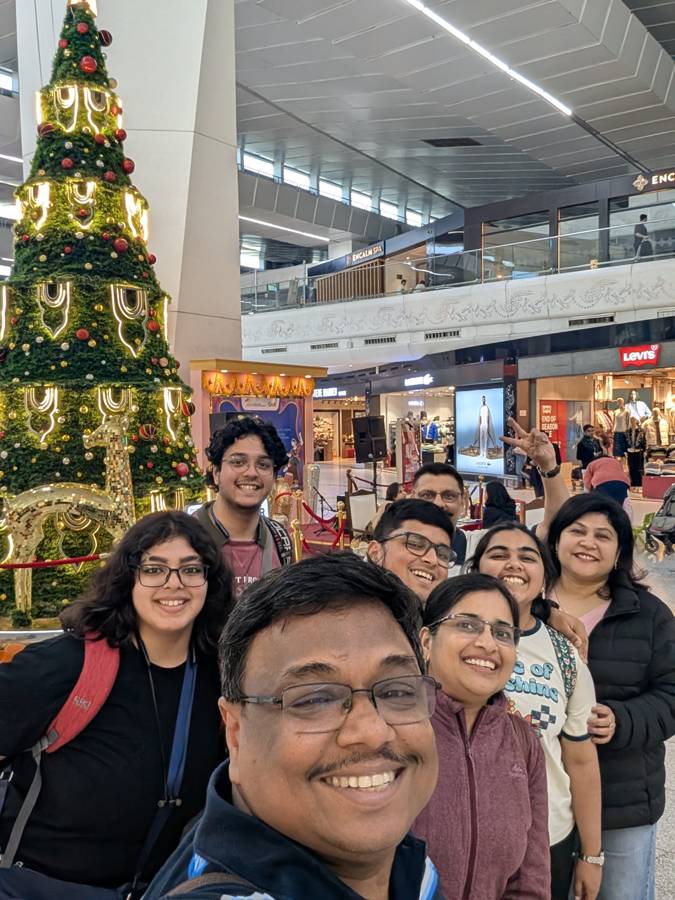
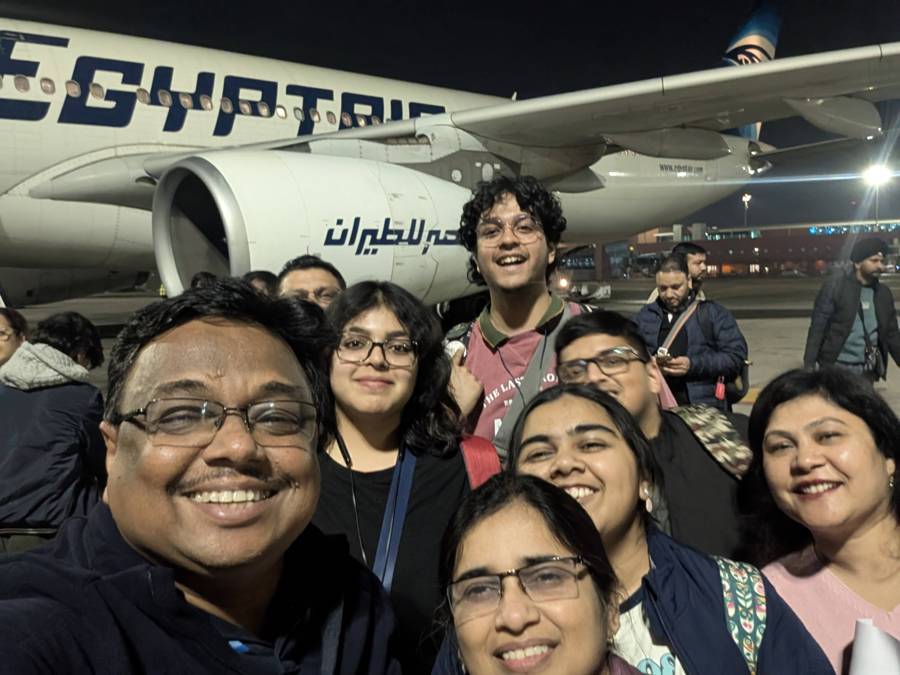
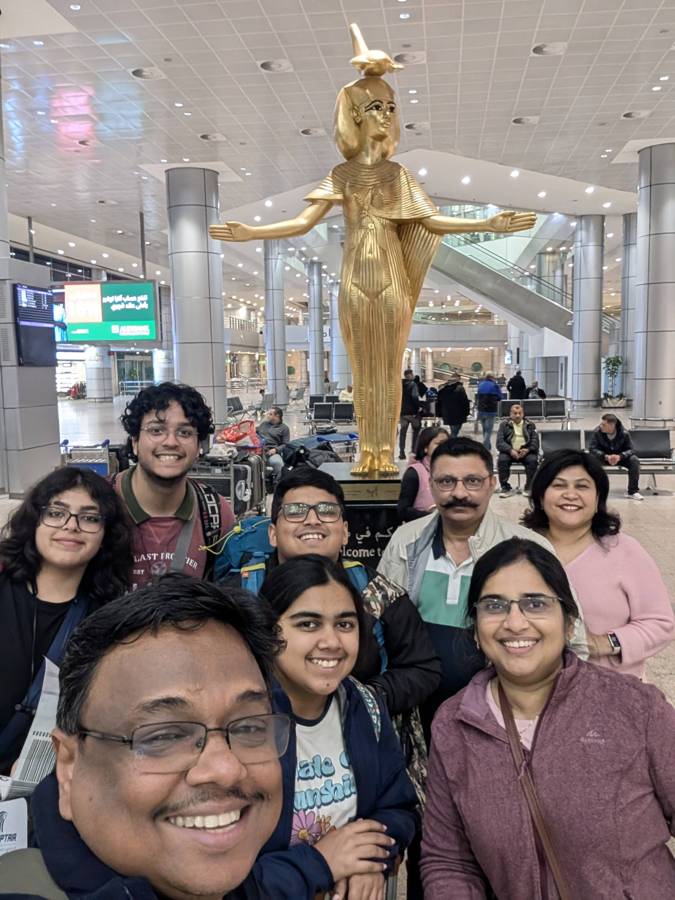
The tour’s local representative met us at immigration, and we were driven to the Sahara Pyramids Inn in Giza for the first of two nights. After a long day we settled in at the hotel cafe, with the Pyramids somewhere out there in the dark, waiting to be seen.
Day 2: Saturday 27 December. A museum, a pyramid and a boat
Sunrise from the roof
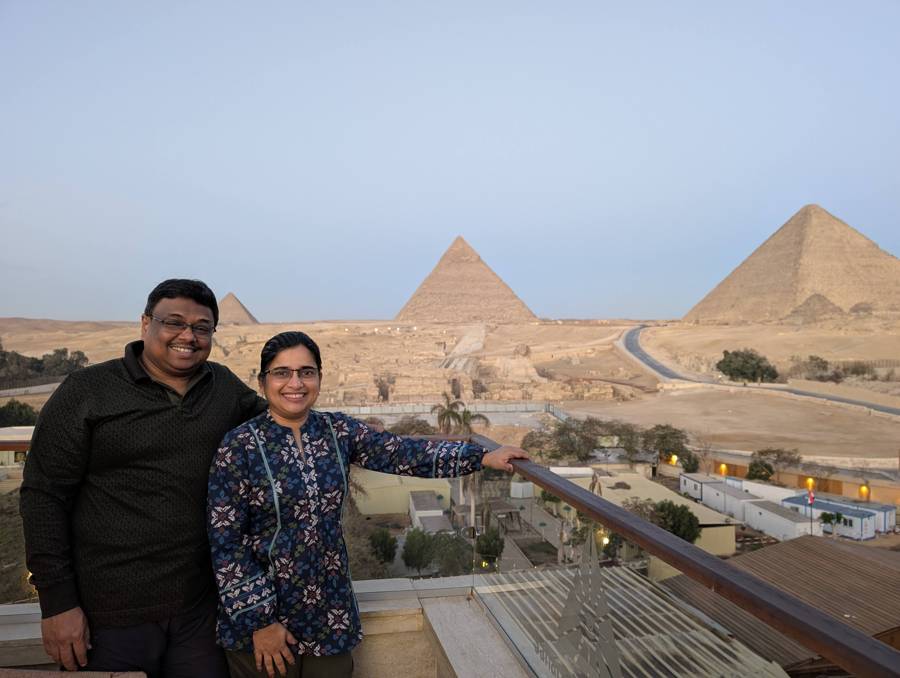
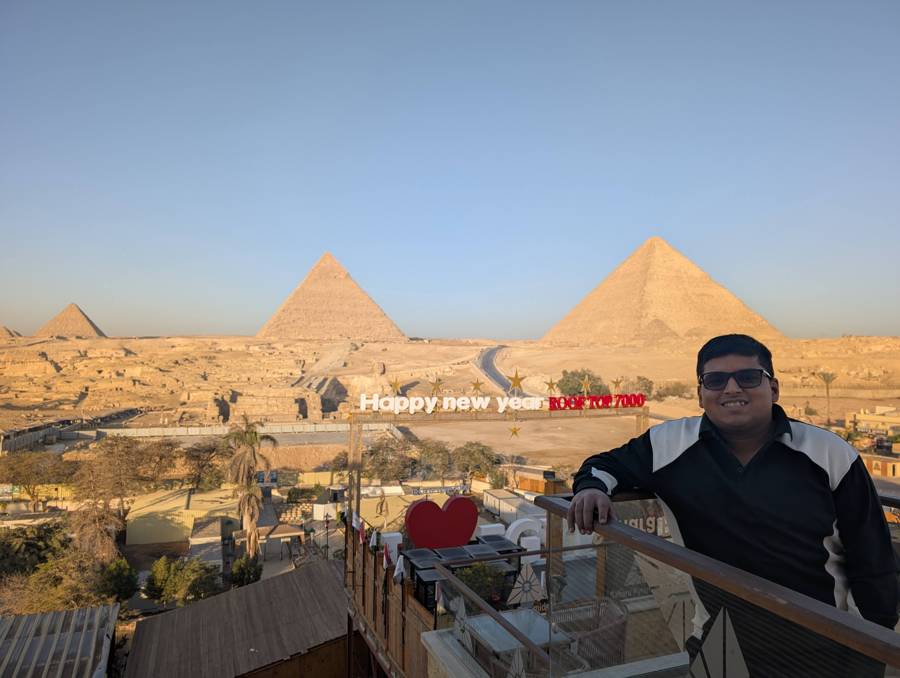
The hotel roof had one great selling point, which was the Pyramids, and we went up before the sun did. In the pale first light the Great Pyramid and its neighbours stood in a row on the desert edge, with the city of Giza crowding right up to their feet. Jackets were definitely needed.
The Grand Egyptian Museum
The morning belonged to the Grand Egyptian Museum, which is a mere two kilometres from the Pyramids and is rather more recent. It took about two decades to finish, which makes the Great Pyramid, built in roughly twenty-six years, look like a masterclass in project management. By the time we arrived it had been fully open for less than two months, and it showed in two ways: everything gleamed, and everyone in Egypt seemed to be there.
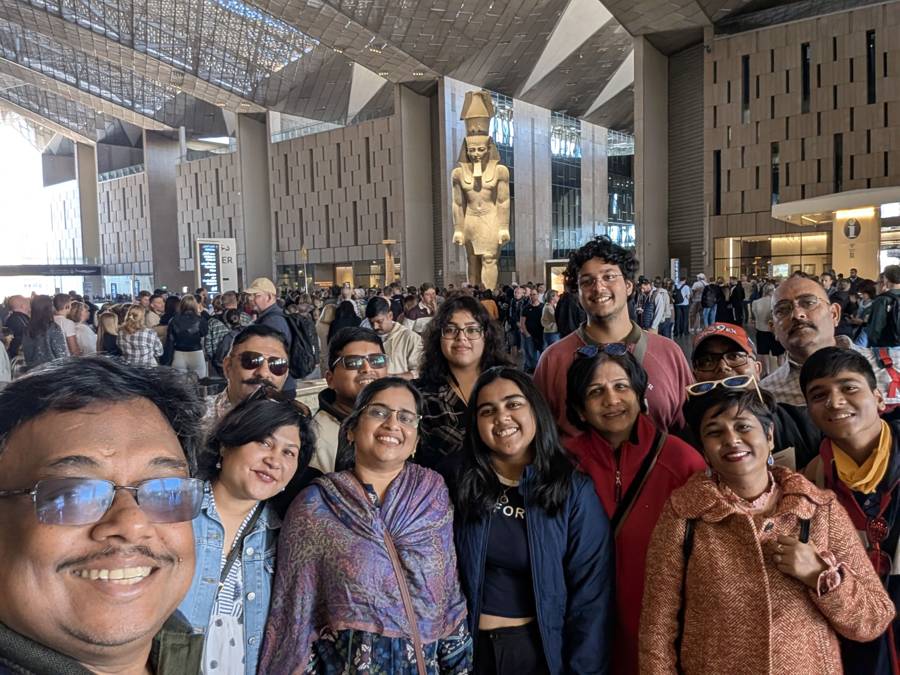
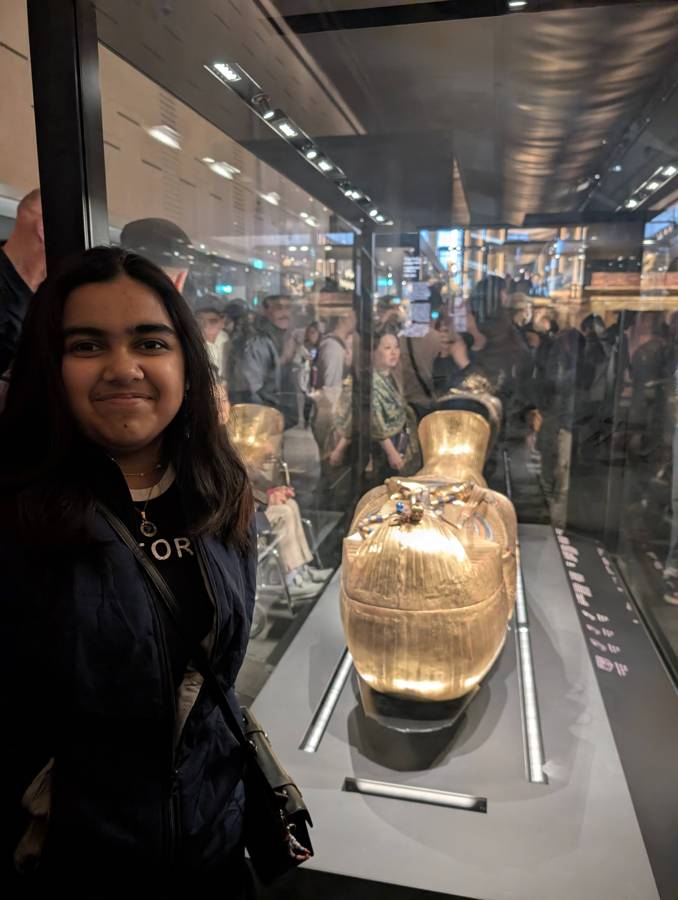
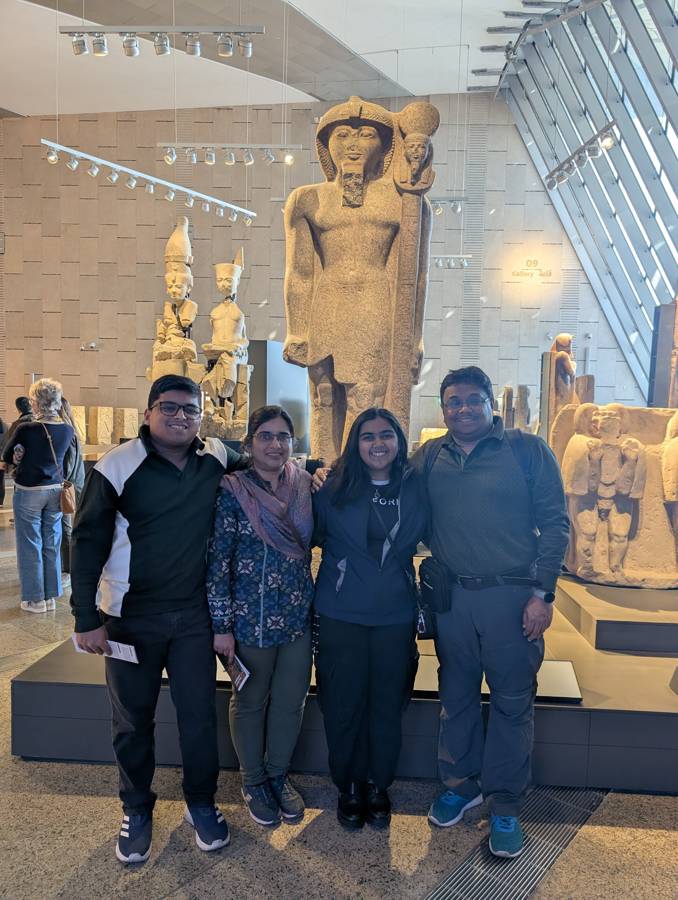
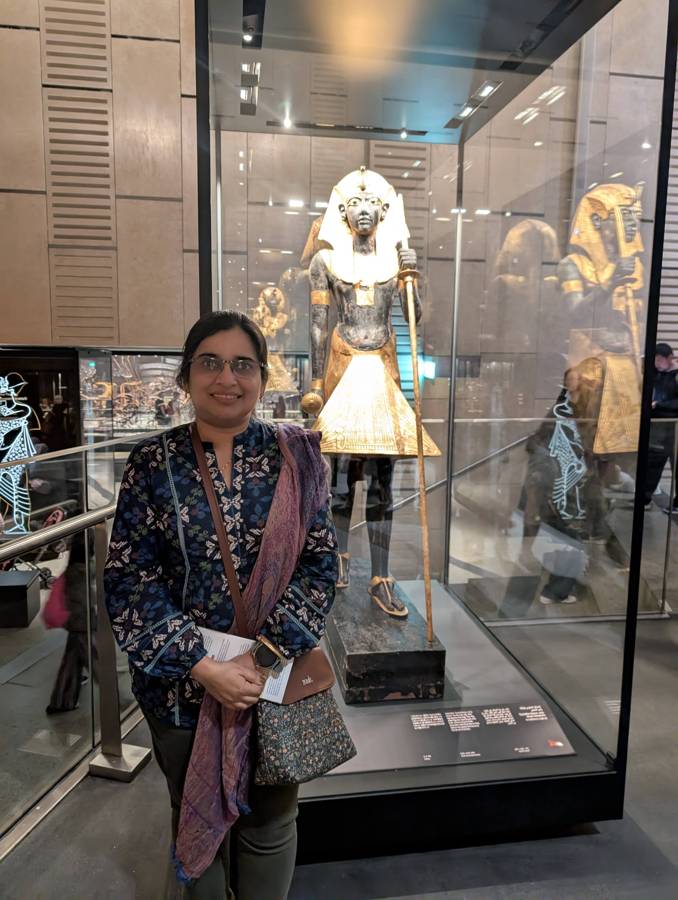
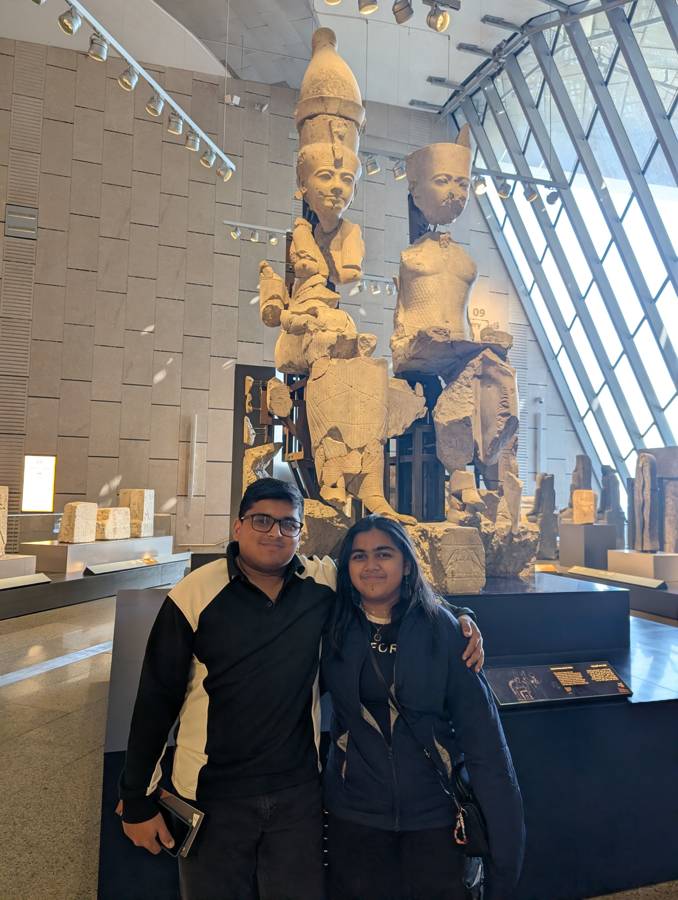
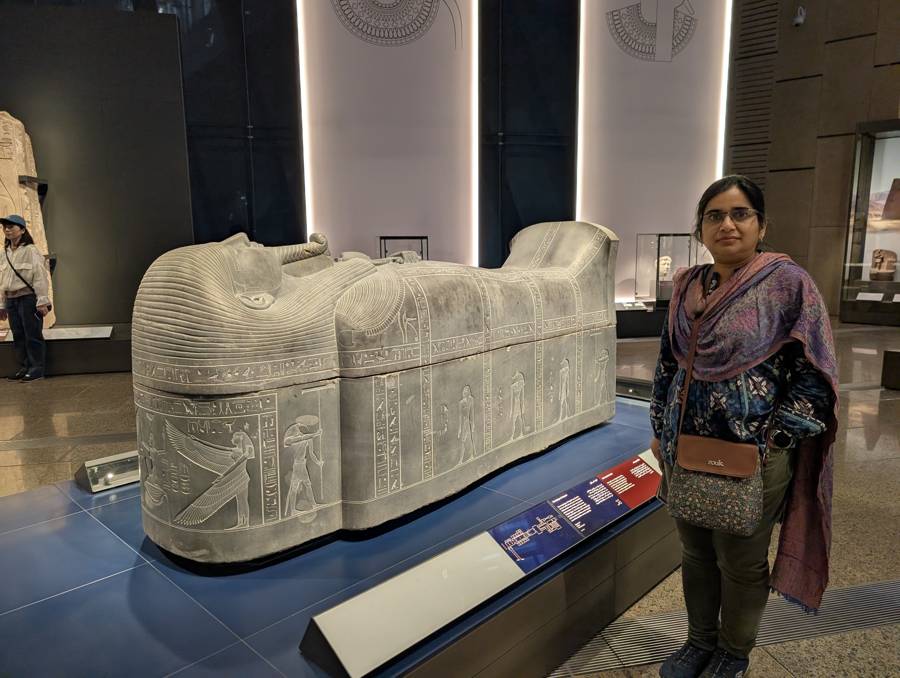
- Officially opened in full on 1 November 2025, after years of postponed dates. A trial opening for about 4,000 visitors came in October 2024.
- Cost: about $1.2 billion. Construction began in 2005, and the design competition was won by Heneghan Peng Architects in 2003.
- The Tutankhamun collection runs to 5,398 pieces, shown in two halls.
- The colossus of Ramesses II in the Grand Hall is 11 m tall and weighs 83 tonnes.
- The Grand Staircase is six storeys high and carries more than 60 artefacts up towards a terrace with views of the Pyramids.
Figures from the museum’s Wikipedia entry, which gives its sources.
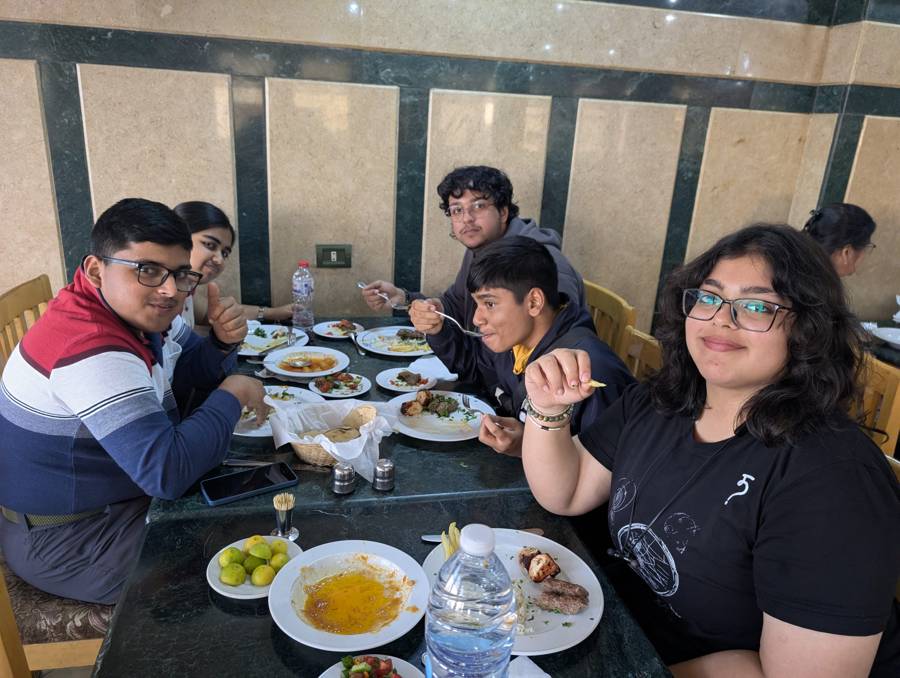
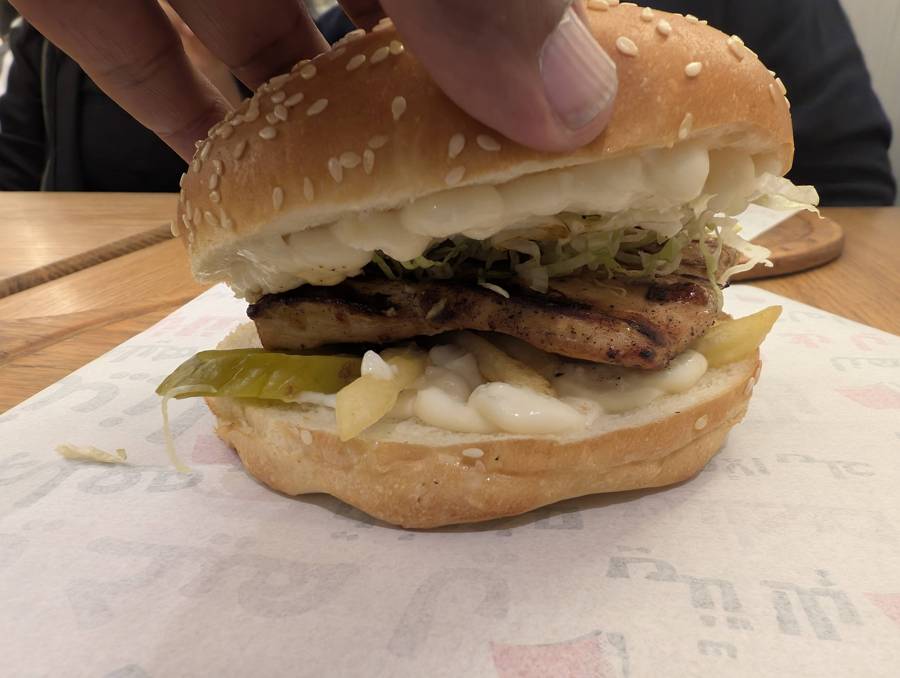
Lunch was wraps and chips, a small and delicious reminder that a country is more than its antiquities, and then it was time for the main event.
The Pyramids and the Sphinx
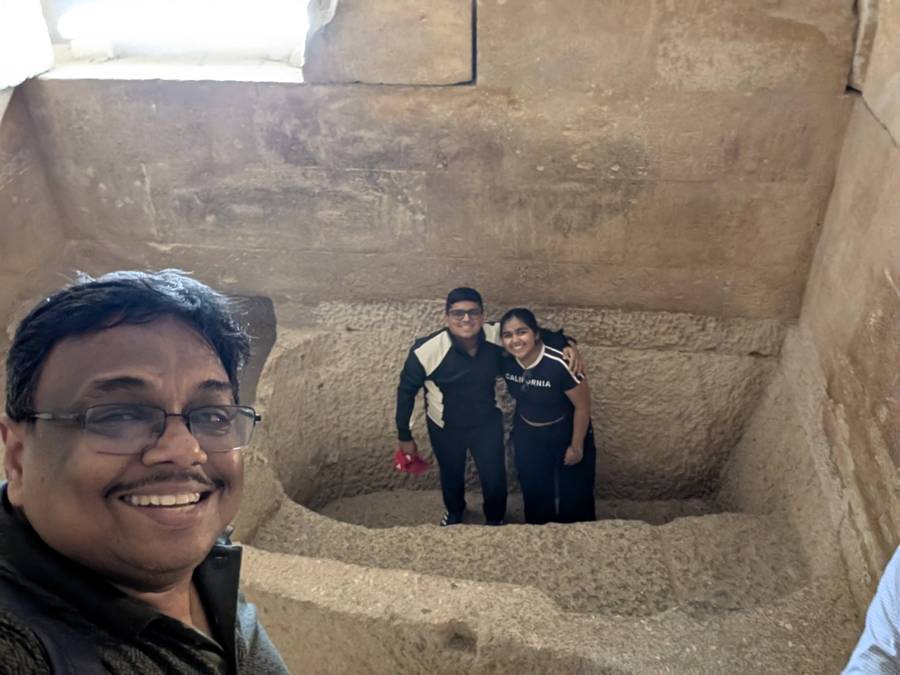
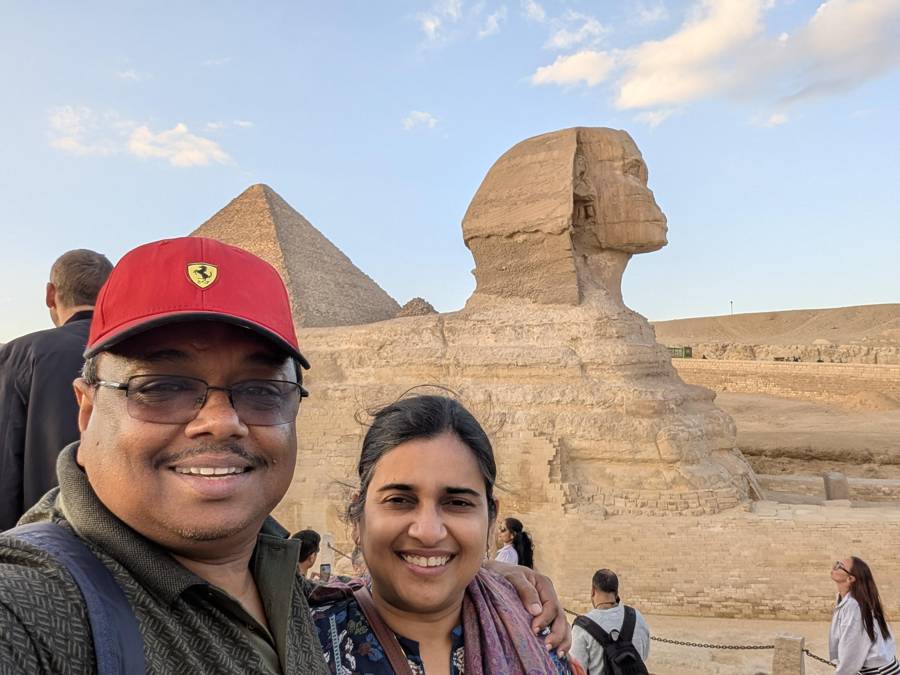
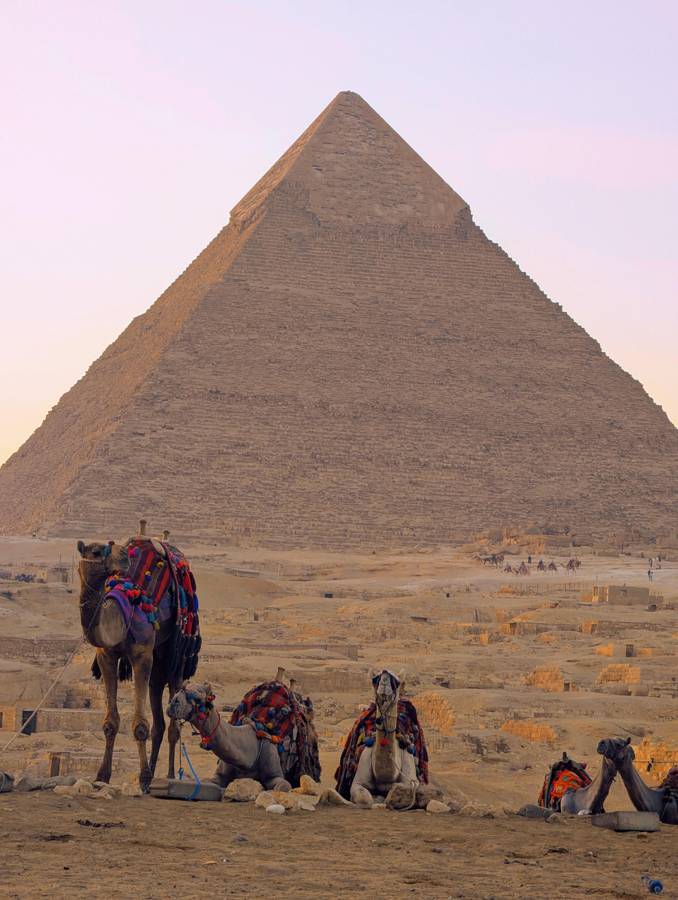
The Great Pyramid is the oldest and largest of the three at Giza, and it is built from an estimated 2.3 million blocks. It was the tallest man-made structure on Earth for over 3,700 years, until medieval cathedral builders got ambitious. Up close, the thing that strikes you is the blocks themselves, rising in courses that look like a staircase for a giant who has lost interest.
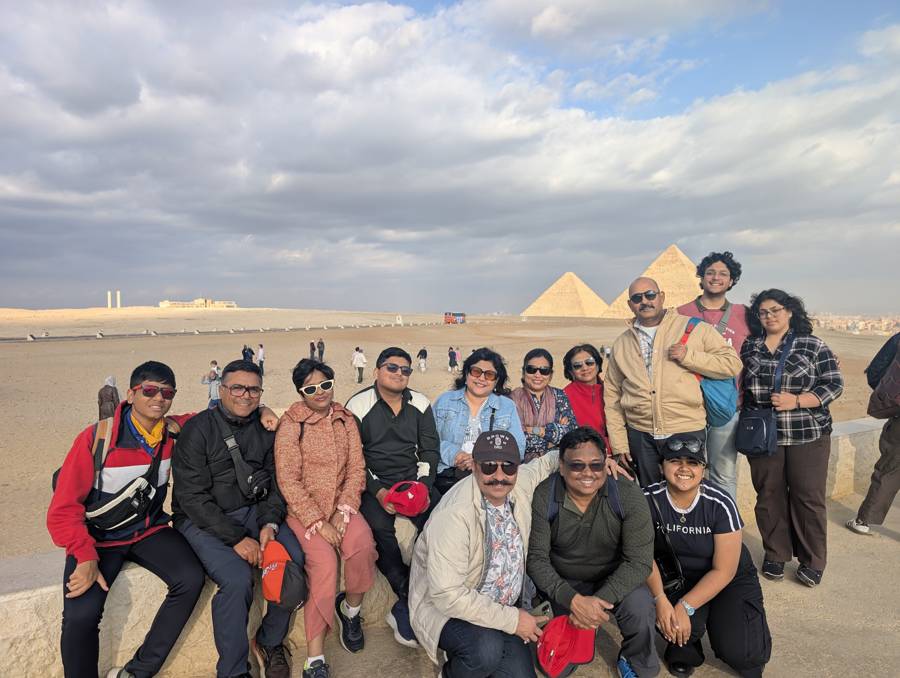
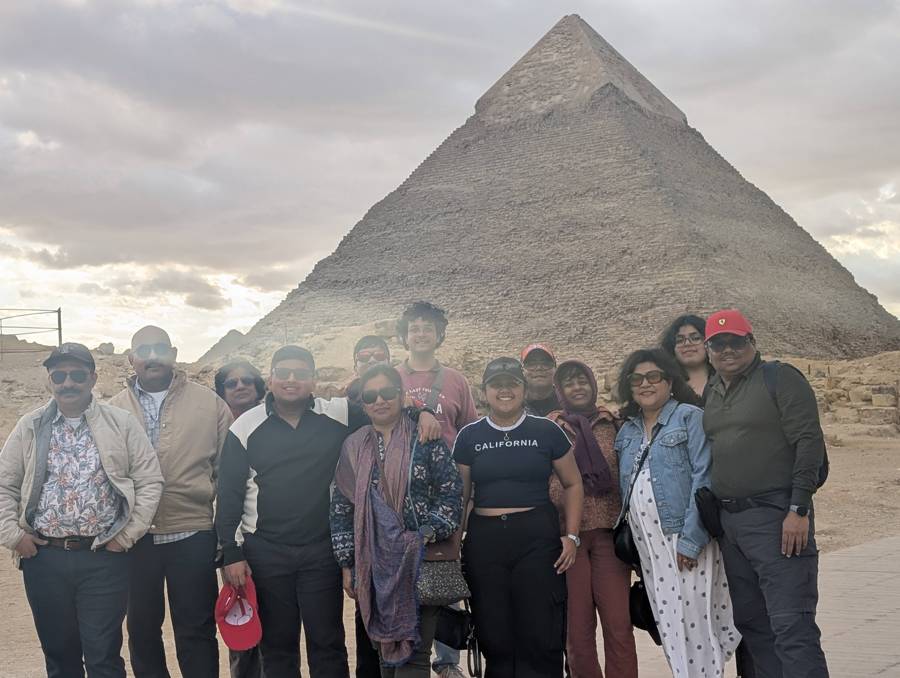
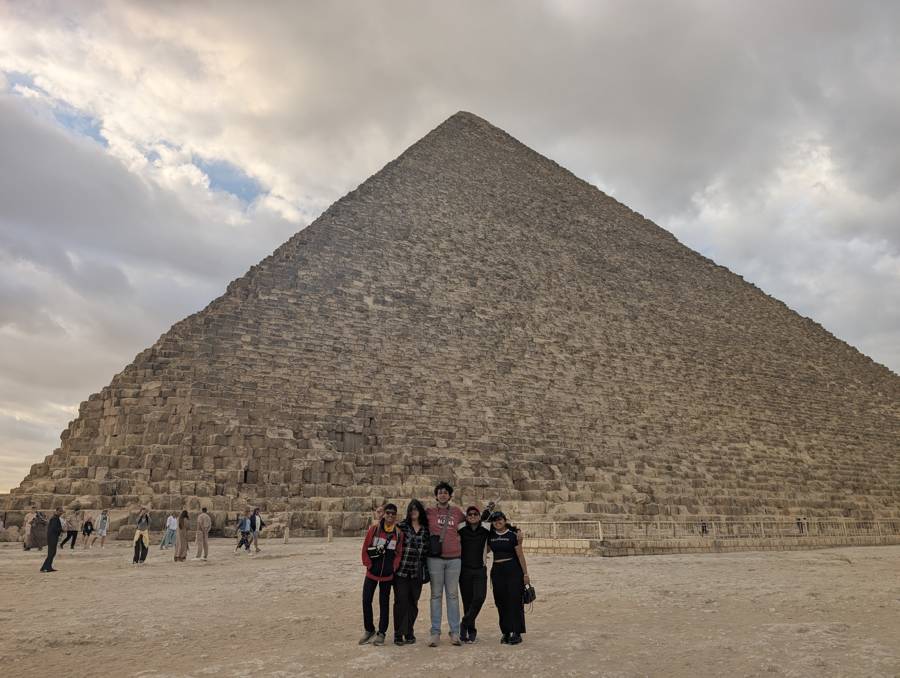
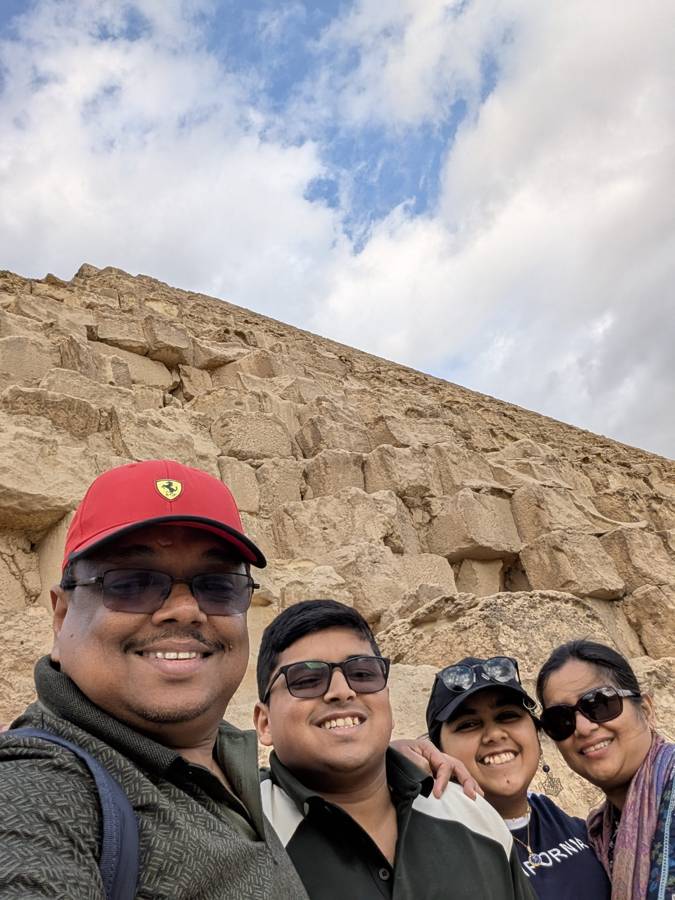
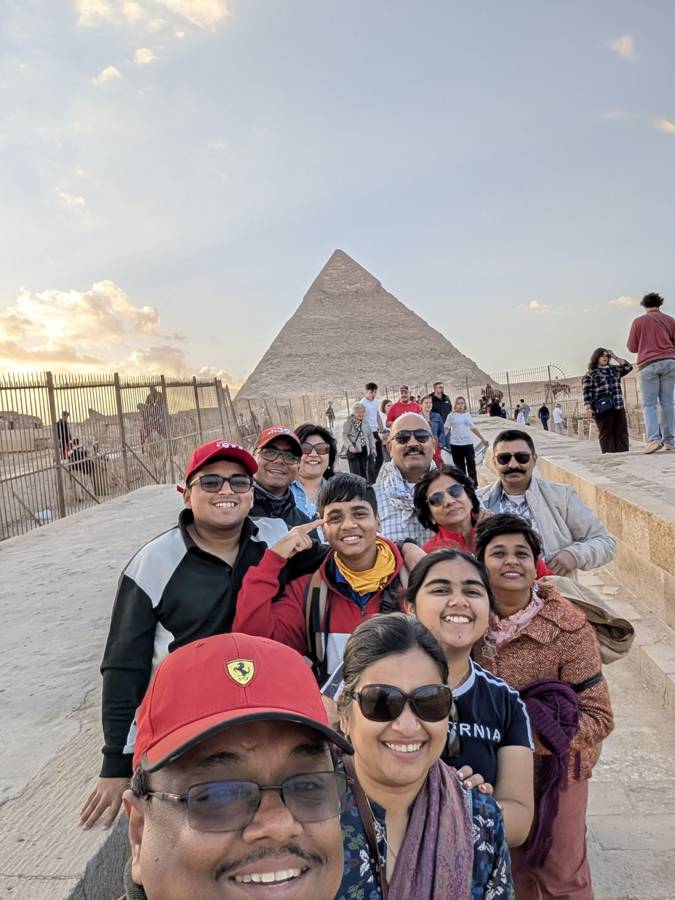
- The Great Pyramid was built for Khufu of the Fourth Dynasty, around 2600 BC, over about 26 years.
- Original height 146.6 m, now 138.5 m after losing its top and casing. The base side is about 230 m.
- The Sphinx is 73 m long and 20 m high and was carved out of the bedrock of the plateau. Scholars attribute it to Khufu or to his son Khafre, and there is no agreement.
- The missing nose is not Napoleon’s doing. That story is a myth, and the nose was already recorded as damaged by the 10th century.
- Thutmose IV cleared the sand from the Sphinx’s paws around 1400 BC and recorded the job on a granite stele, after the Sphinx appeared to him in a dream.
Dimensions and dates from Wikipedia’s entries on the Great Pyramid and the Great Sphinx.
The Nile, with dinner
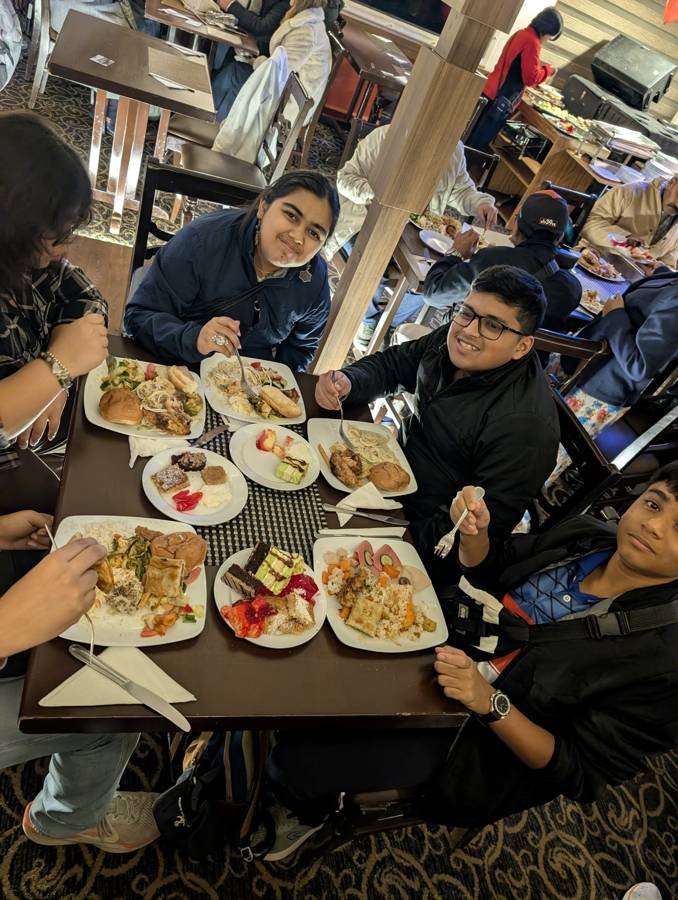
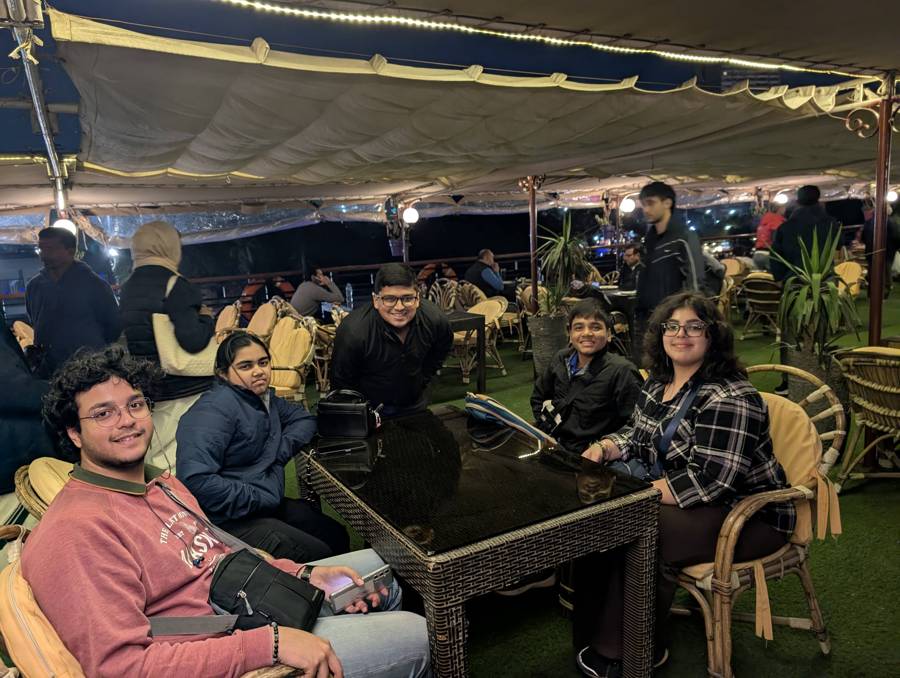
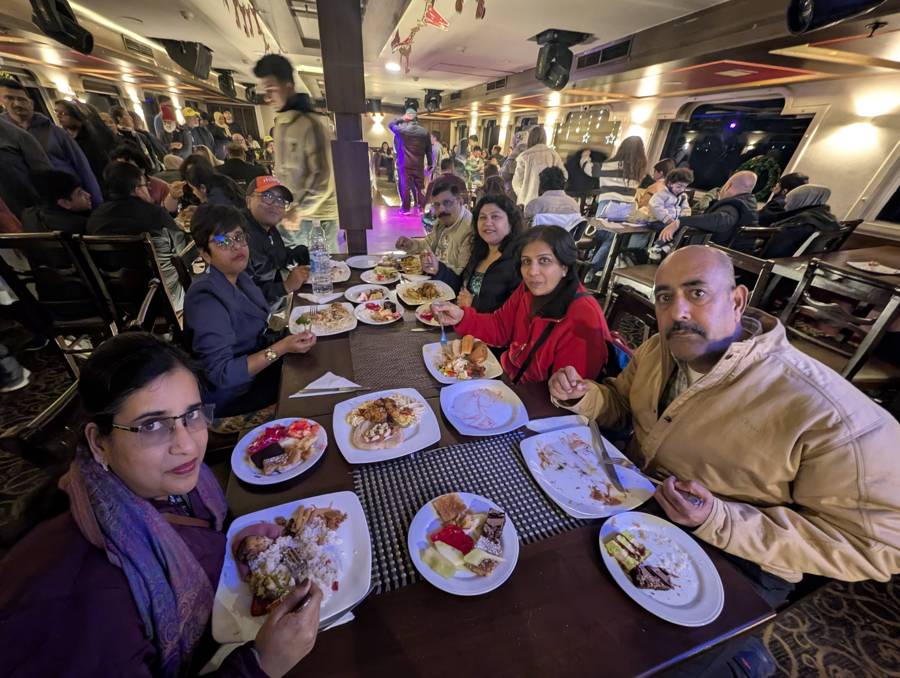
The itinerary put the Nile dinner cruise on the first evening, and it ended up on the second. The boat had a buffet that could have fed Khufu’s work crews, and a tented deck above it. The programme promised a belly dancer and a whirling Tanoura show, as you would expect from a Nile cruise.
Day 3: Sunday 28 December. South to Aswan, and a very early start
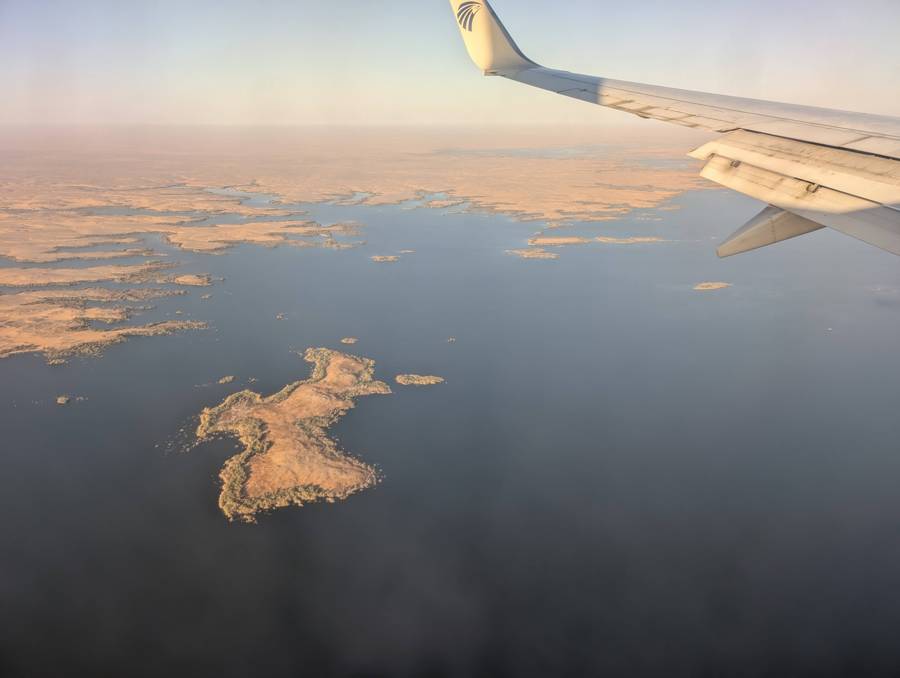
We were up before the roosters, in the dark, for the flight to Aswan. Out of the window, Lake Nasser lay below like spilled ink with an island in it.
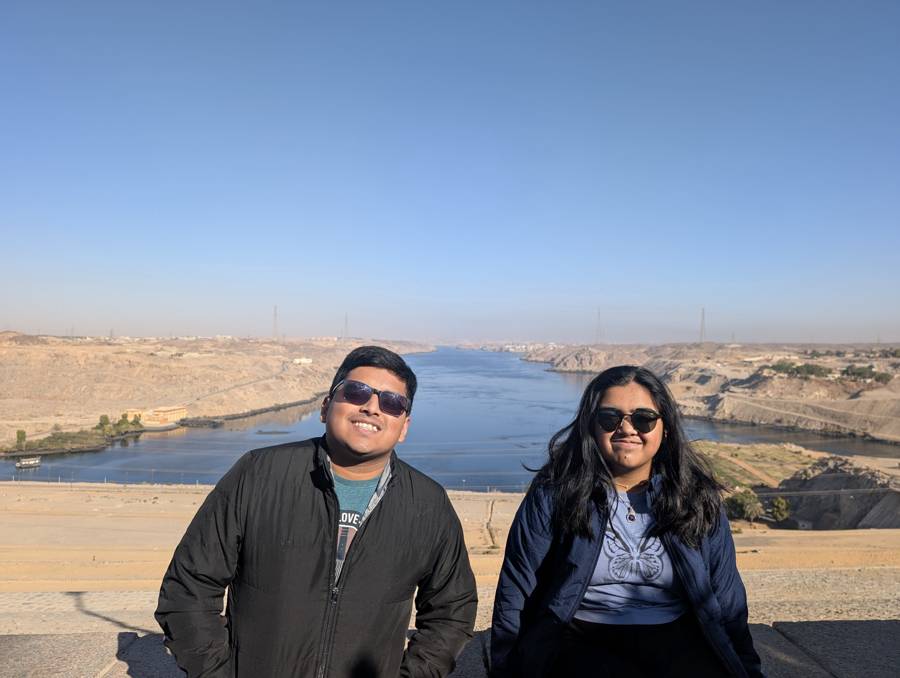
The itinerary had Abu Simbel next, a 280-kilometre drive into the desert to see Ramesses II’s four colossal selves carved into a cliff. It did not happen. A vehicle-related problem and the tour operator put paid to it, and we could not go. Abu Simbel is the big miss of the trip, and there is no point pretending otherwise. What we got that day instead was the Aswan High Dam, Philae Temple and a good Nile sunset.
Philae, by boat
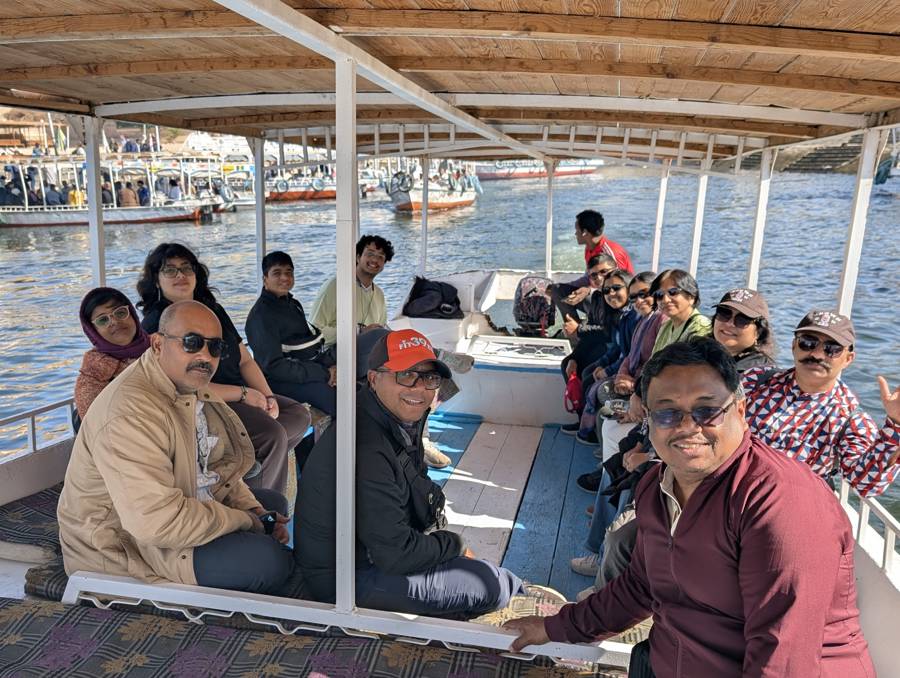
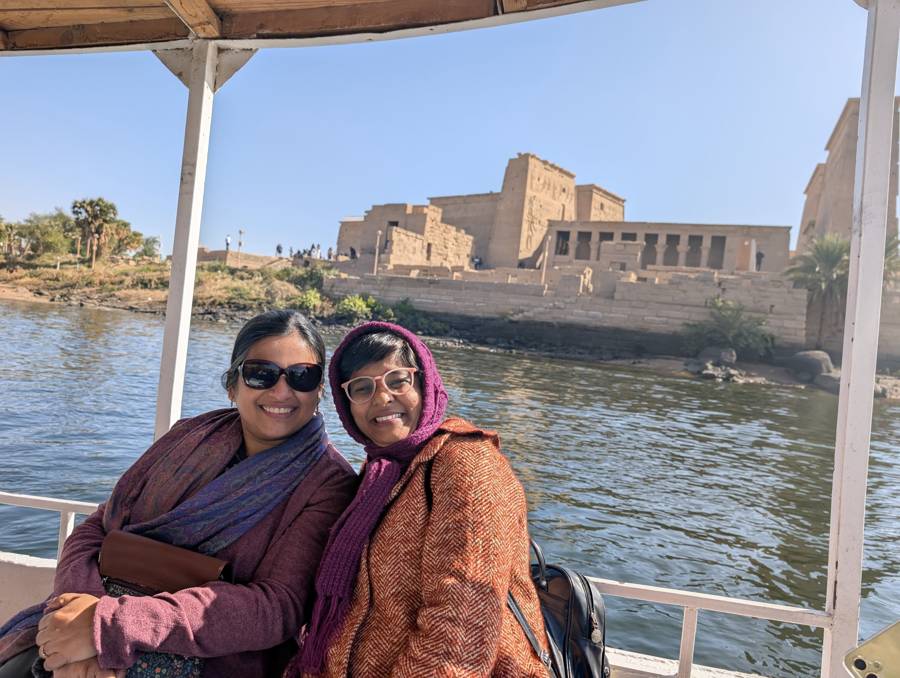
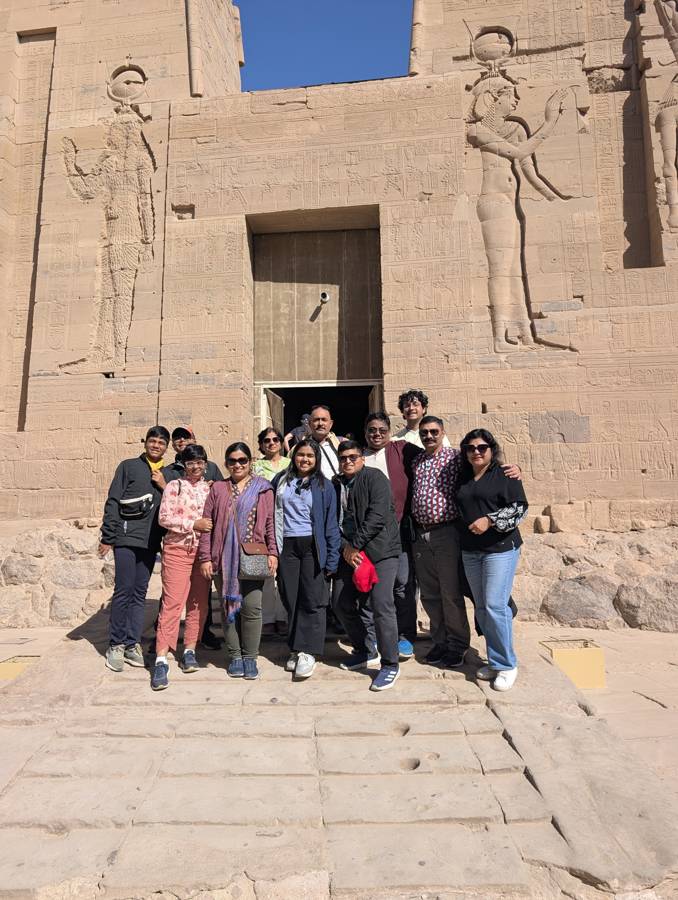
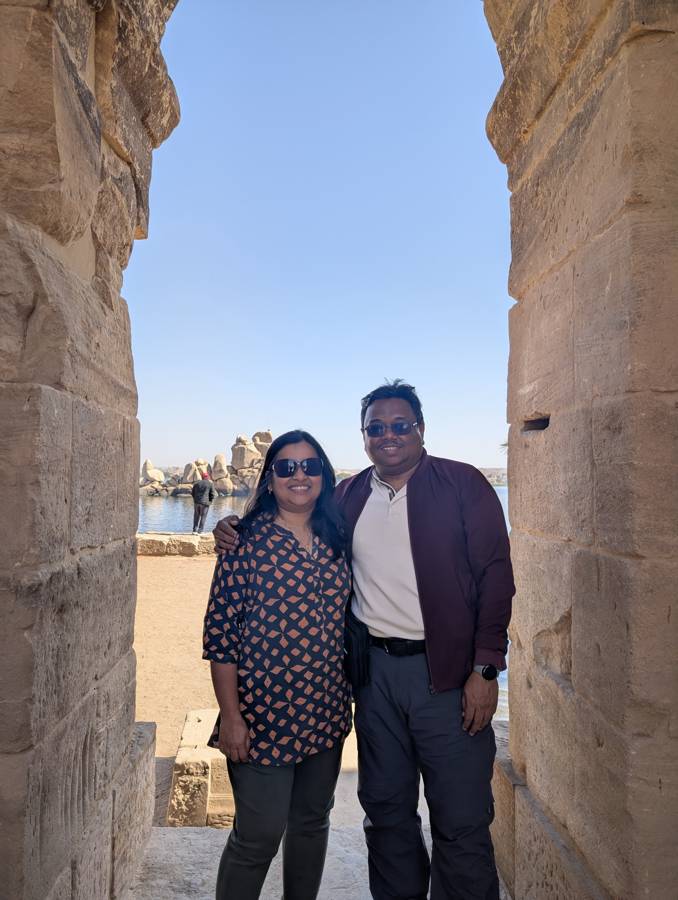
The temple of Isis at Philae is reached by a small motor boat, and arriving by water is the right way to do it. It sits on an island in the sunshine, as if the river had been designed around it. The truth is slightly different: the whole temple was moved here from the island it was built on, so the river is arranged around a temple that was arranged around a dam.
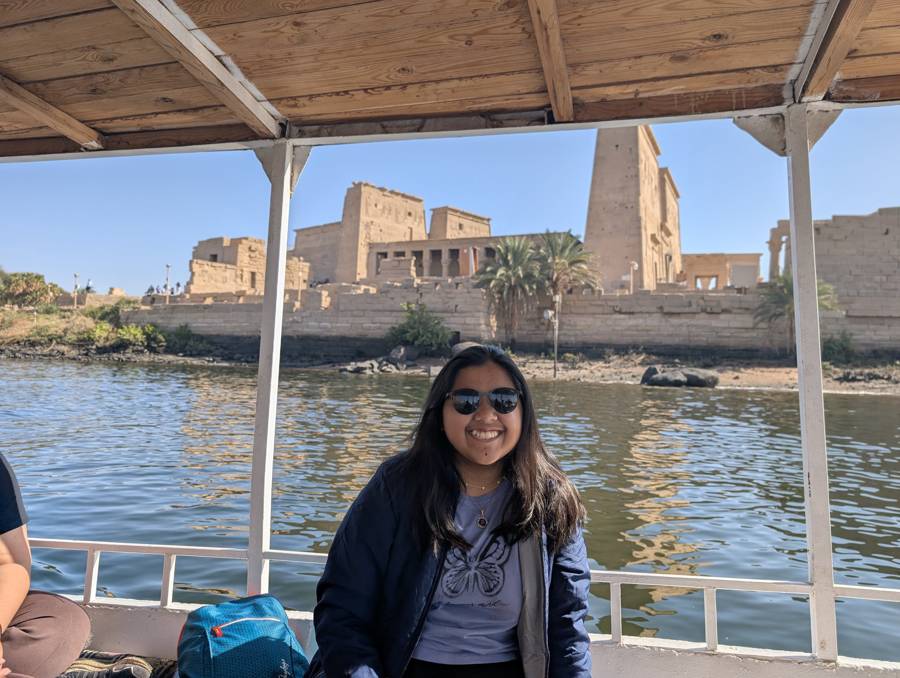
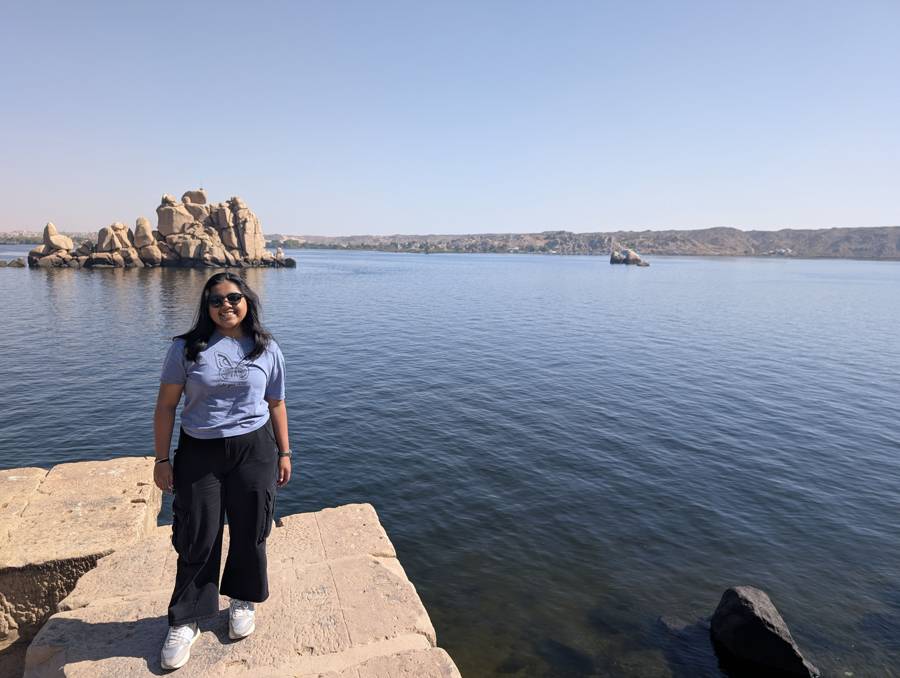
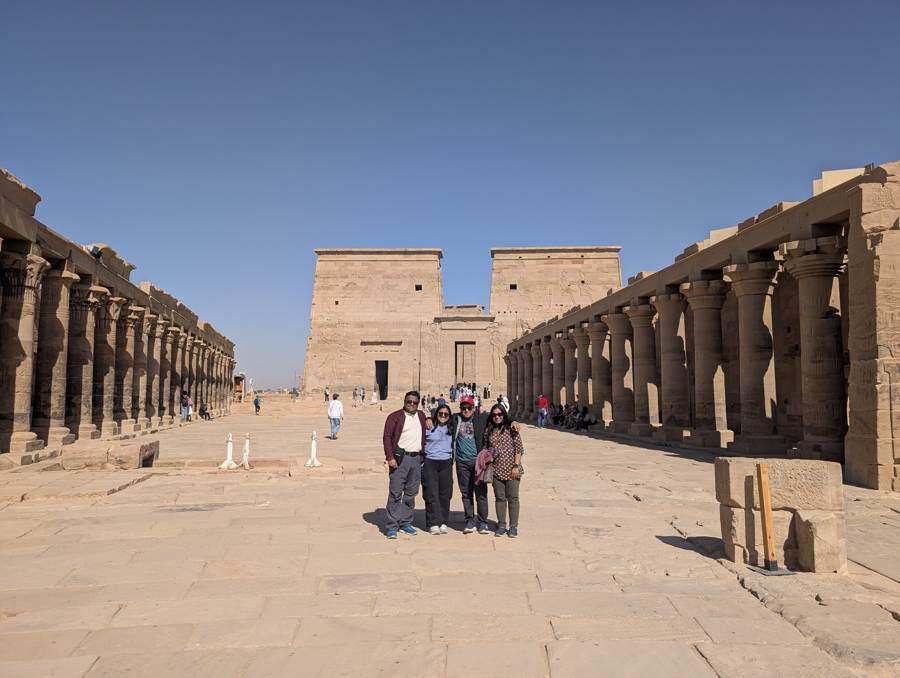
- The Aswan High Dam was built between 1960 and 1970. It is 3,830 m long and 111 m high, and its reservoir, Lake Nasser, is about 500 km long and covers about 5,250 square km.
- The dam threatened to drown the temples of Nubia, so UNESCO ran a rescue campaign that saved 22 monuments, including Abu Simbel and Philae.
- The Temple of Isis at Philae was begun under Nectanebo I (380–362 BC), and most of the rest dates from the Ptolemaic period.
- Philae was dismantled into about 40,000 blocks and rebuilt on nearby Agilkia Island in the late 1970s.
- The last known hieroglyphic inscription anywhere in Egypt was carved at Philae in AD 394.
From Wikipedia’s entries on the Aswan Dam and Philae.
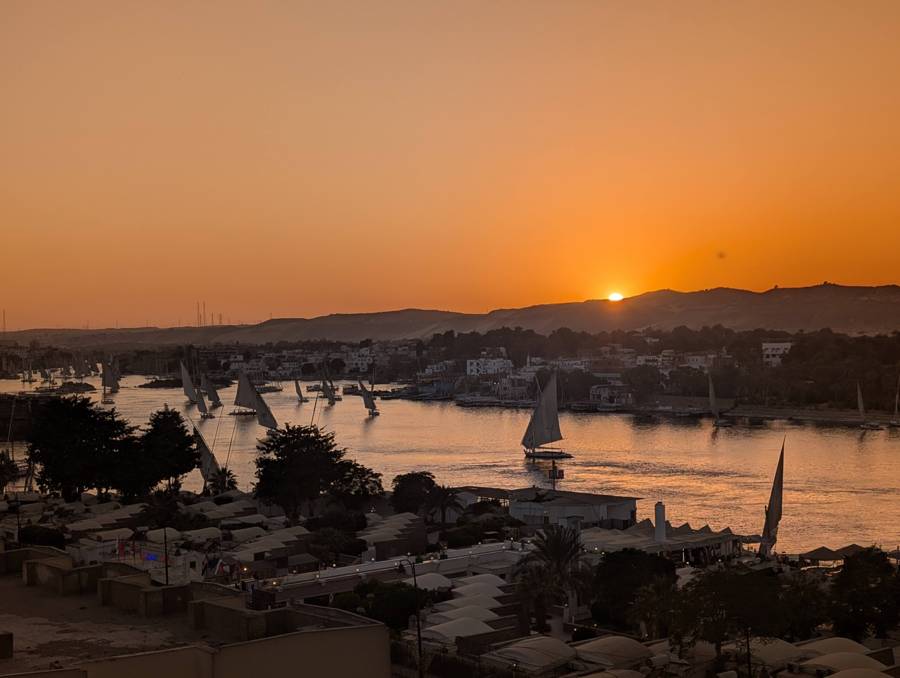
We had lunch in Aswan, and by late afternoon the Nile was a sheet of gold with feluccas at their moorings, and we watched the sun slide down behind the hills on the far shore. The Hapi Hotel took us in for the night.
Day 4: Monday 29 December. The temple road to Luxor
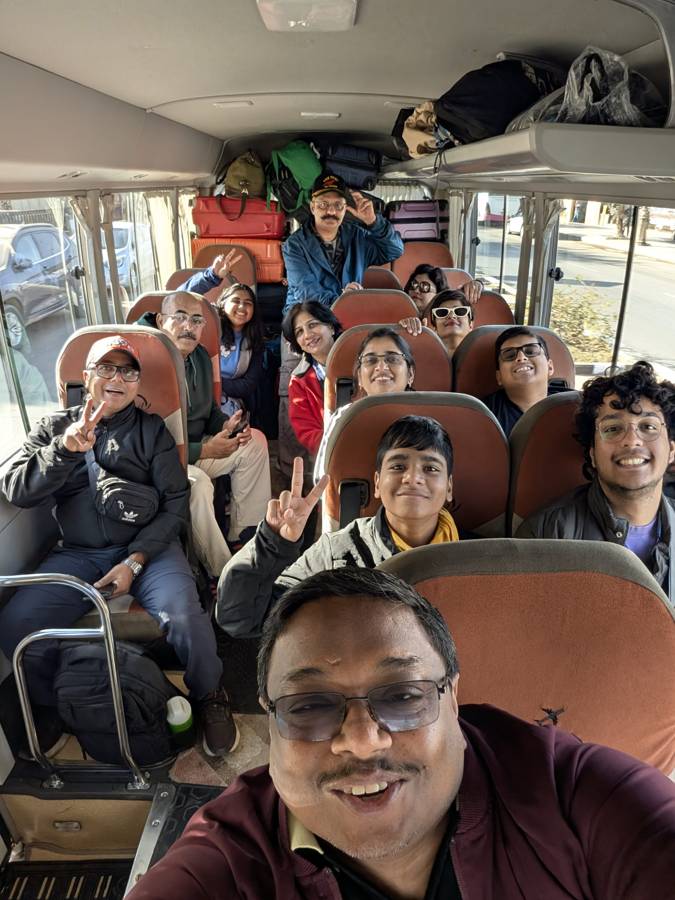
Today the whole group rode north by coach, along the Nile, with a temple at either end of the day.
Kom Ombo, the double temple
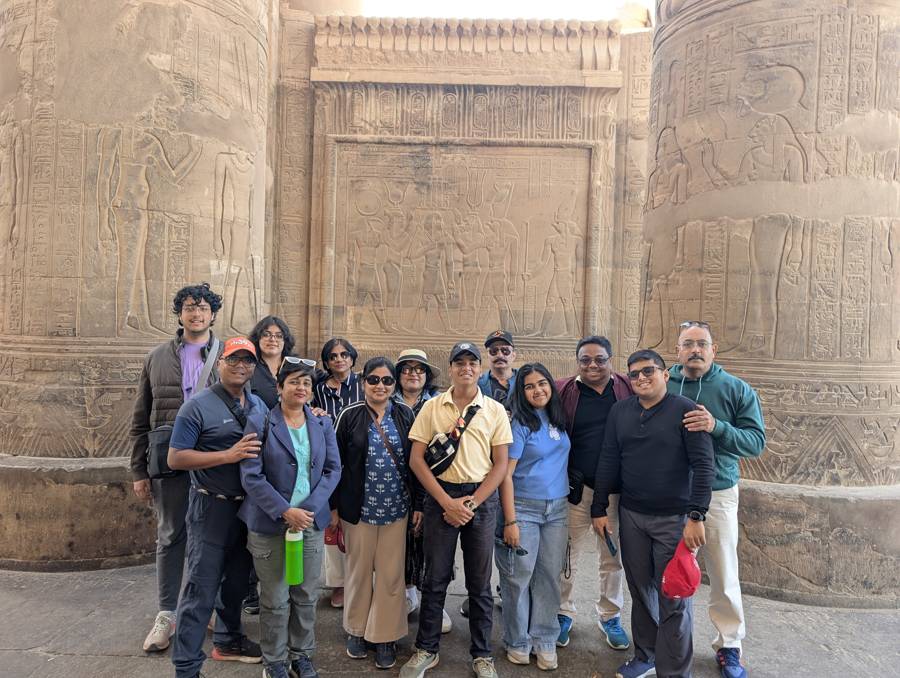
The first stop was Kom Ombo, which stands right on a bend of the river, and which is peculiar for having two of everything. It has two entrances and two halves, because it was built to honour two gods at once. We assembled the whole group in front of a wall of enormous columns, which is how you give a temple a sense of scale.
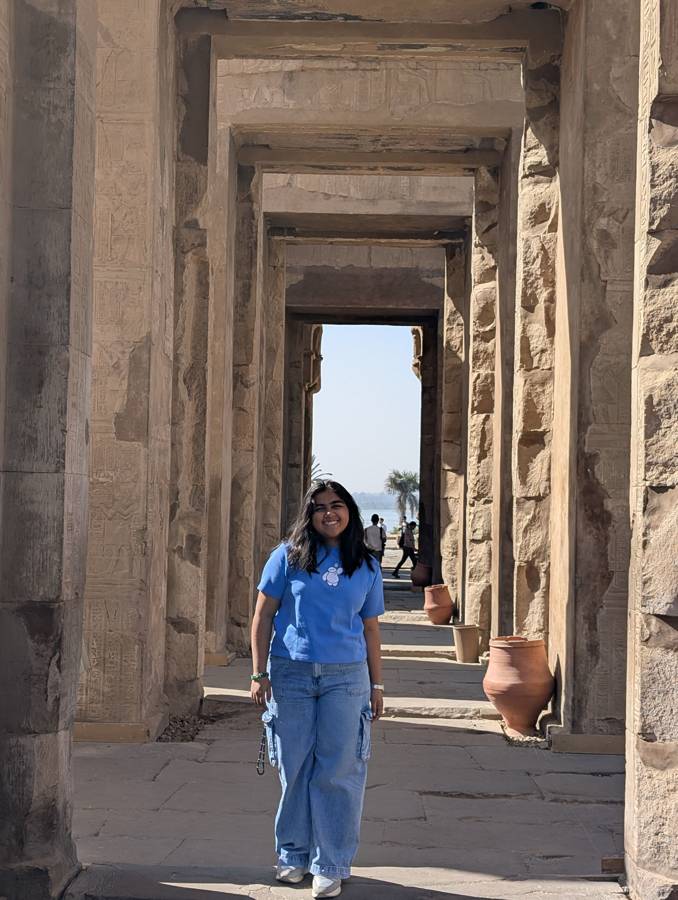
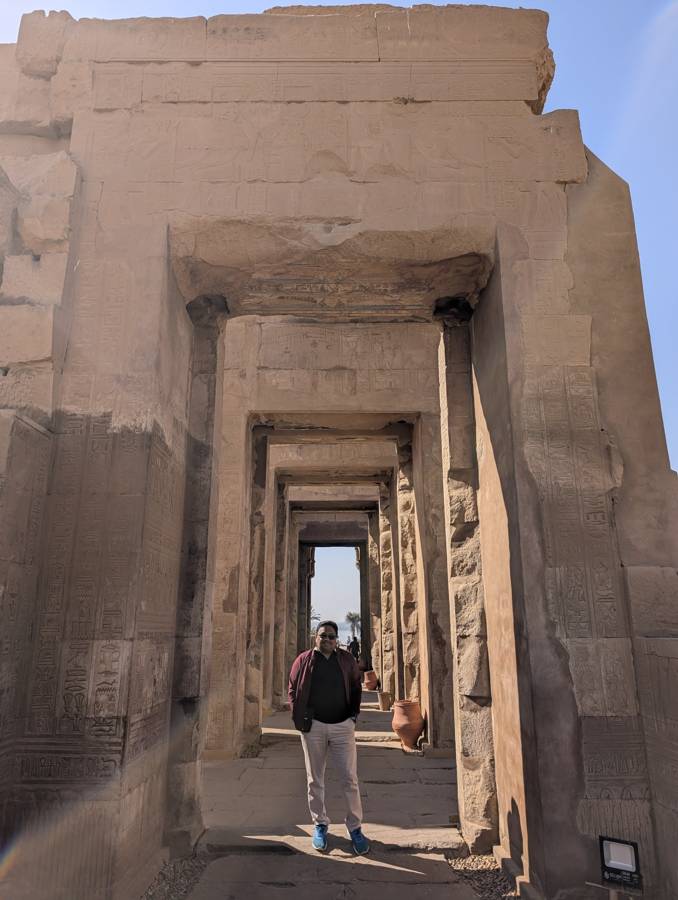
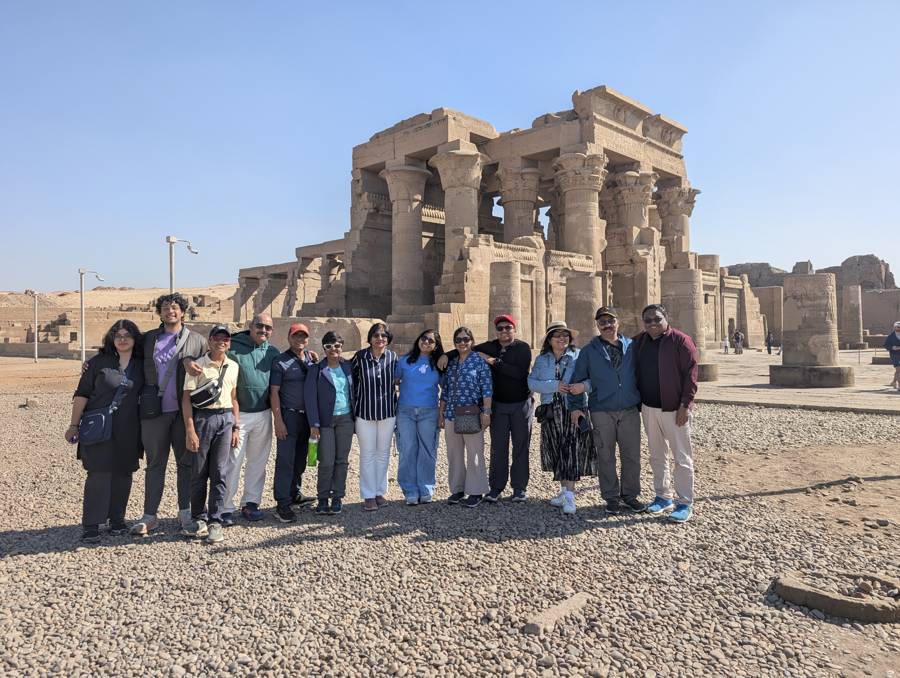
- A Ptolemaic temple, with its main building dated to the reign of Ptolemy VI Philometor and his sister-wife Cleopatra II (180–145 BC).
- Built to honour two gods, Haroeris (a form of Horus) and Sobek the crocodile god, and so it has twin entrances and twin sanctuaries.
- A relief here is thought to be the earliest known picture of surgical instruments, showing scalpels, forceps, scissors and medicine bottles. It dates from Roman times.
- The catacombs next to it sometimes contain mummified sacred crocodiles.
From Wikipedia’s entry on Kom Ombo.
Edfu, the temple that the sand kept
In the afternoon came Edfu, the Temple of Horus, which is among the best-preserved temples in Egypt. It is enormous and in remarkably good condition, partly because it spent centuries buried in sand and silt, which is the kindest thing the desert ever did for architecture. The great pylon, the entrance gateway, is covered with figures of the king smiting enemies, and it was a very good place for a group photograph.
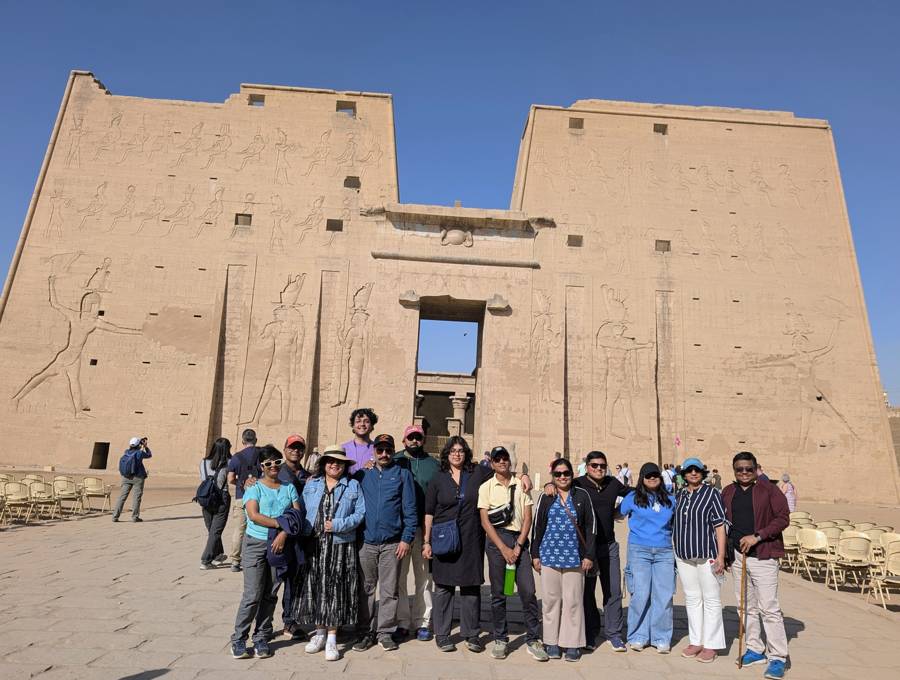
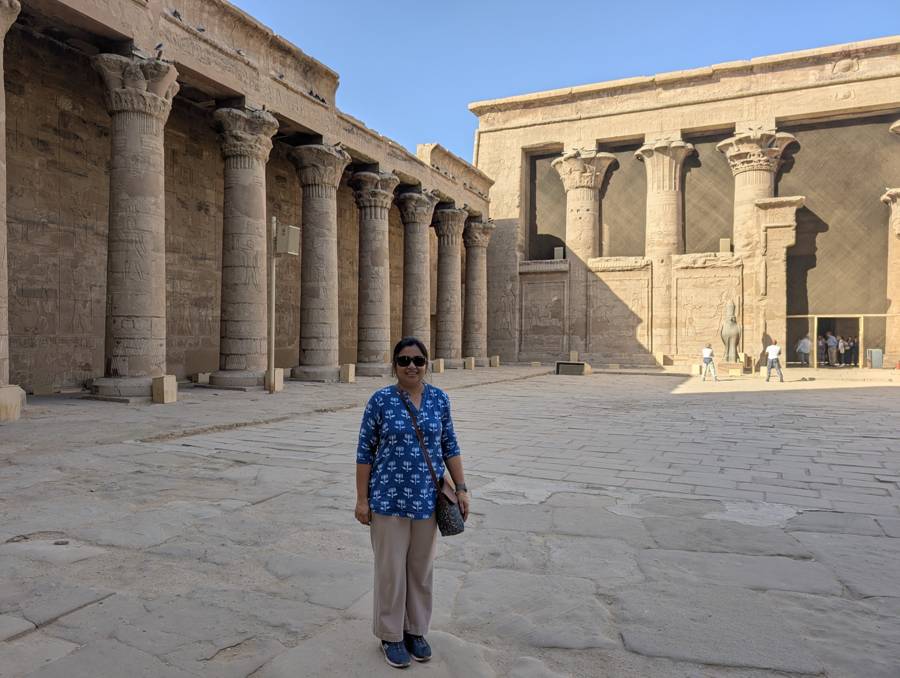
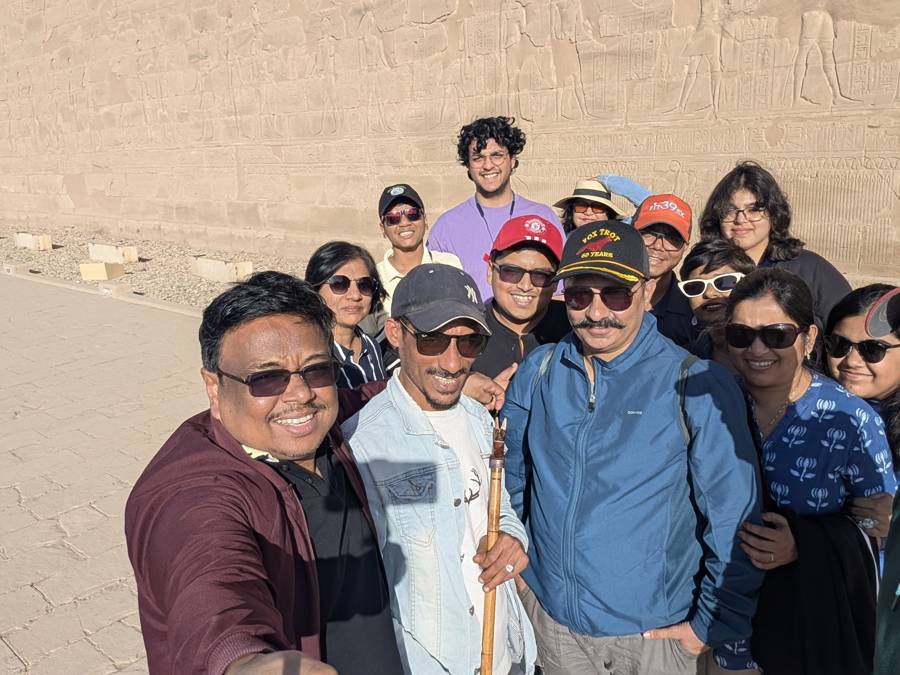
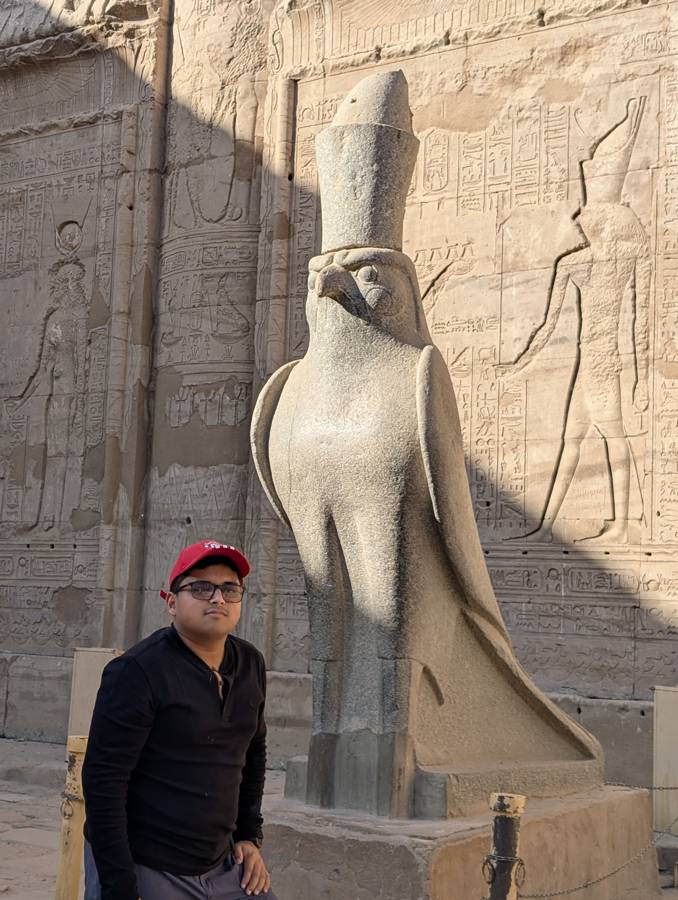
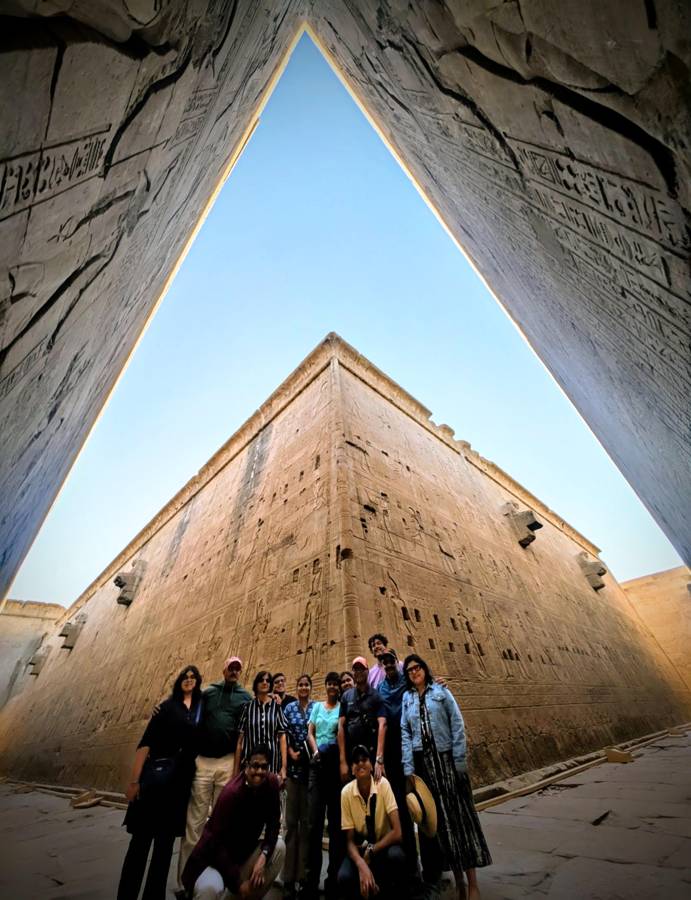
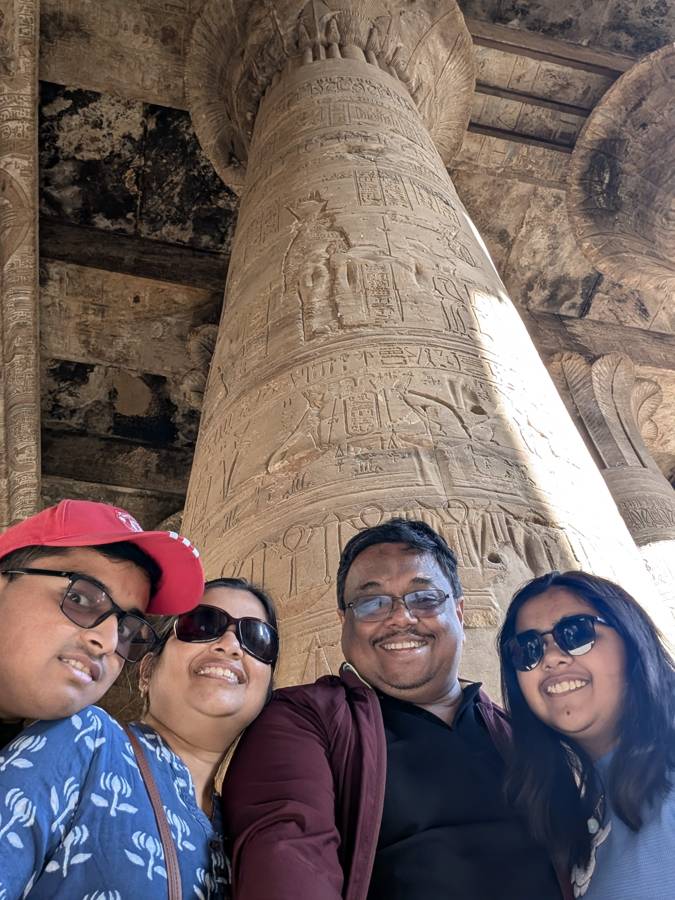
- Work began on 23 August 237 BC under Ptolemy III and the temple was completed in 57 BC.
- It is dedicated to Horus, the falcon god, with Hathor and Harsomtus.
- It stands about 36 m high and 79 m long.
- It lay buried under up to 12 m of desert sand and Nile silt and is among the best-preserved temples in Egypt.
From Wikipedia’s entry on the Temple of Edfu.
Then came the last stretch of road to Luxor in the dark, and dinner, and the Pyramisa Isis Hotel, which would be home for the next three nights. Luxor gave us three nights in the same hotel, a luxury after the packing of the past three days.
Day 5: Tuesday 30 December. The Valley of the Kings, and the dead in their best clothes
The West Bank of the Nile at Luxor is where ancient Thebes buried its dead, and the dead did not hold back. We crossed over in the morning.
The Valley of the Kings
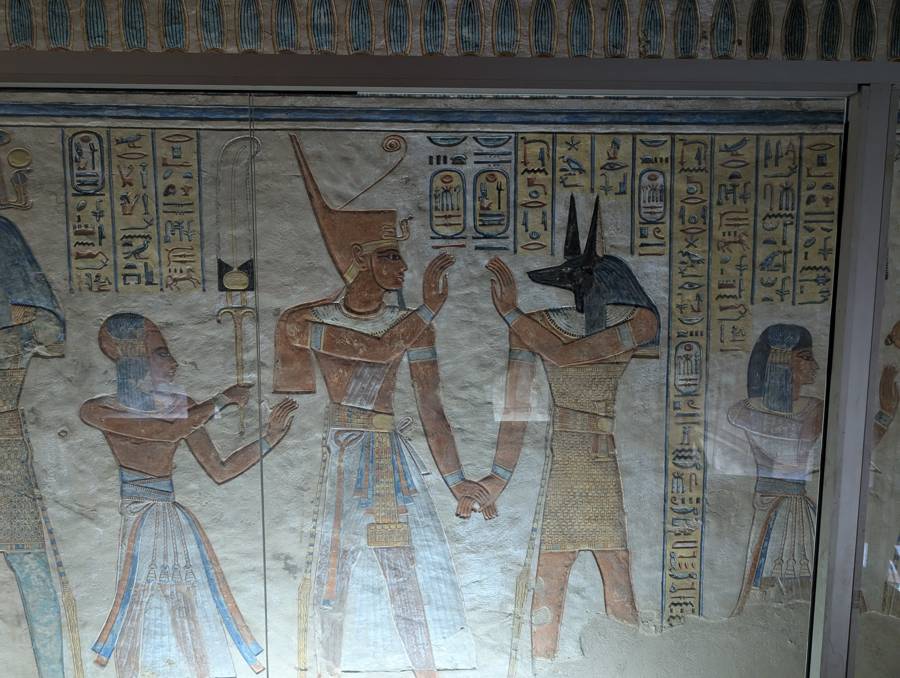
You walk down a dusty path between limestone cliffs, and then you go underground into tombs (we entered five in the Valley of the Kings) where the walls are painted floor to ceiling in colours that have lasted over three thousand years. The ceilings are the show: deep blue, painted with gold, stretching away overhead. There was a little bit of queuing, a little bit of looking up and a lot of “did you see that one?”.
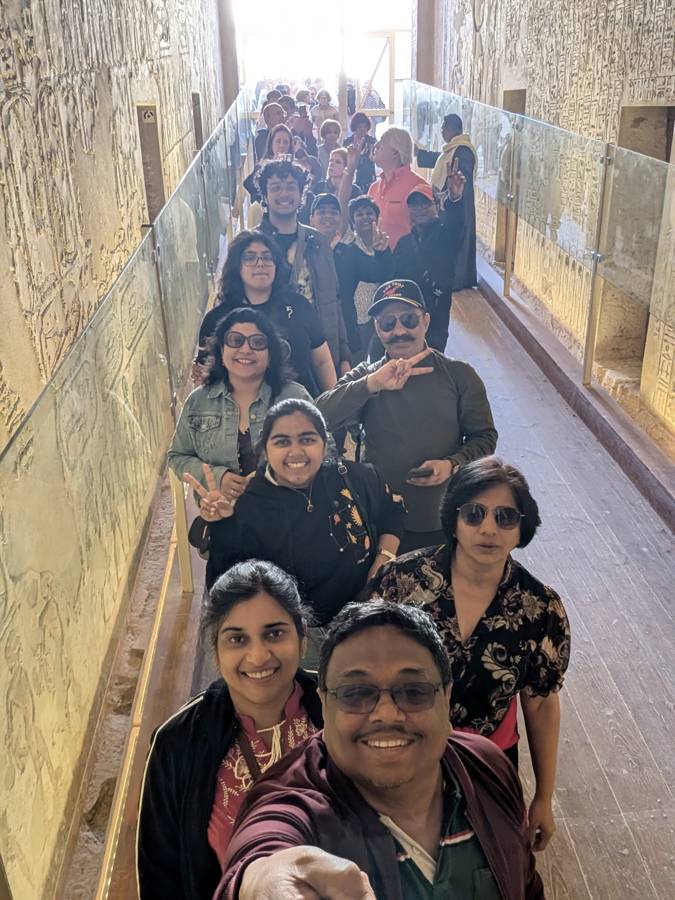
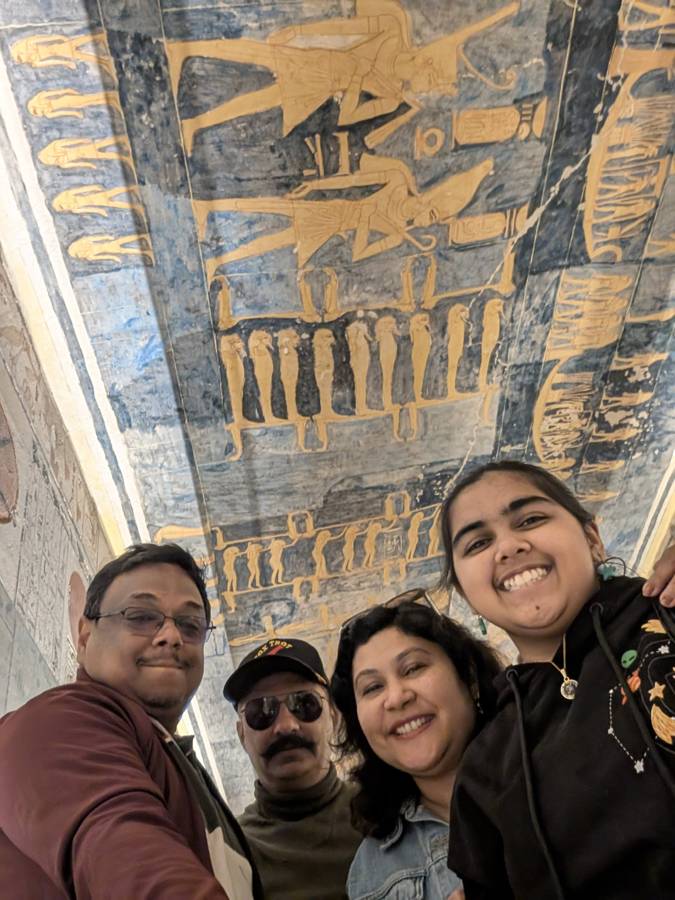
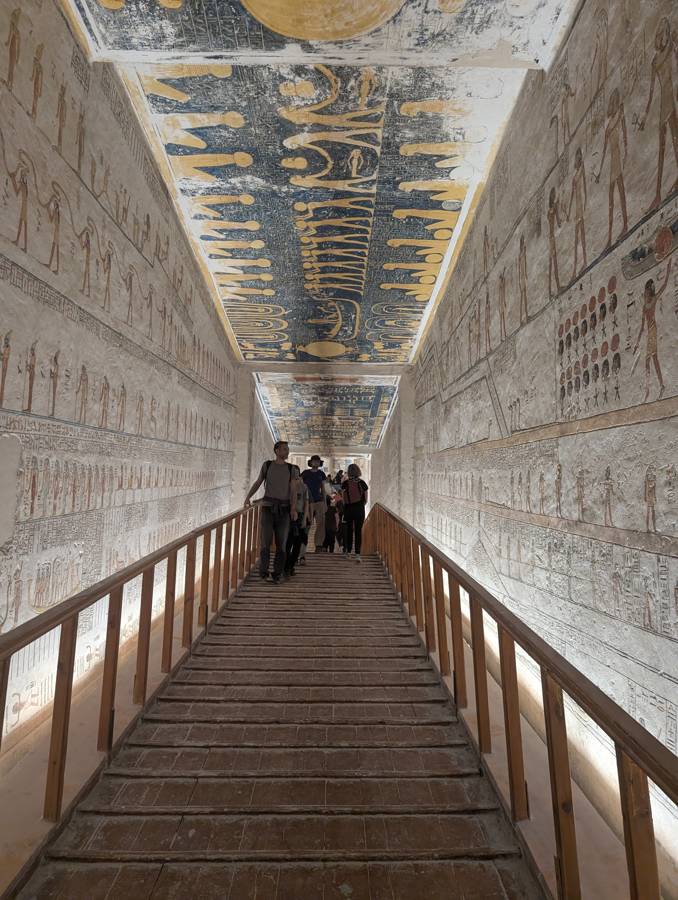
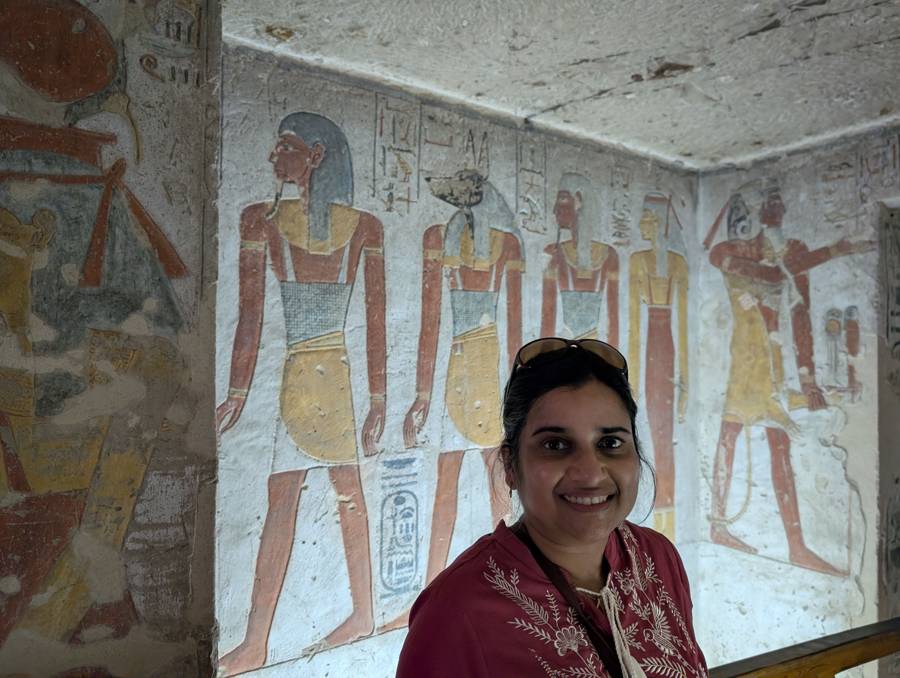
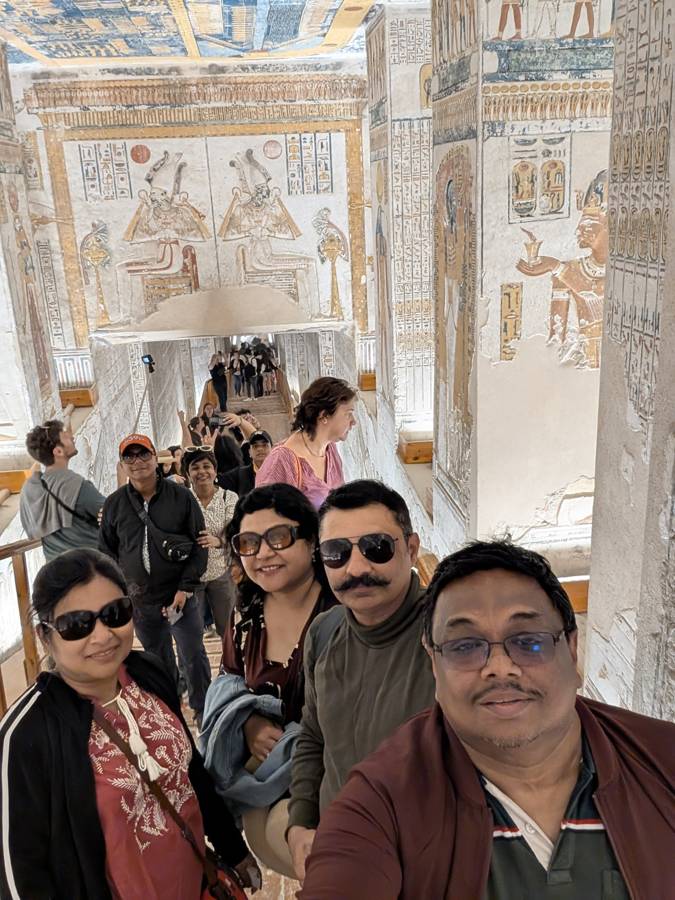
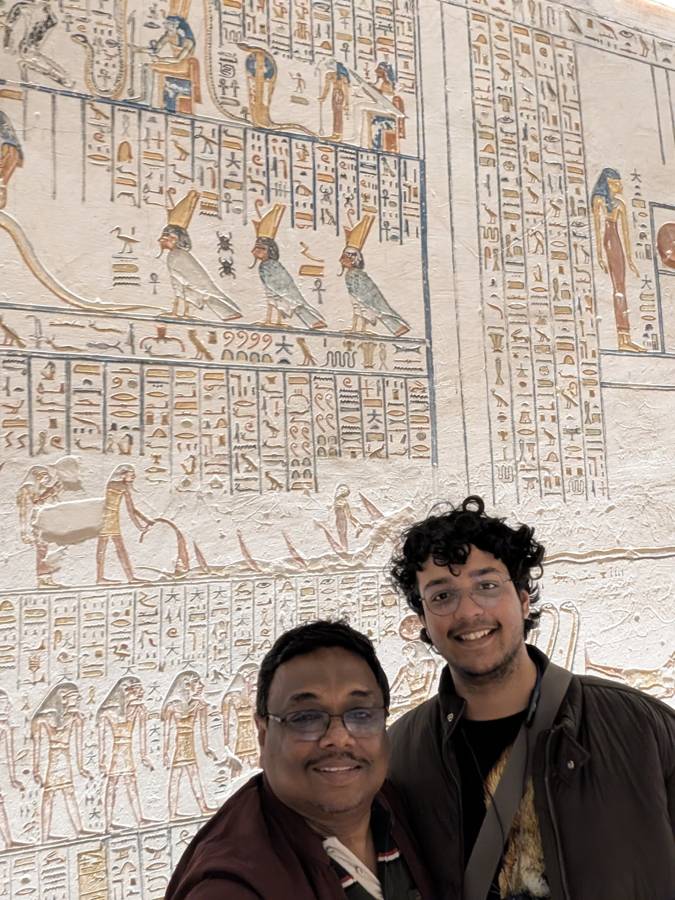
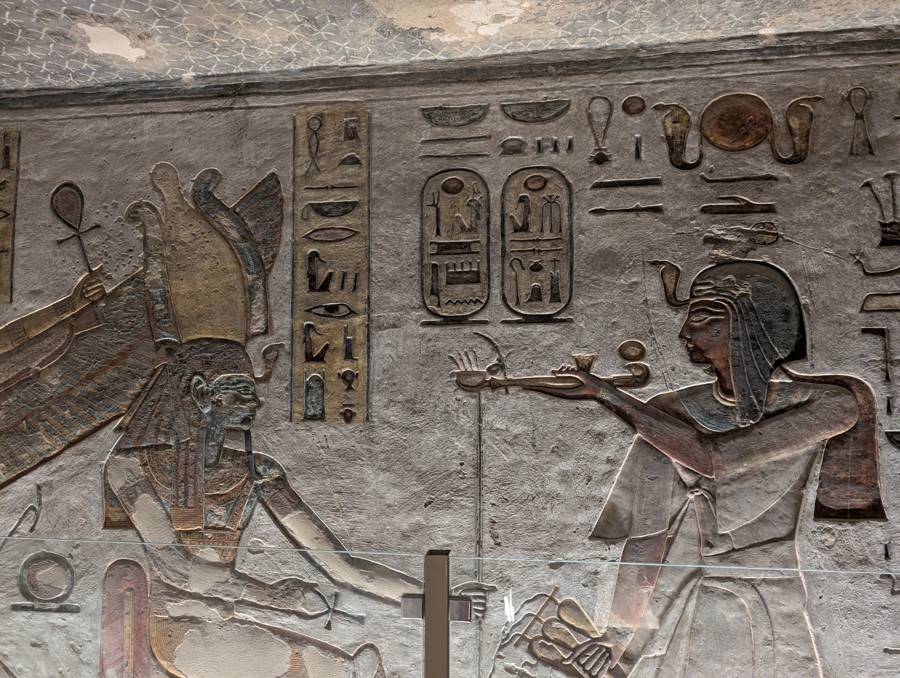
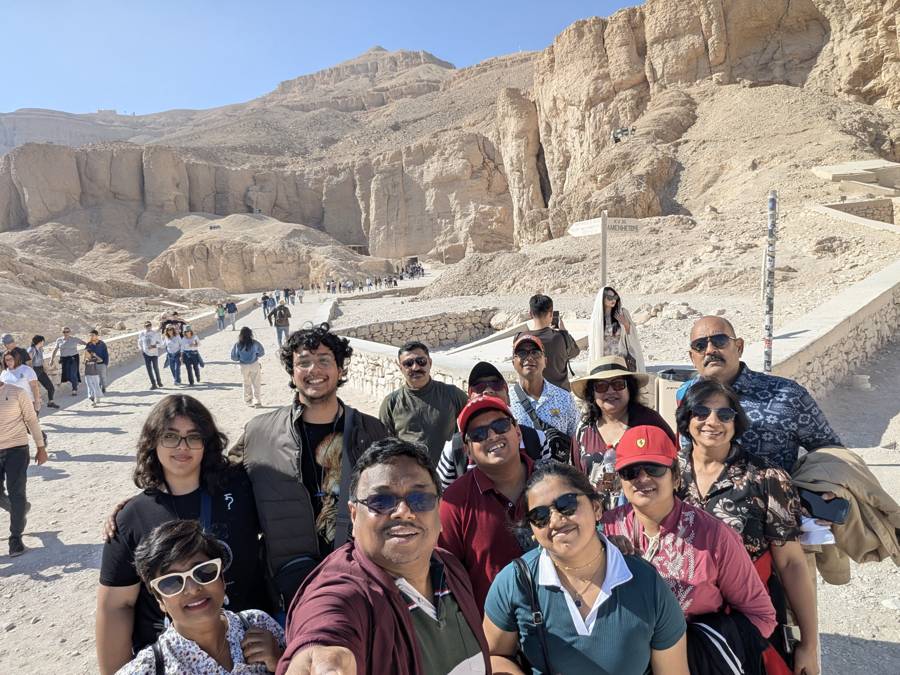
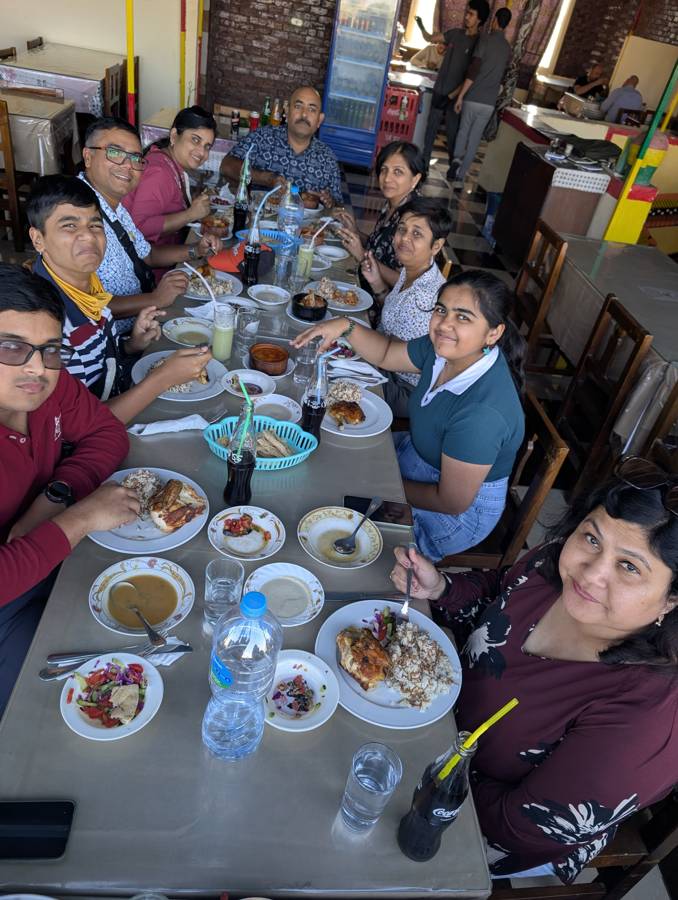
- The valley was the royal burial ground from about 1539 to 1075 BC, nearly 500 years of the New Kingdom.
- The tombs are numbered KV1 to KV64. The most recent find, KV63, was excavated in 2005, and KV64 was discovered in 2011.
- Howard Carter found the tomb of Tutankhamun, KV62, on 4 November 1922.
- Only about eighteen tombs can be opened to visitors, and not all at the same time. On most days 4,000 to 5,000 visitors pass through.
- The valley was chosen for its isolation, in the desolate hills, which also let the tomb police guard it.
From Wikipedia’s entry on the Valley of the Kings.
Hatshepsut and the two big fellows
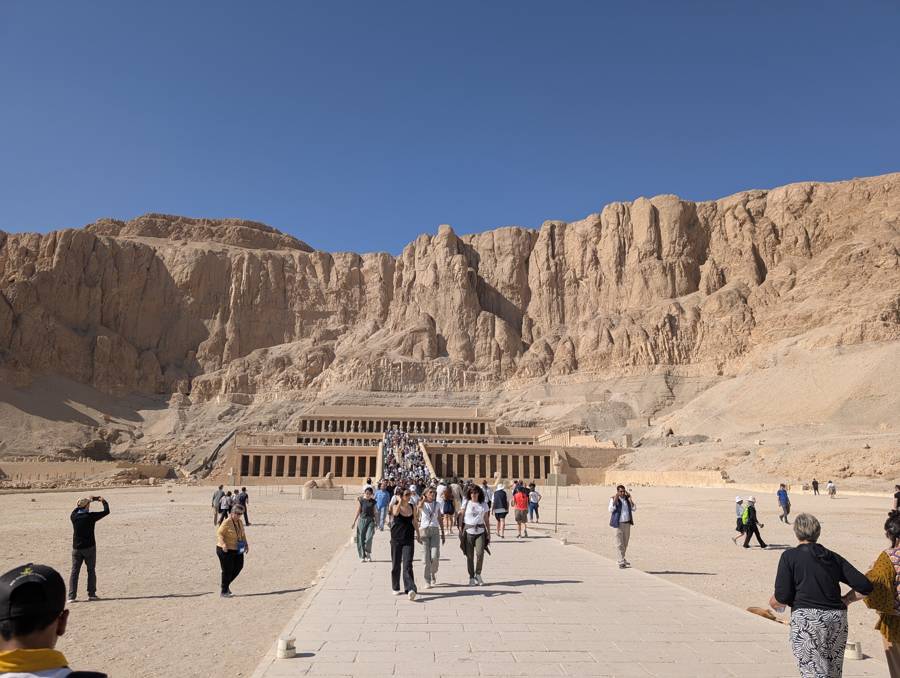
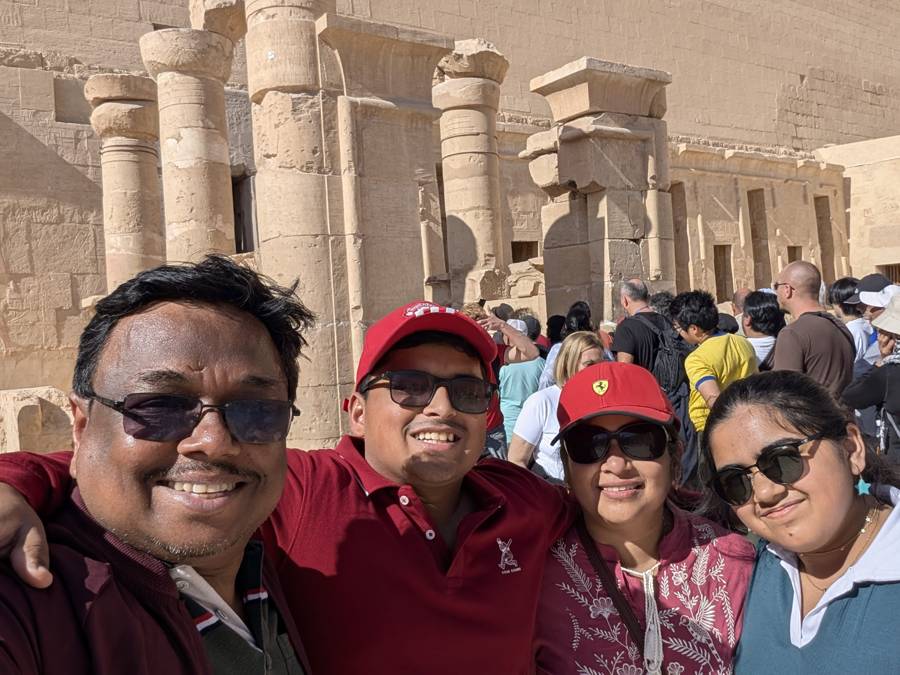
From the Valley we went on to the temple of Hatshepsut, the woman who ruled as pharaoh. It is built into a cliff in three broad terraces, in a style so modern that it looks like the work of an architect with a deadline. A long causeway leads up to it across the sand.
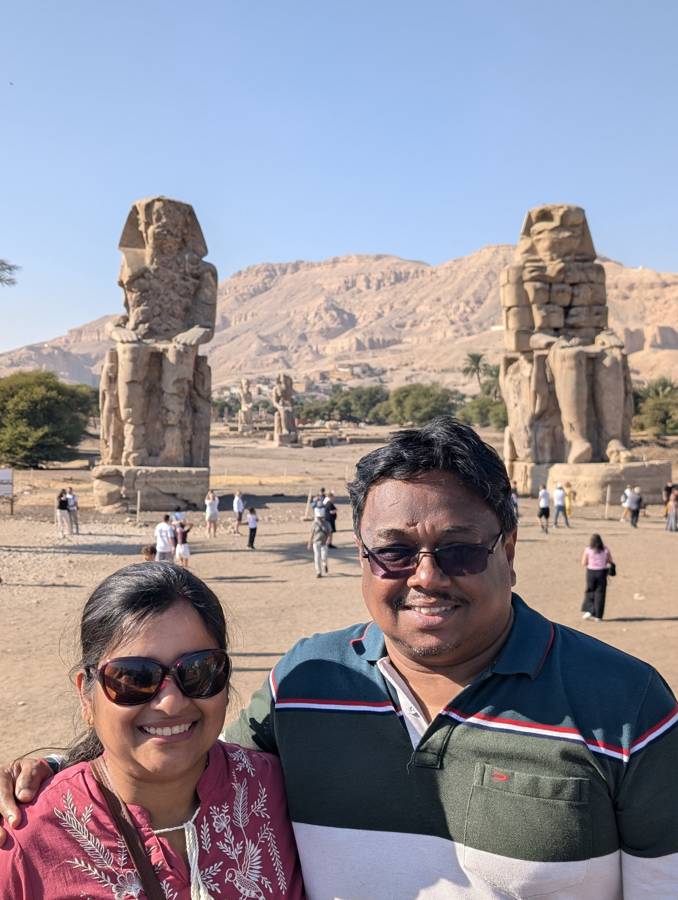
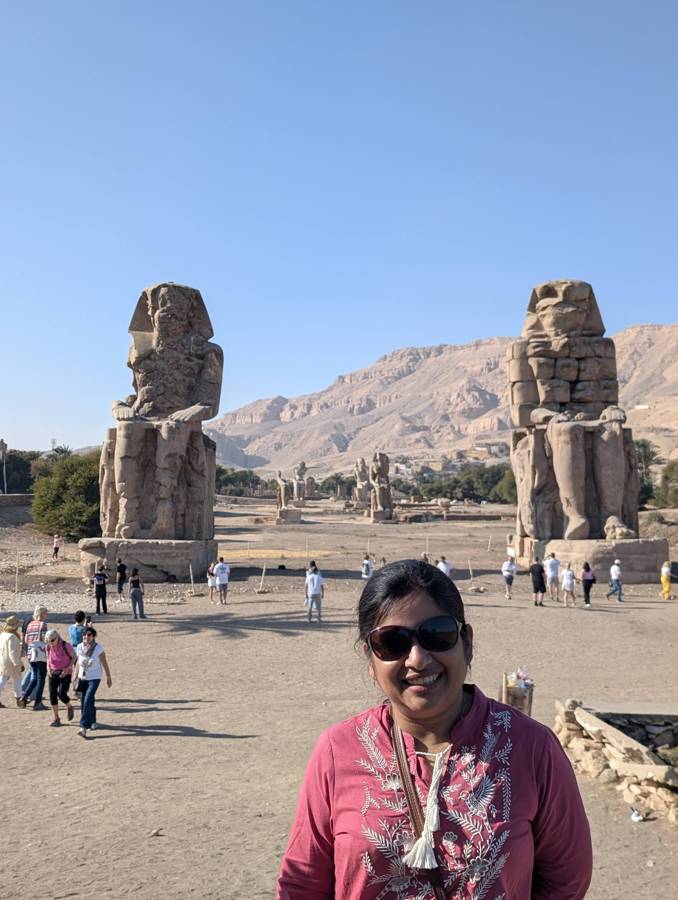
On the way out, there are two giant seated figures by the roadside, the Colossi of Memnon, which are all that is left of the largest mortuary temple of its day. They have been sitting there for about 3,400 years, with the patience of statues that have heard it all.
- The temple of Hatshepsut, Djeser-Djeseru or “Holy of Holies”, was built between the seventh and twentieth year of her reign, with three terraces reached by a long causeway.
- One of its reliefs shows her expedition to the Land of Punt. Thutmose III later had her image erased, about twenty years after her death.
- The Colossi of Memnon show Amenhotep III and stand 18 m high, including their platforms. Each weighs an estimated 720 tons.
- After an earthquake in 27 BC, the northern colossus was said to “sing” at dawn. Greek visitors linked the sound to Memnon, the son of the dawn goddess. The sound stopped after repairs around AD 199.
From Wikipedia’s entries on the Mortuary Temple of Hatshepsut and the Colossi of Memnon.
Luxor Temple, by night
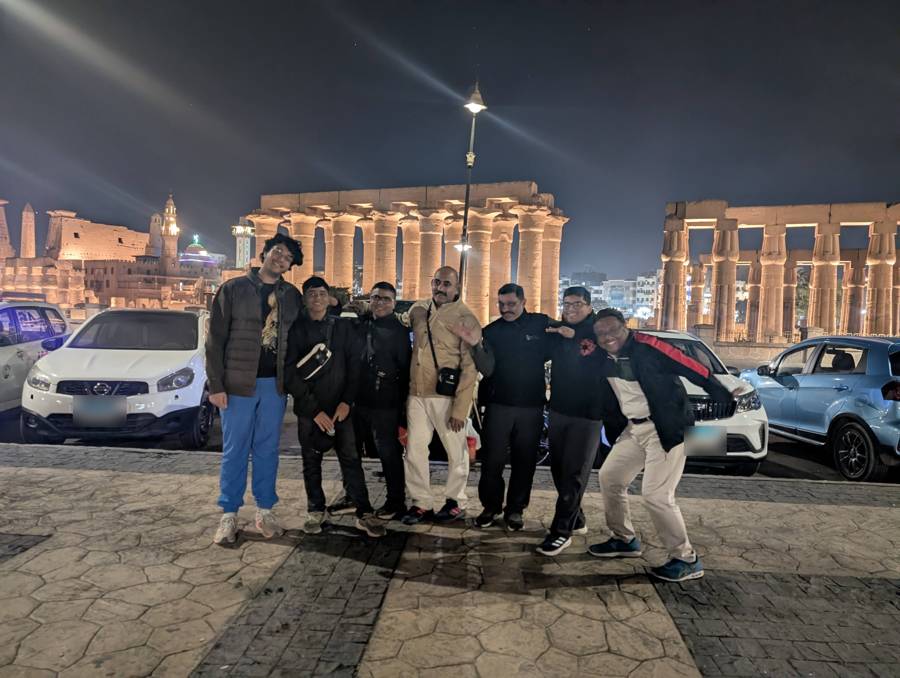
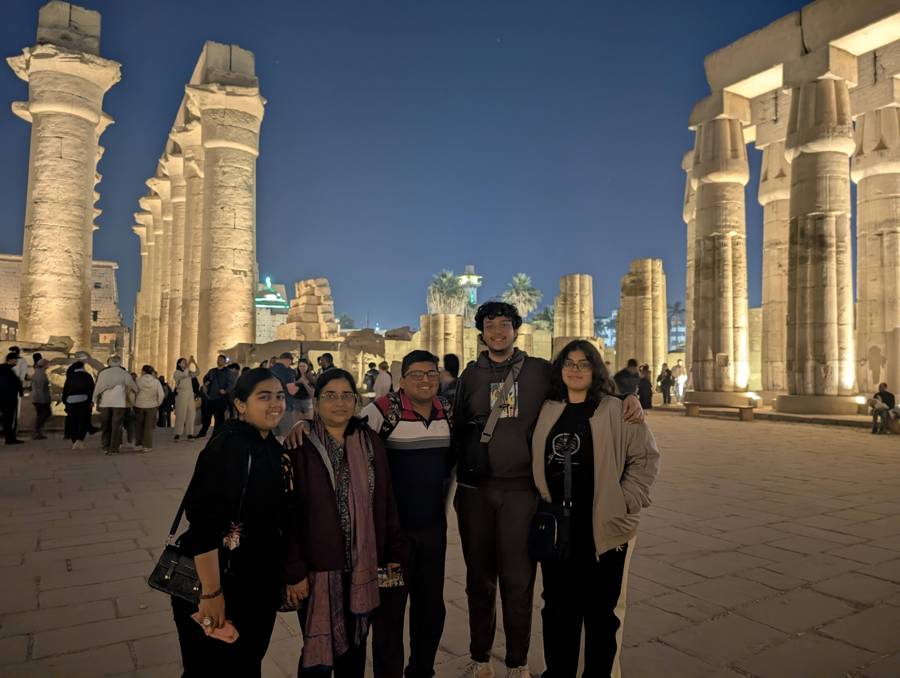
After a rest, we went back out in the evening to Luxor Temple, which is a different place after dark. The columns of the great colonnade are floodlit in honey gold, with the mosque and its minaret rising out of the ruins. The temple was built mainly by Amenhotep III and Ramesses II, and its annual festival was the Opet, when the god Amun was carried here from Karnak for a visit.
Day 6: Wednesday 31 December. A balloon, a temple and a felucca
Sunrise, from above
The alarm went off in the dark, which was the price of admission. We were taken across to the launch field on the West Bank, climbed into a wicker basket with a very big burner on top, and went up as the sky was starting to turn. At that height it all makes sense: the green strip of the Nile valley, the sharp line where the fields stop and the desert begins, and the hills of the Valley of the Kings pink in the first light. The sun came up a little before seven, and a sky full of other balloons came up with it.
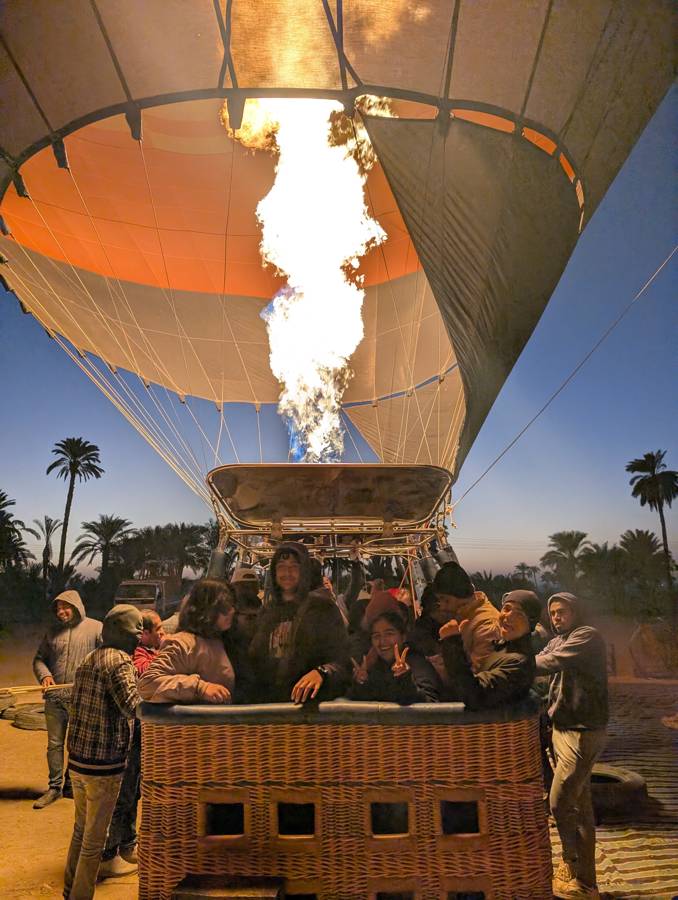
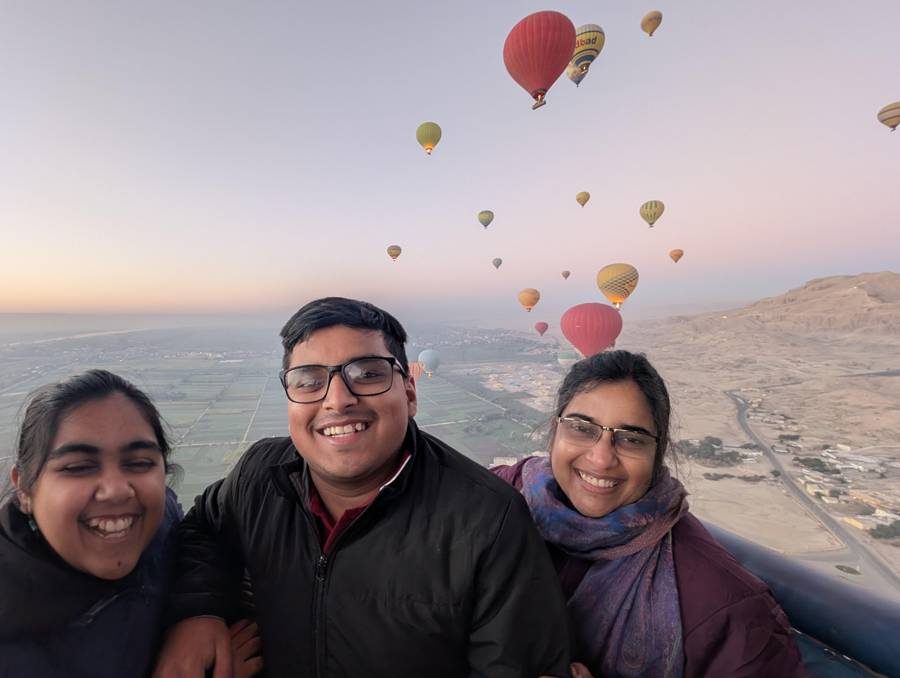
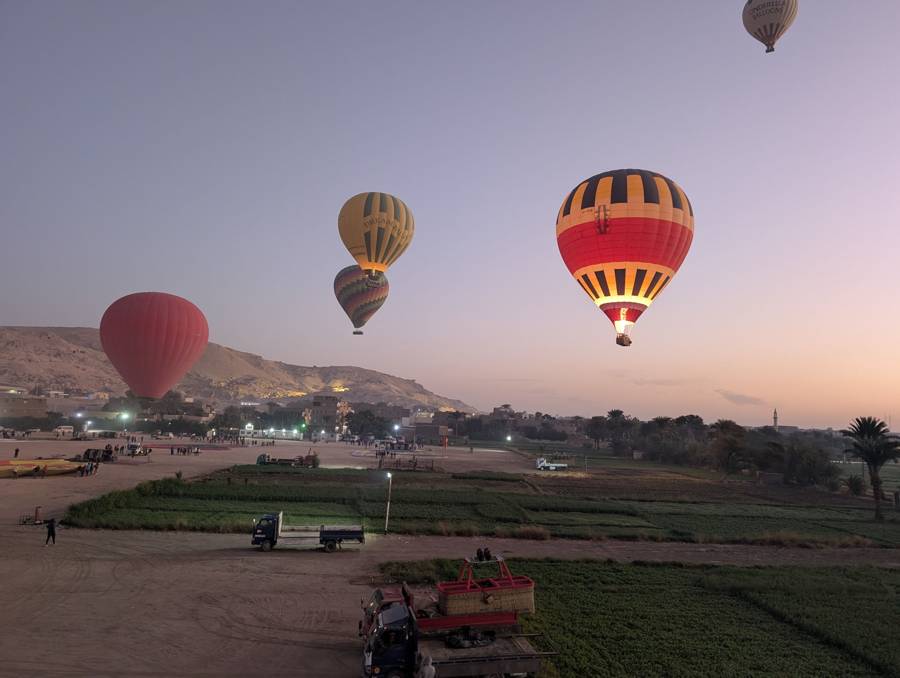
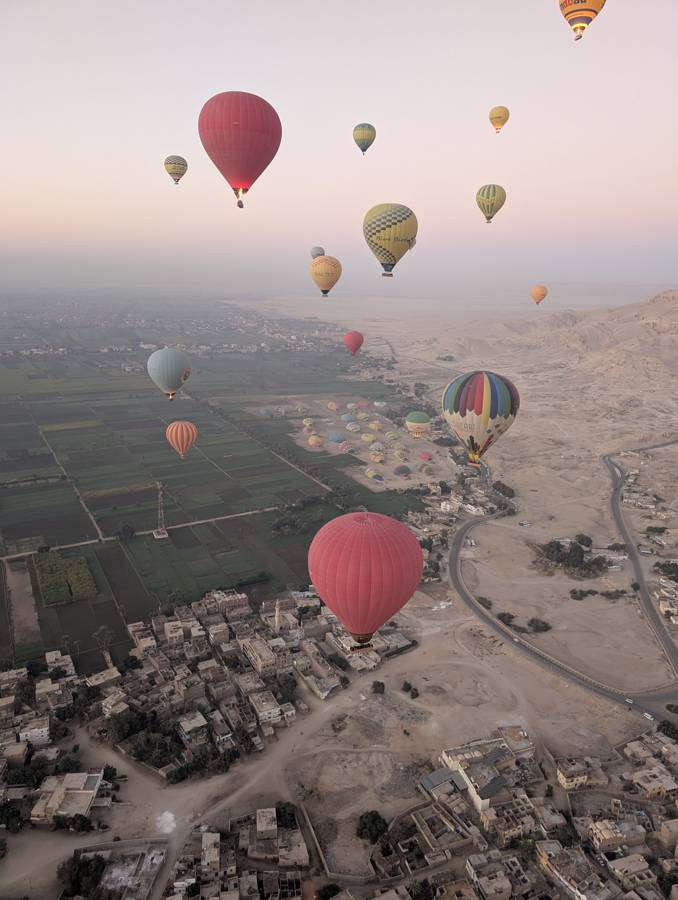
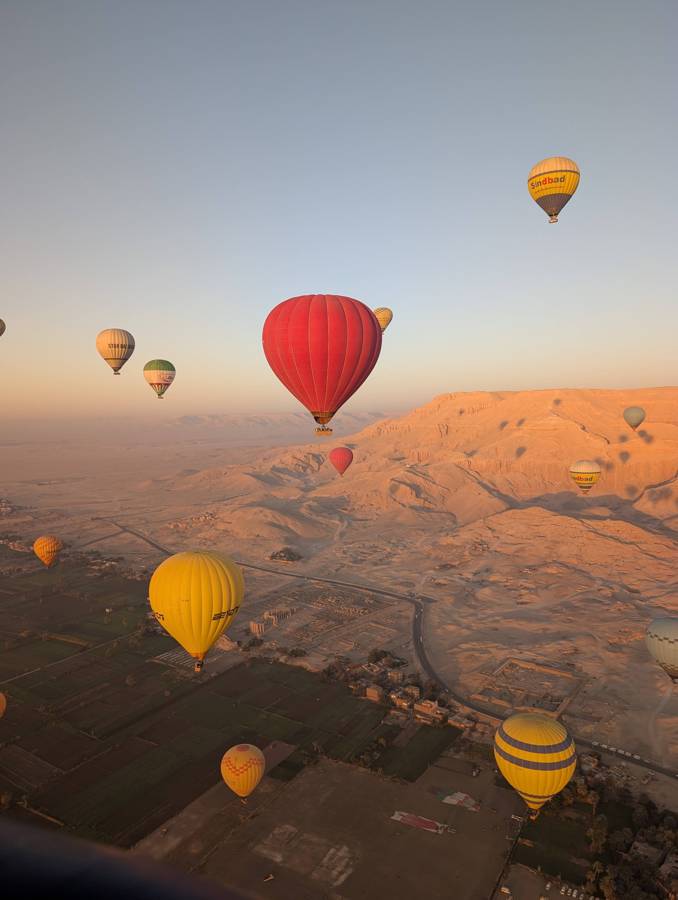
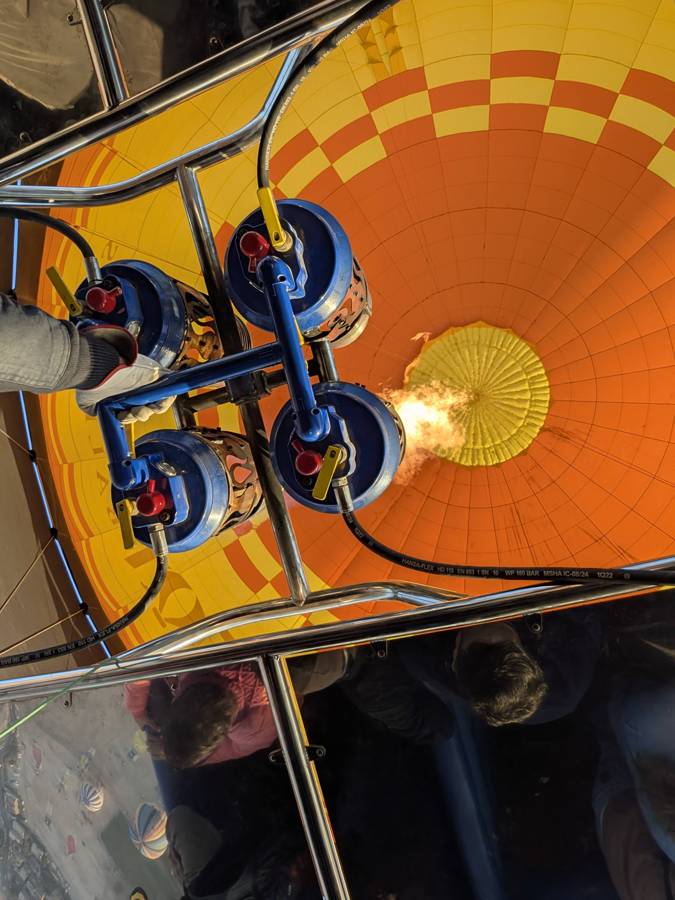
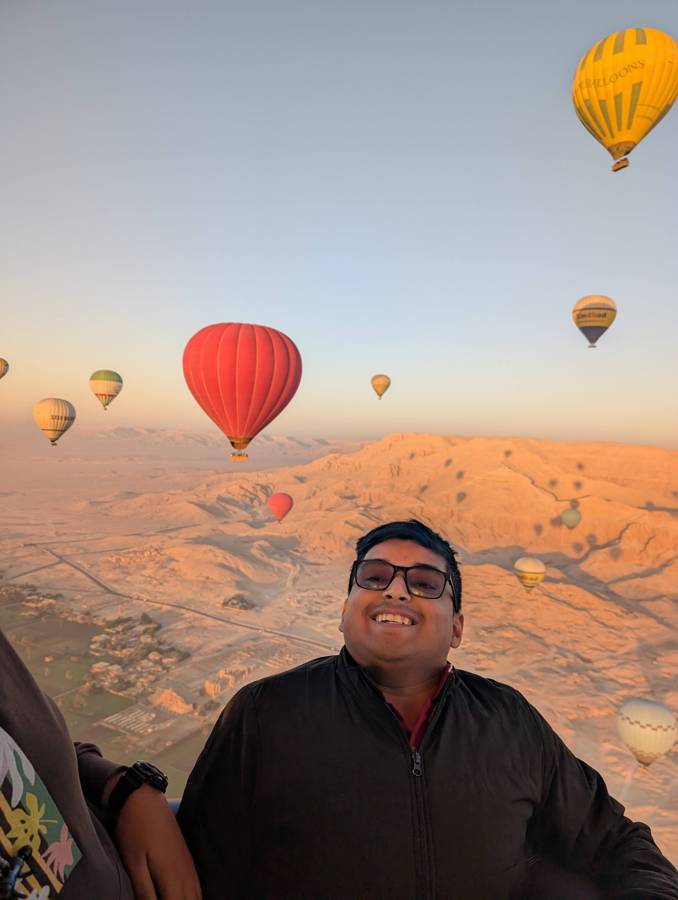
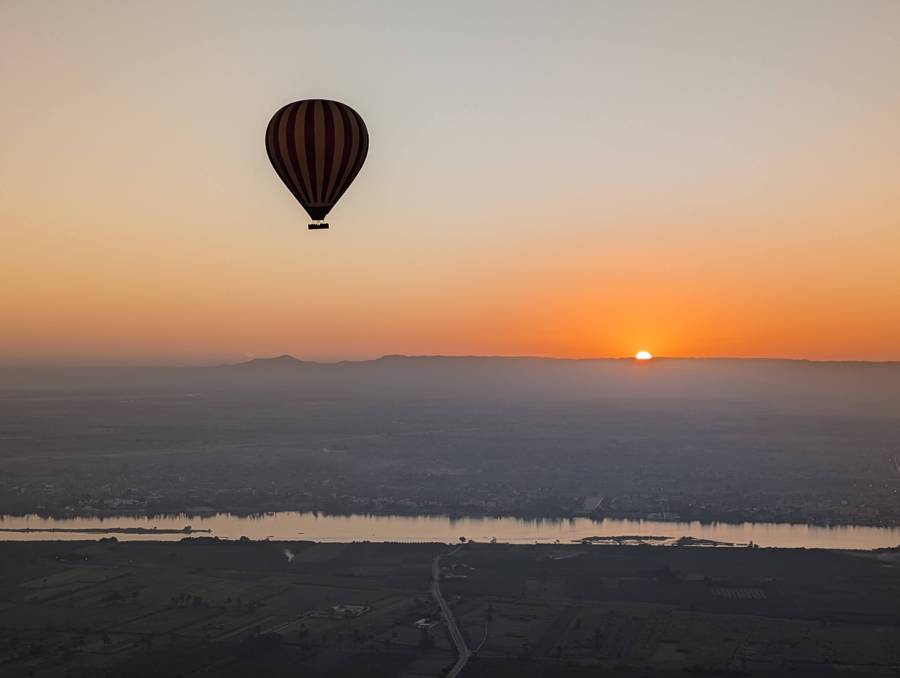
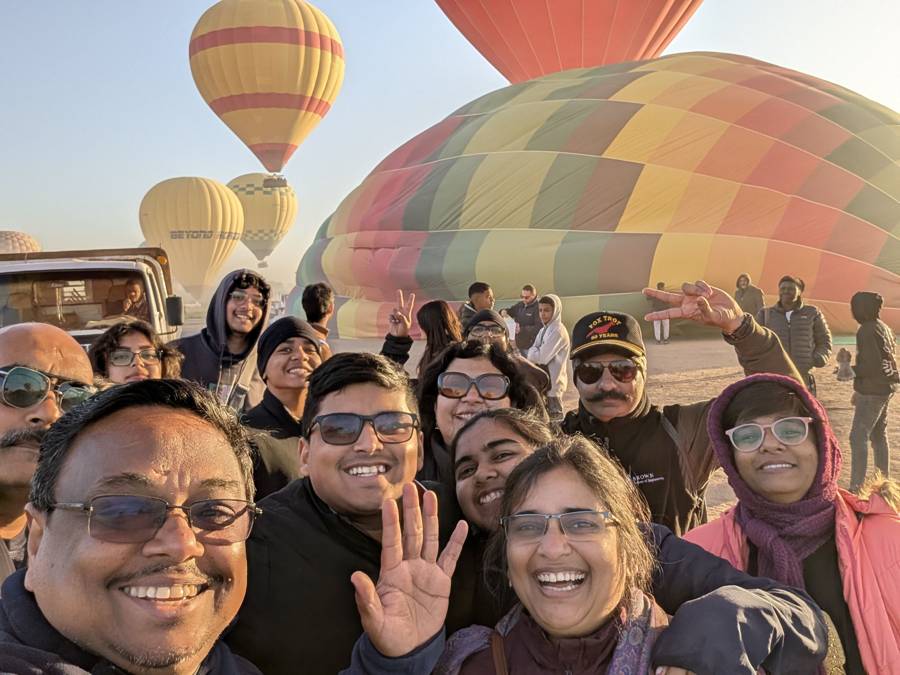
It was, as a balloon ride should be, quiet and slow, with a strange peace over the whole valley. Afterwards there was breakfast, and, because Egypt does not believe in a free morning, three more tombs, this time in the Valley of the Queens.
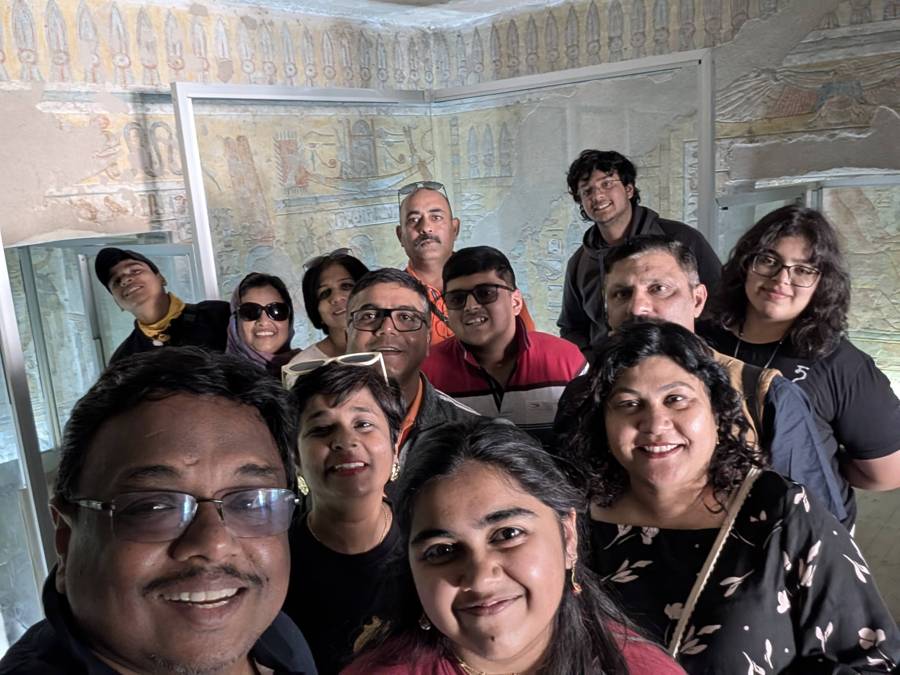
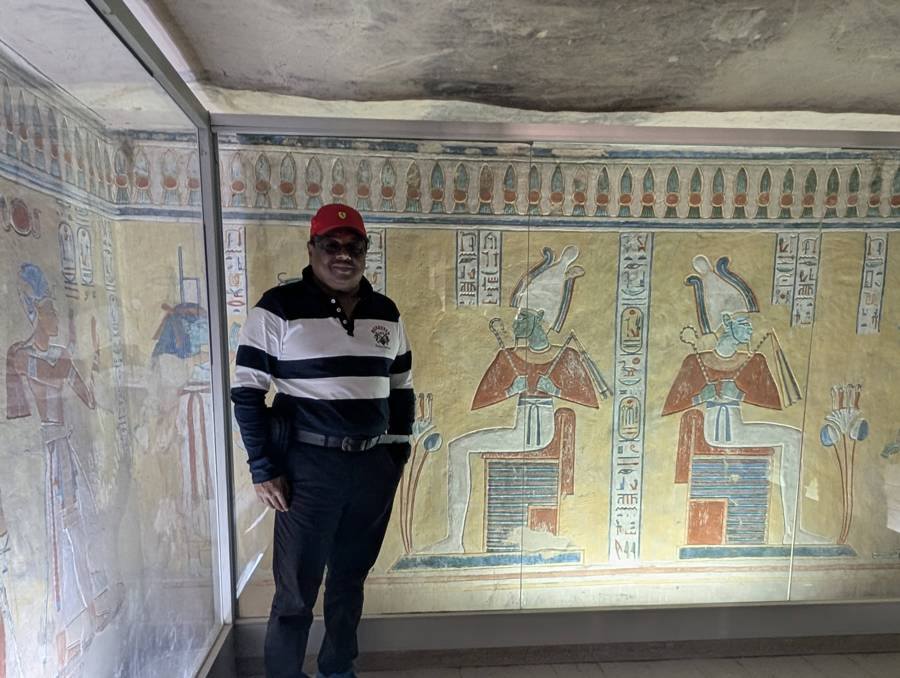
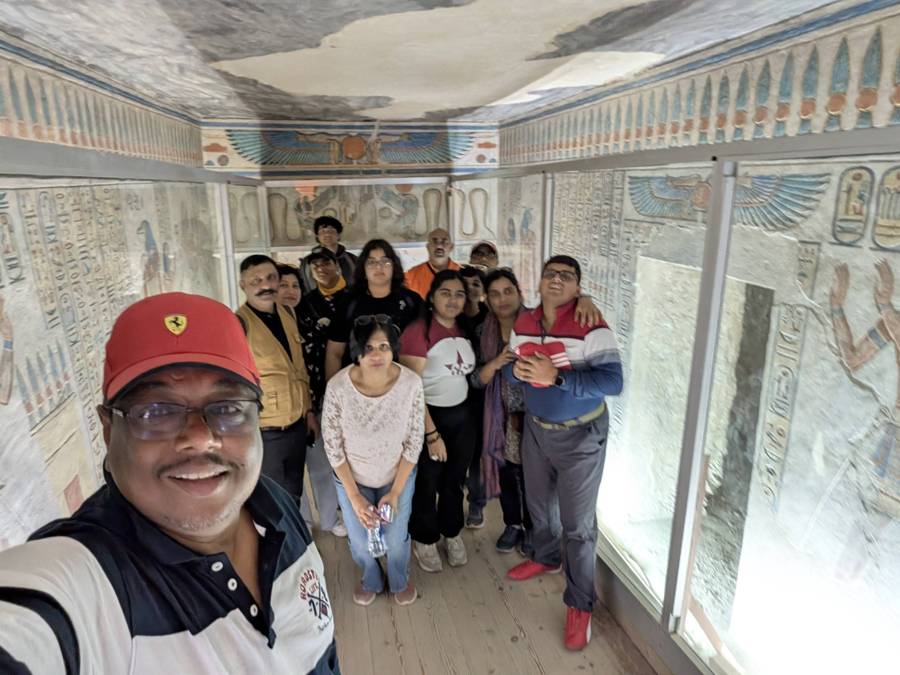
Karnak
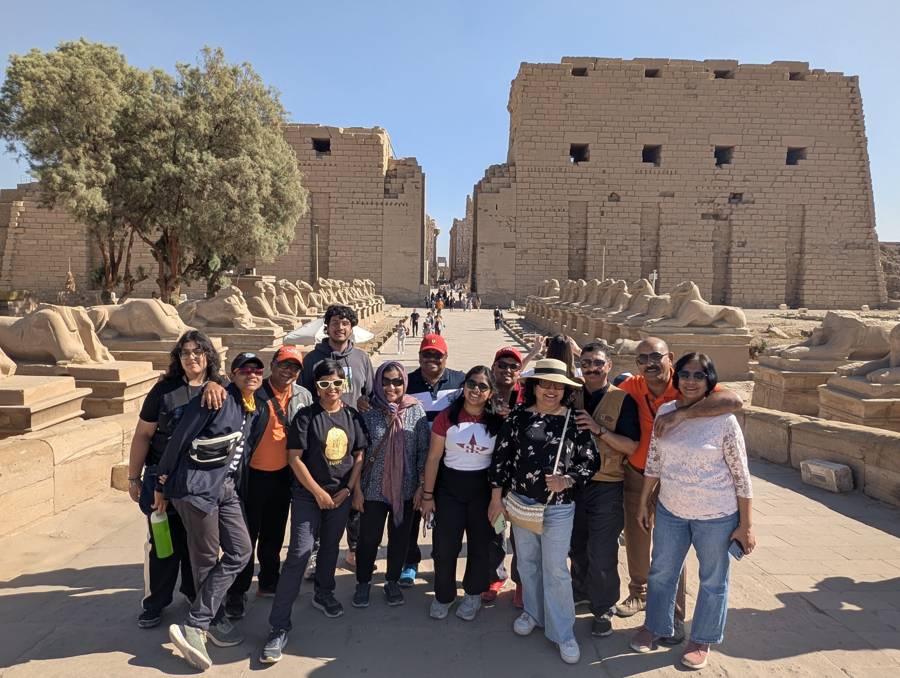
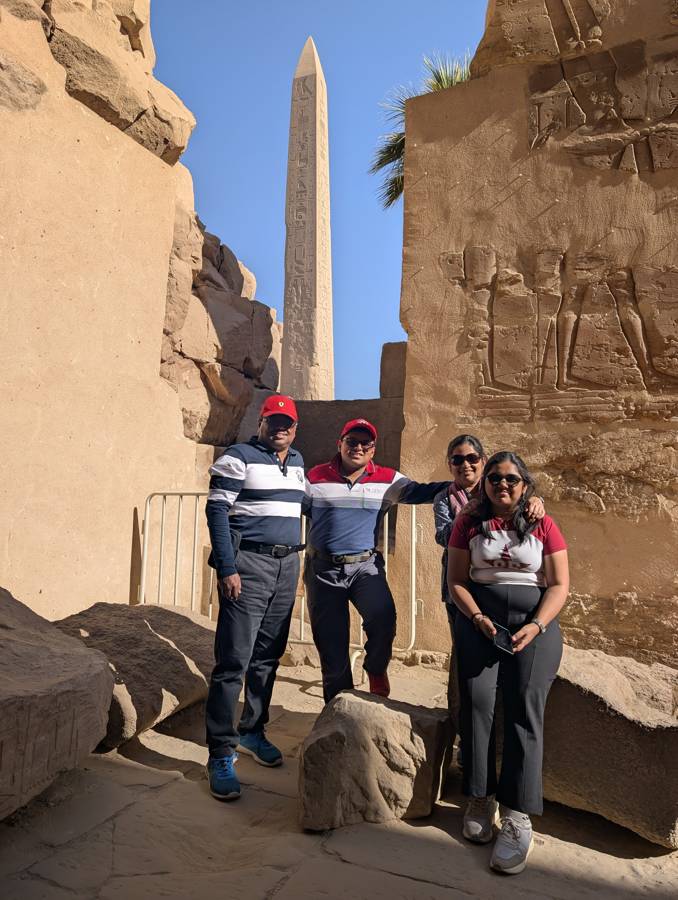
Karnak is the great temple complex on the east bank, and the word that fits is not “big”. It was built, added to and rebuilt by about thirty pharaohs over some two thousand years, and it looks like it. You walk in along an avenue of ram-headed sphinxes, past gateways and courtyards, and then you are in the Great Hypostyle Hall, which is a forest of stone columns that make you look up.
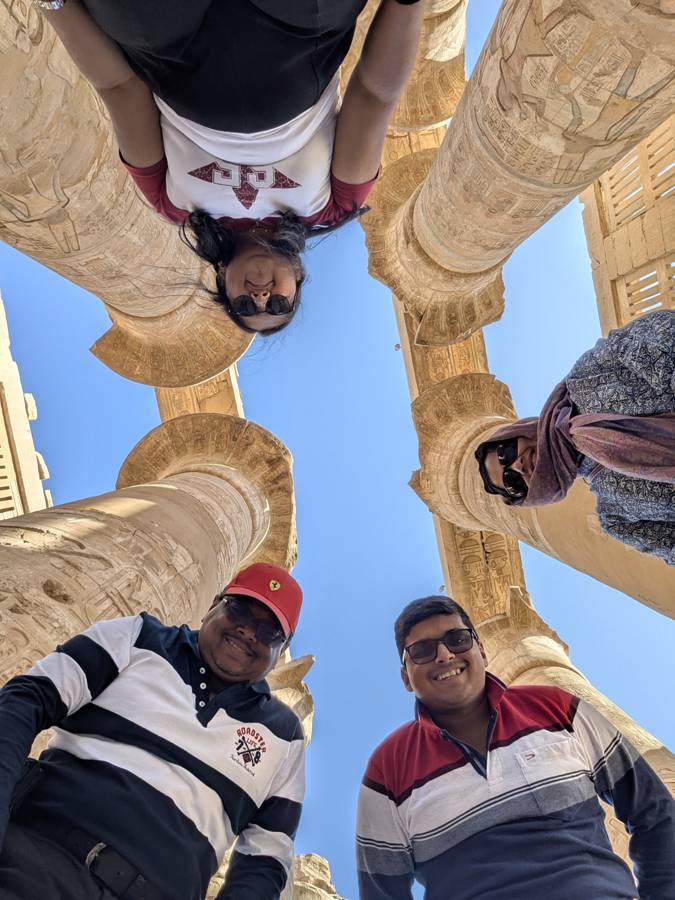
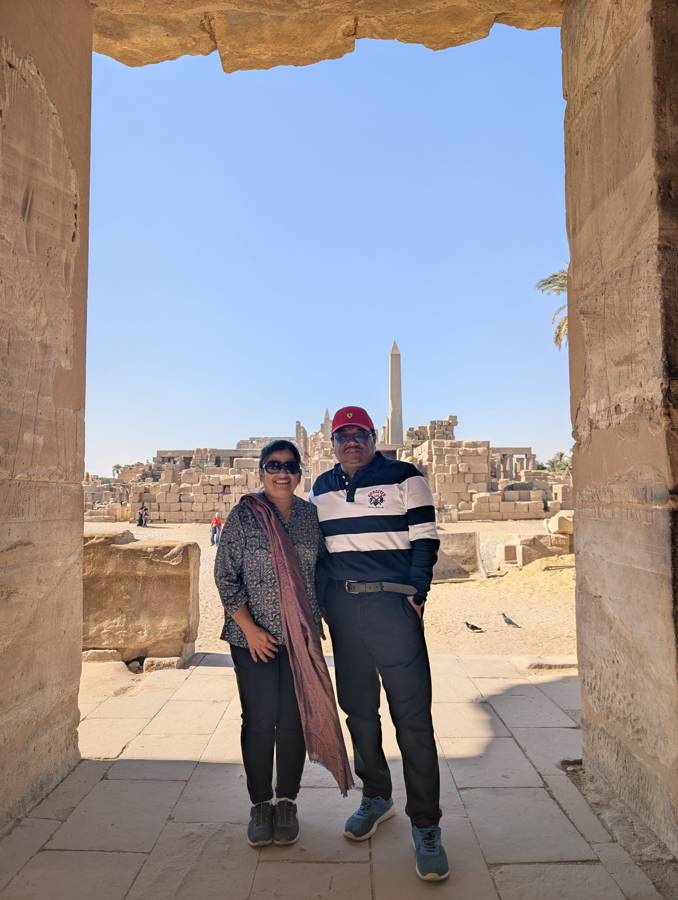
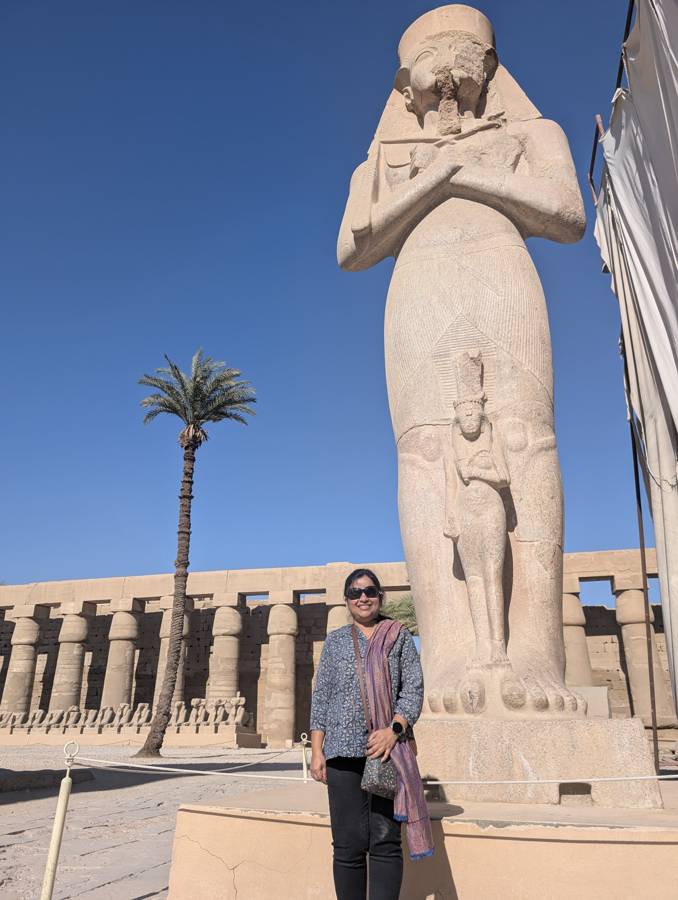
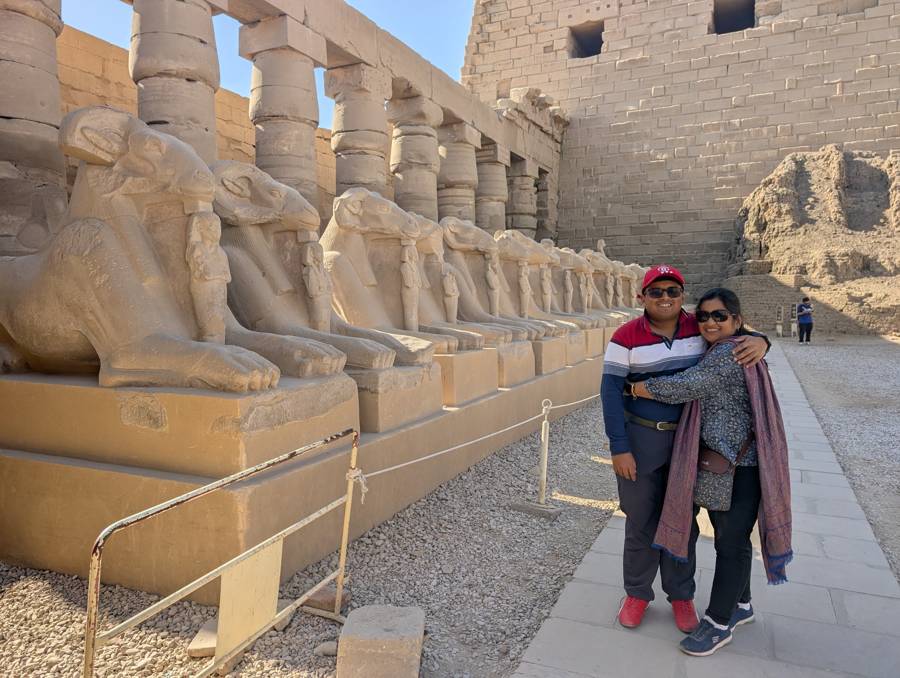
- The Hall has 134 columns in 16 rows. Twelve are 21 m tall and the other 122 are 10 m.
- It covers about 5,000 square metres, a little under the size of a football pitch.
- Building at Karnak ran from about 1970 BC into the Ptolemaic era, nearly 2,000 years, with about thirty pharaohs adding to it.
- It is linked to Luxor Temple by an avenue of sphinxes about 2.7 km long.
From Wikipedia’s entries on Karnak and Luxor Temple.
A felucca at sunset
The day ended on the water. A felucca is a traditional Nile sailing boat with a simple triangular sail, and the last hours of the day were spent on one. The sun went down just after five, as it does at this time of year, and the sky did the rest.
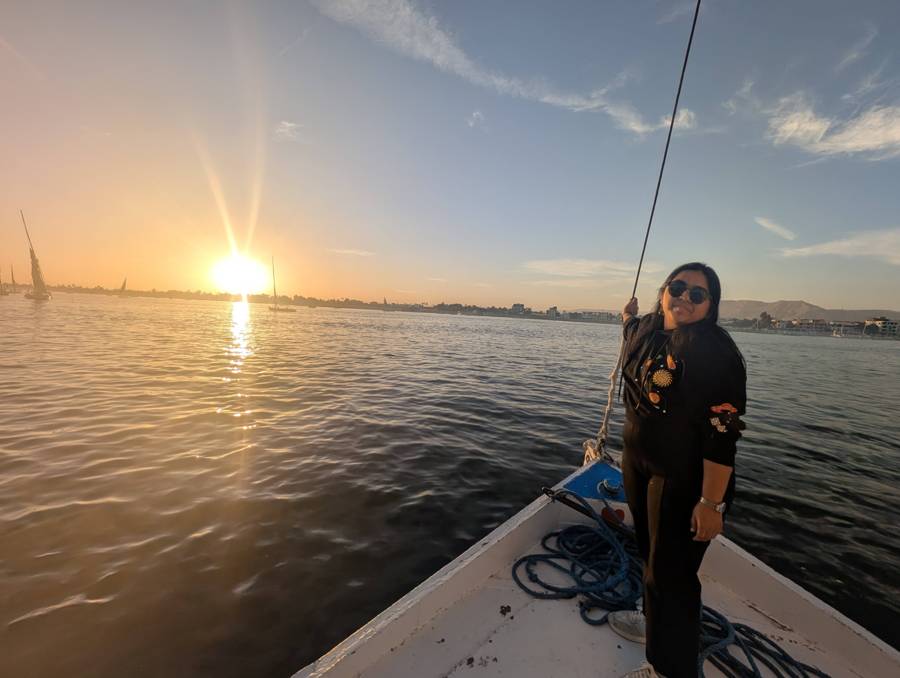
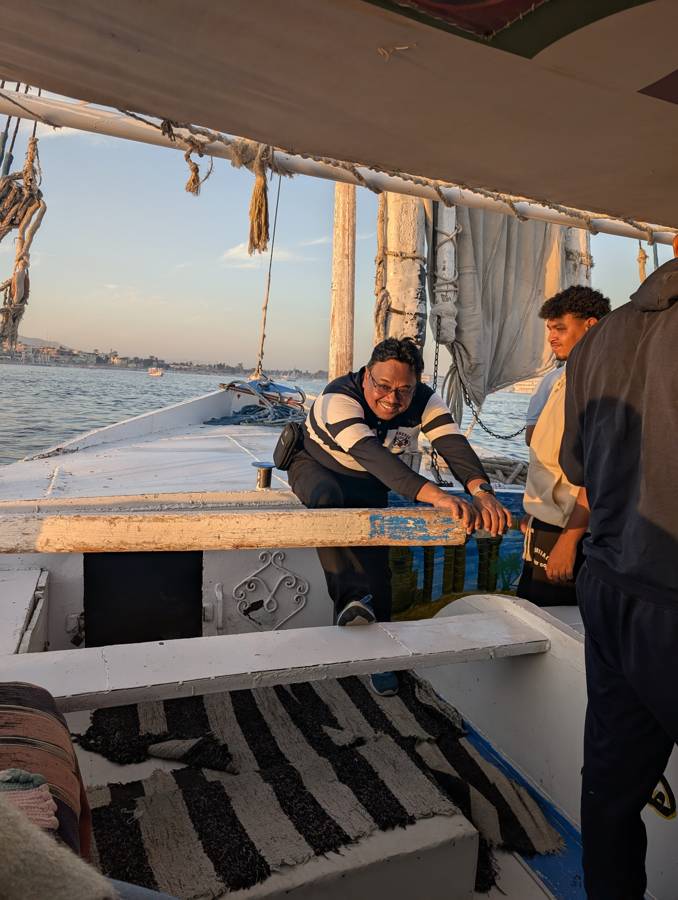
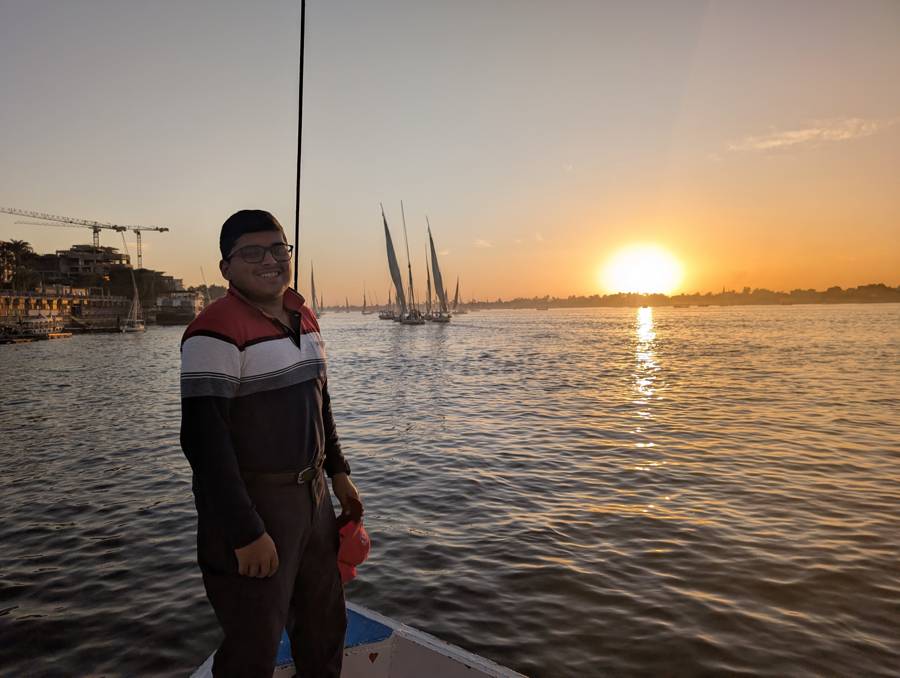
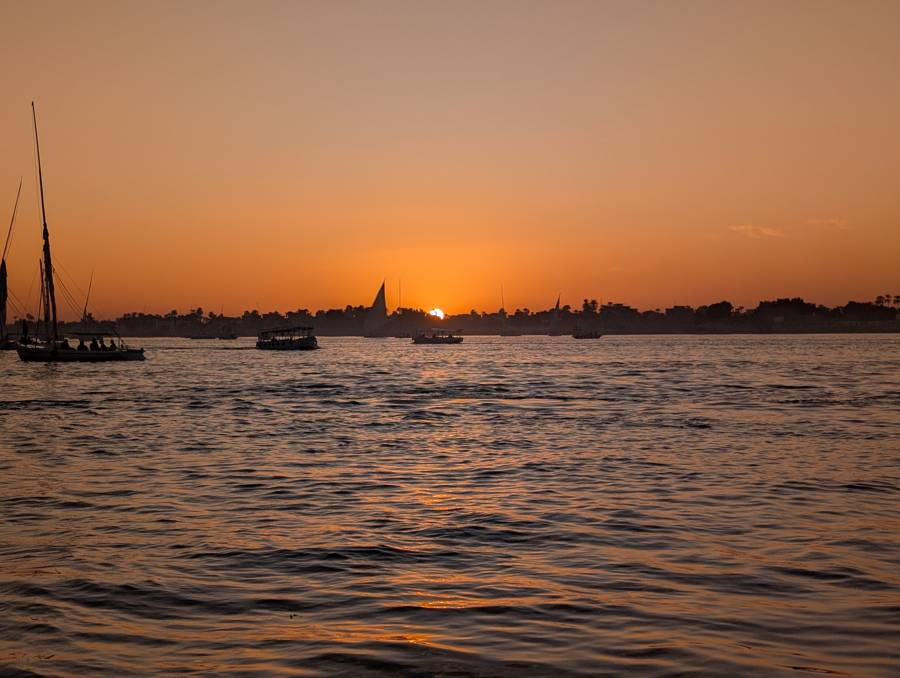
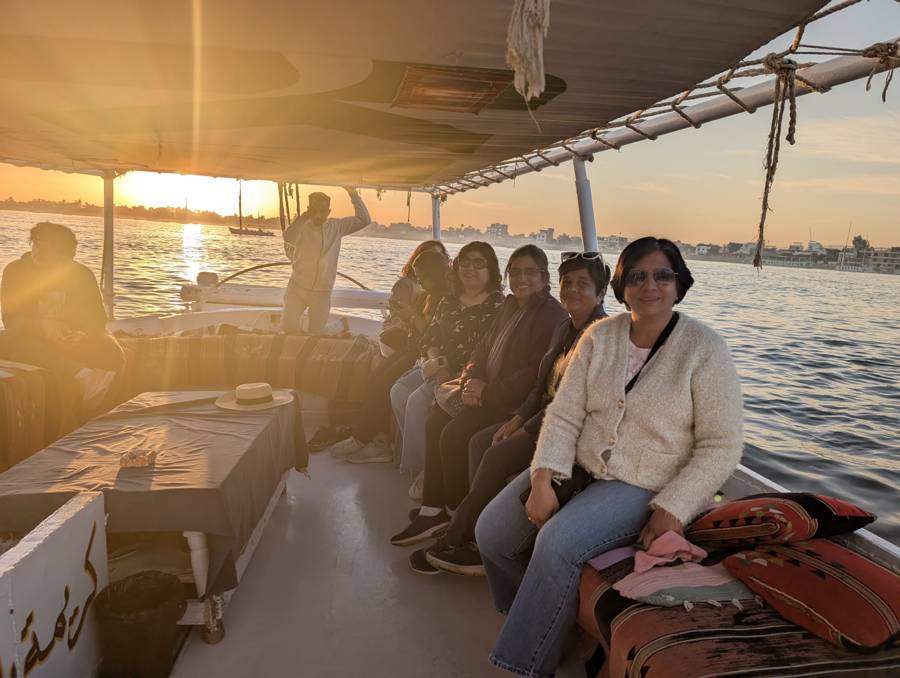
There was no special plan for New Year’s Eve. We went up to the hotel roof and watched the fireworks over the city.
Day 7: Thursday 1 January. A new year, a long road and a beach
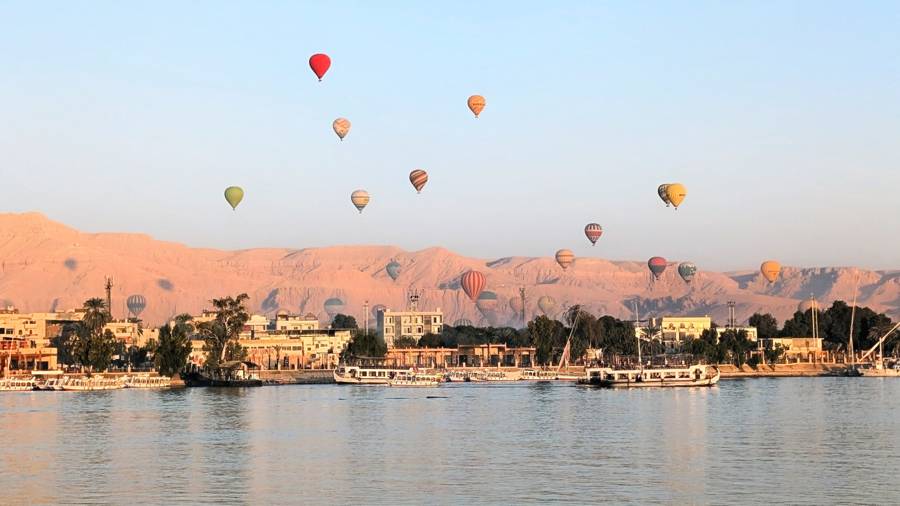
The first morning of the year began with the balloons. We stood on the riverbank with the sun just up and watched them drift over the West Bank, which is a nice way to watch other people’s sunrise flights when you have already had your own. Then we checked out, climbed into the coach, and drove east across the desert to the Red Sea coast, about 250 kilometres of road and a very different Egypt at the end of it.
Hurghada and its resort strip is a place with a pool, a beach, plenty of sun and no ancient temples. We had one night at the Mirage Bay hotel. We waded in for the photographs and stayed for the sunset.
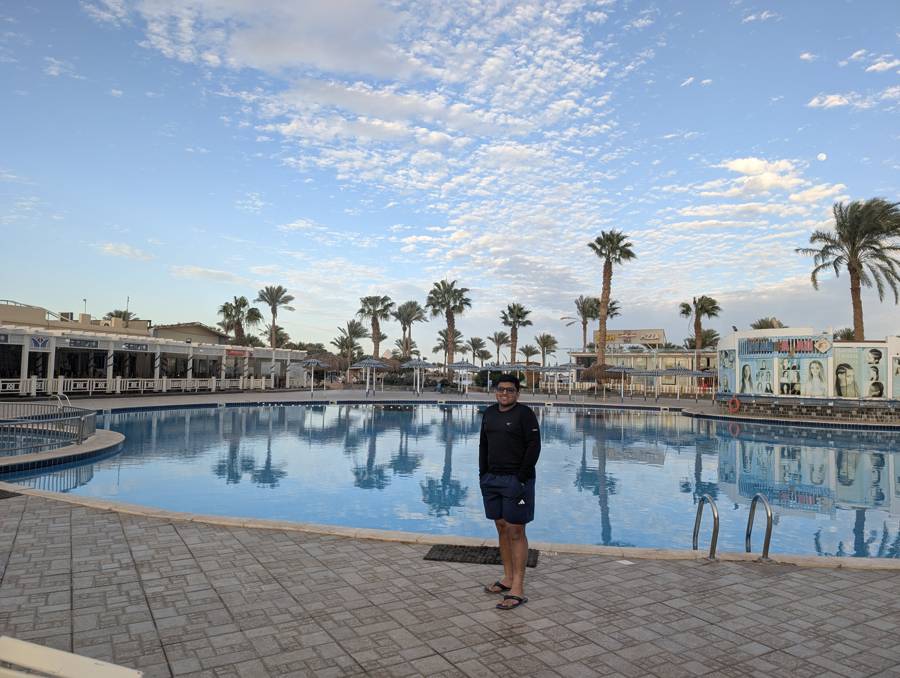
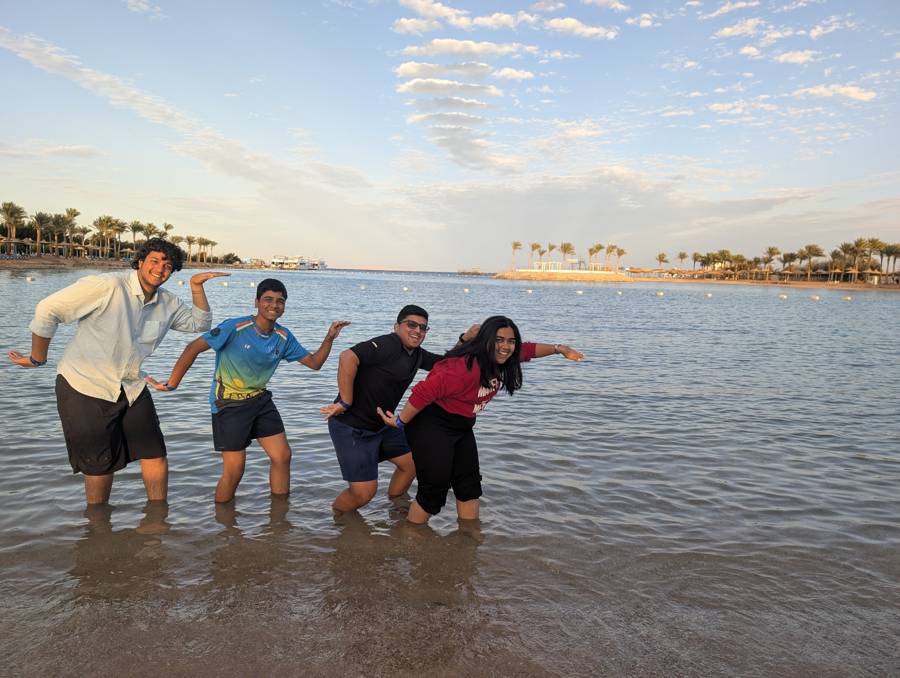
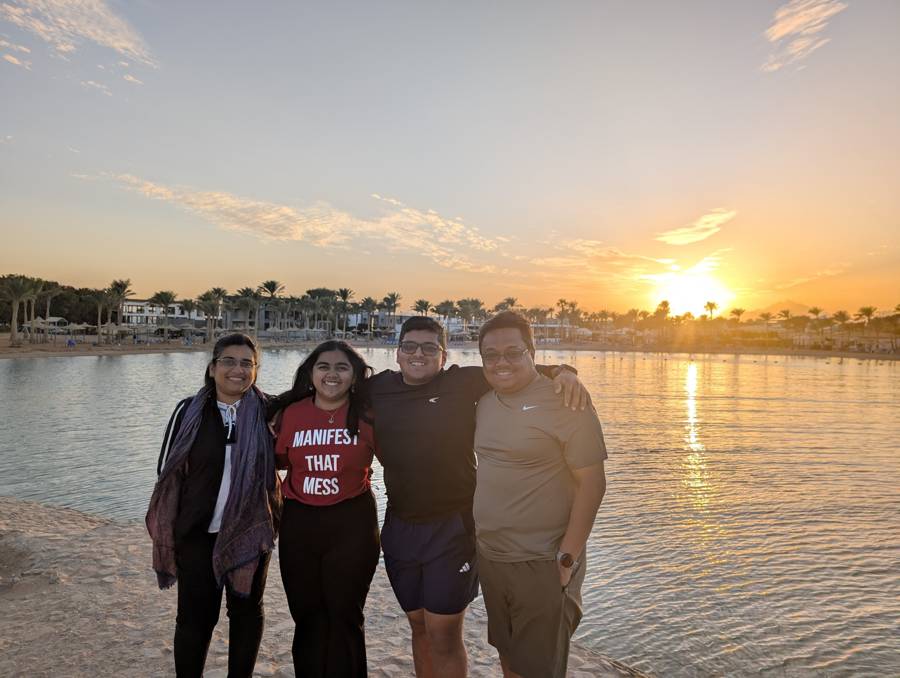
Day 8: Friday 2 January. The Red Sea, properly
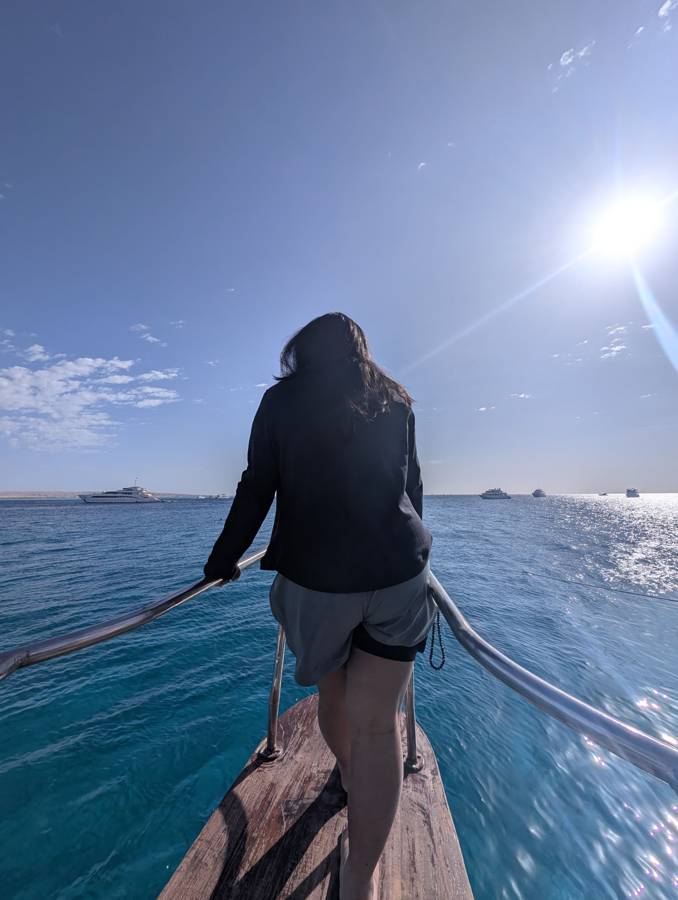
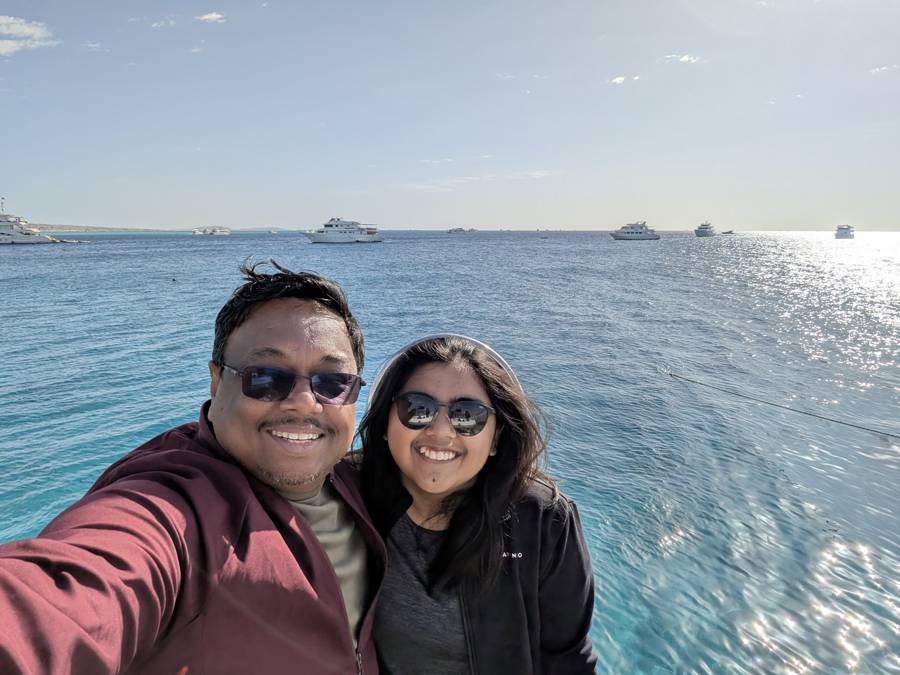
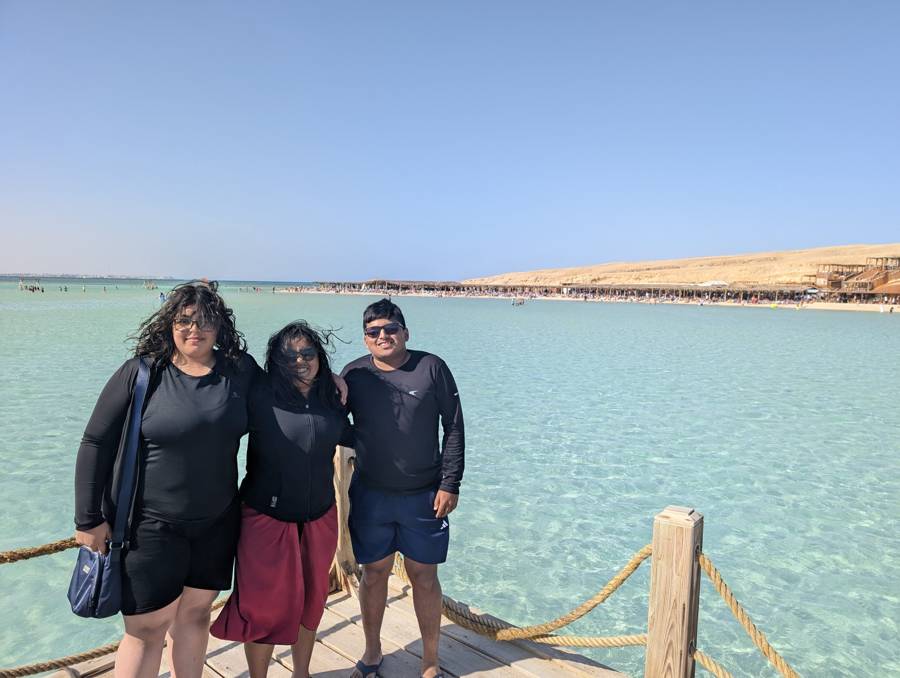
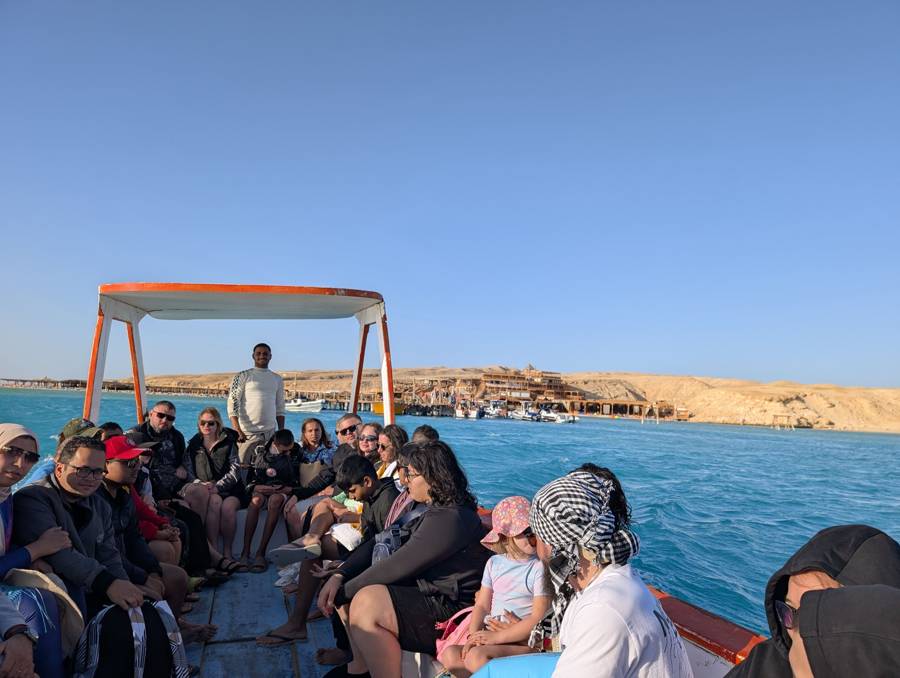
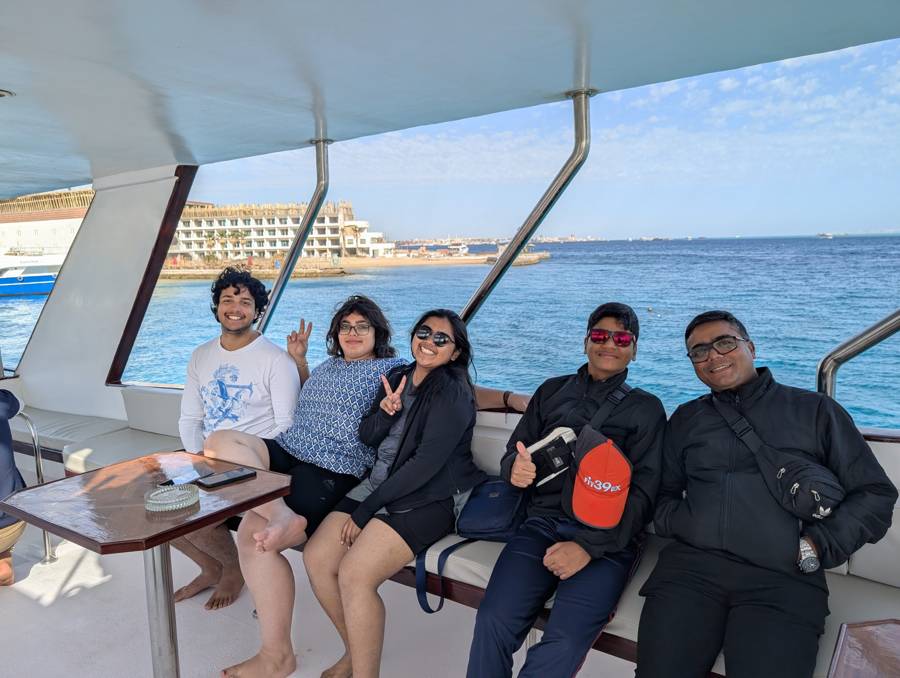
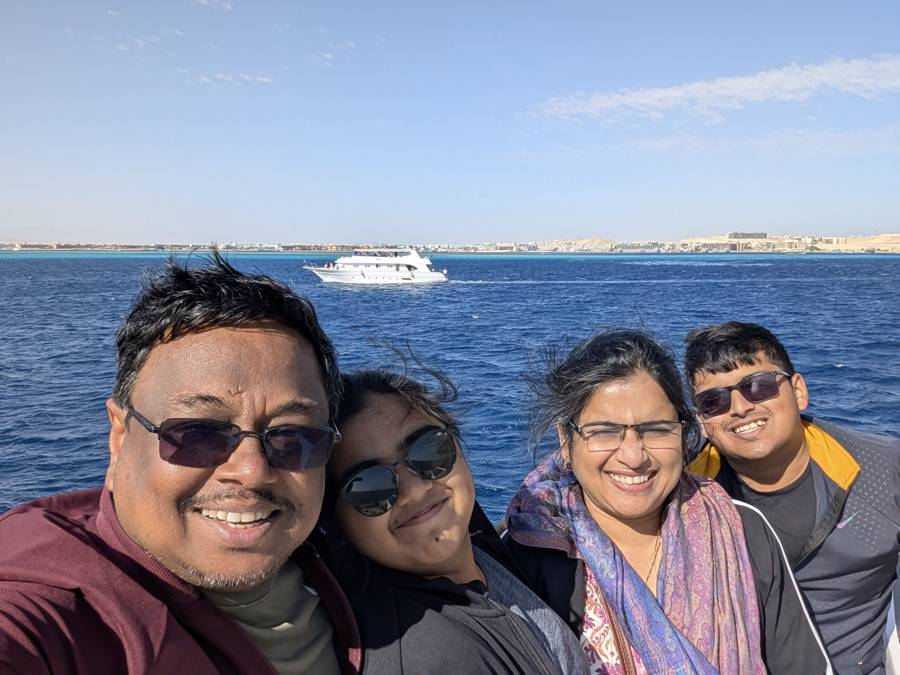
The sun came up out of the sea at breakfast time, and by mid-morning we were on a boat. The yacht trip was the day’s big event: a morning sail out from the Hurghada marina, and a stop at an island with water in colours that look like a mistake in the colour printing. We swam, and we looked at the underwater world too, which turned out to be every bit as good as the view from the deck.
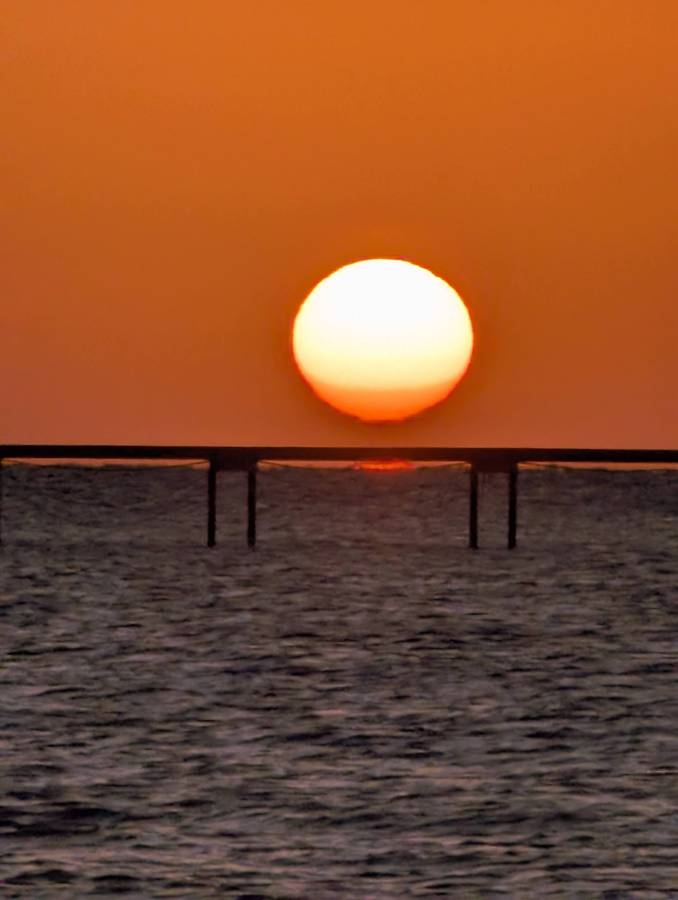
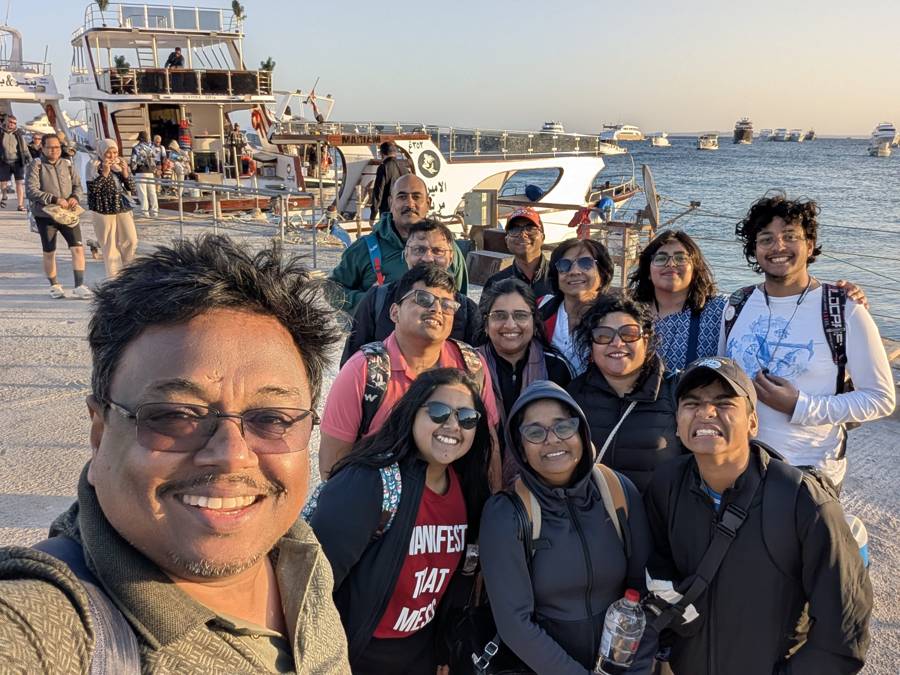
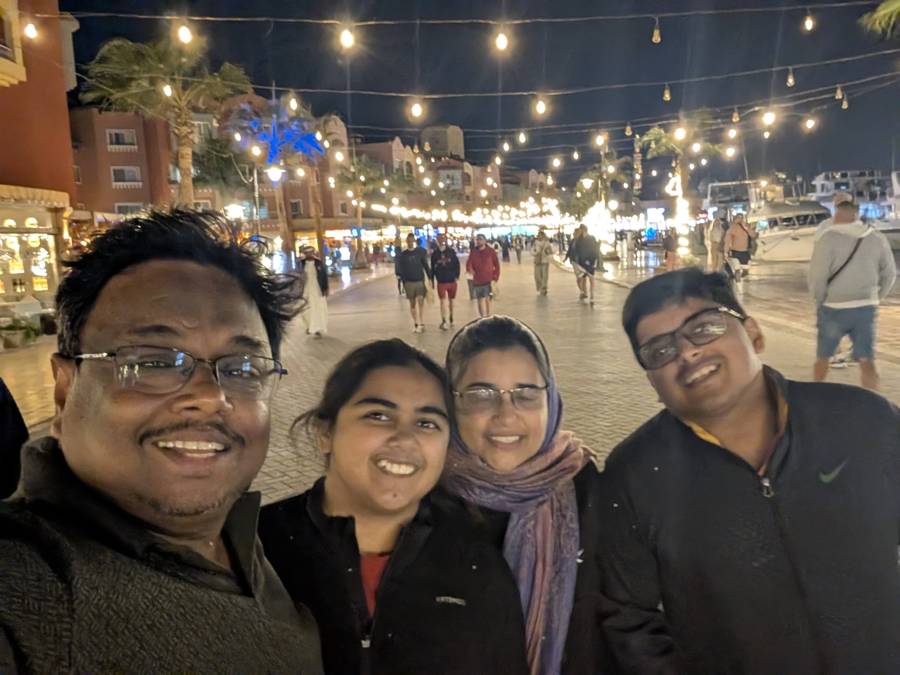
Back at the marina in the late afternoon we had a group photograph on the quay and a stroll along the promenade in the dark with the lights strung overhead. That evening we caught the flight back to Cairo, and reached the Golden Season Hotel in the small hours.
Day 9: Saturday 3 January. Cairo, the slow way
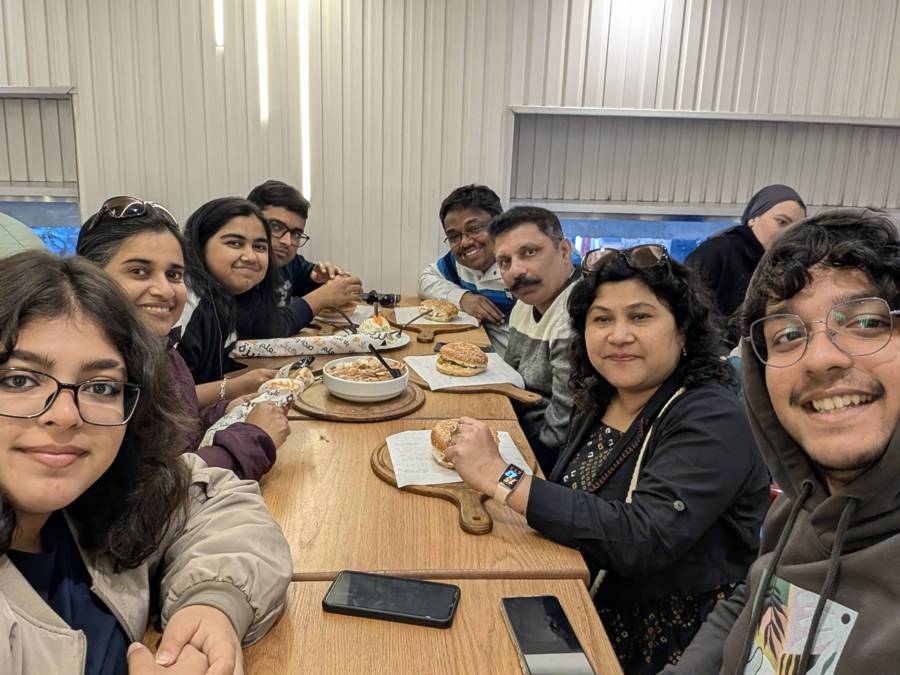
This was the day the group began to come apart. Two of the families, the Malanis and the Majumdars, had flights home that day according to the itinerary, which left the rest of us in Cairo with a day to roam. We did exactly that: we wandered around the city, visited a few places and stopped for a long lunch. One of the stops was Tahrir Square, where a Ramesses II obelisk stands between four ram-headed sphinxes, and where the whole group stopped to pose.
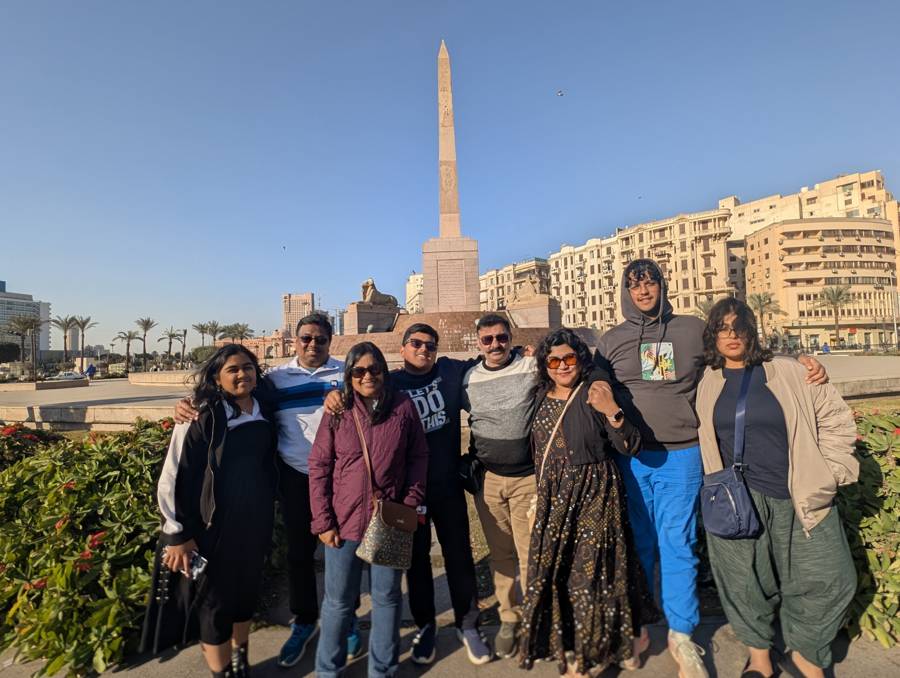
- In 2020 an obelisk from the reign of Ramesses II was set up in the centre of Tahrir Square, with four ram-headed sphinxes moved from Karnak.
- The obelisk had been unearthed at Tanis, in the north of the Delta, in 2019.
- Some archaeologists objected that the soft sandstone sphinxes would suffer from traffic fumes and heat.
From Wikipedia’s entry on Tahrir Square.
Day 10: Sunday 4 January. Saladin, the sultan and a plate of koshari
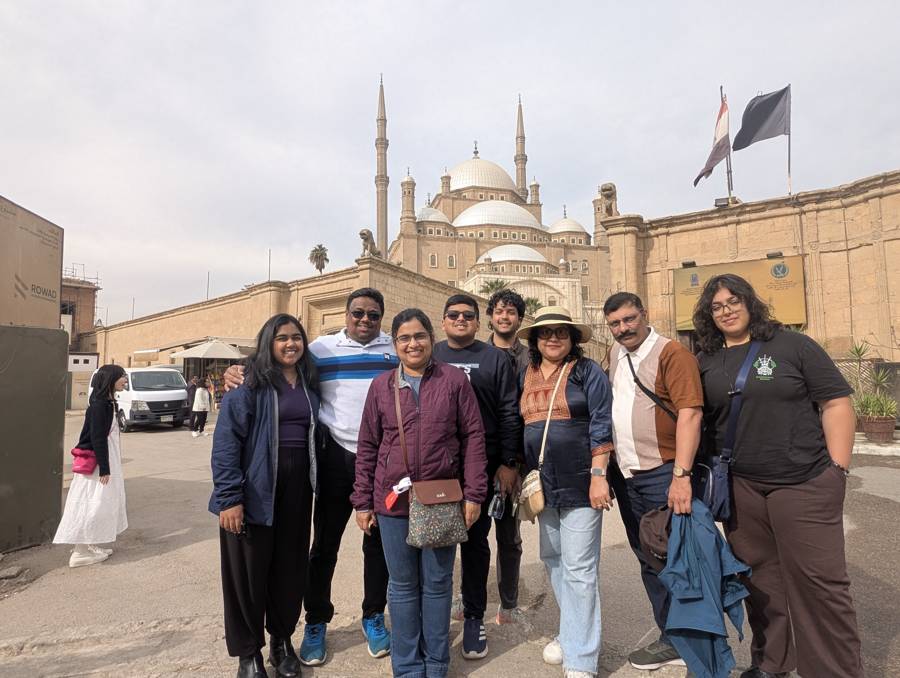
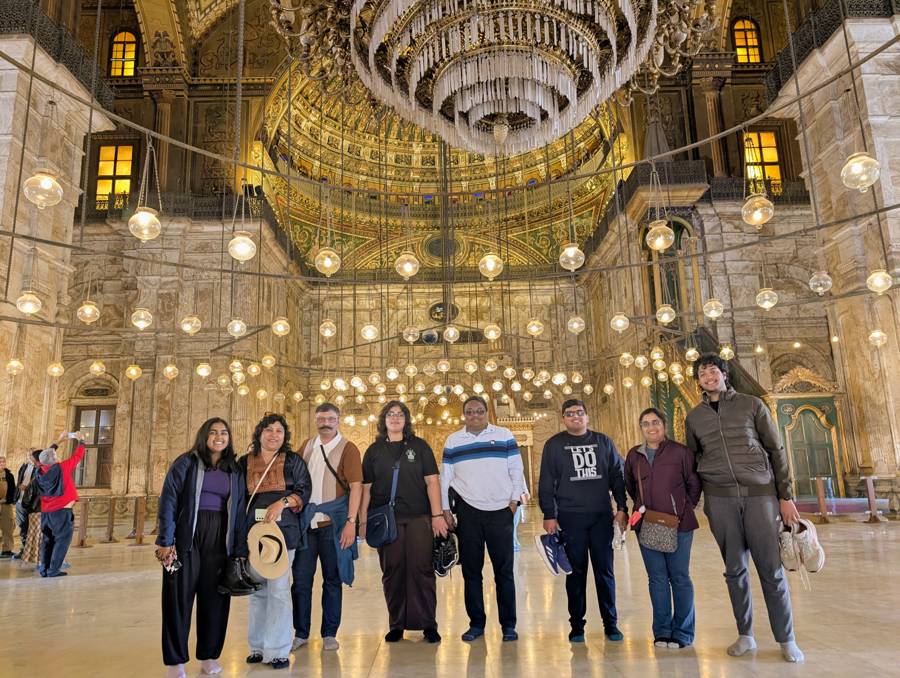
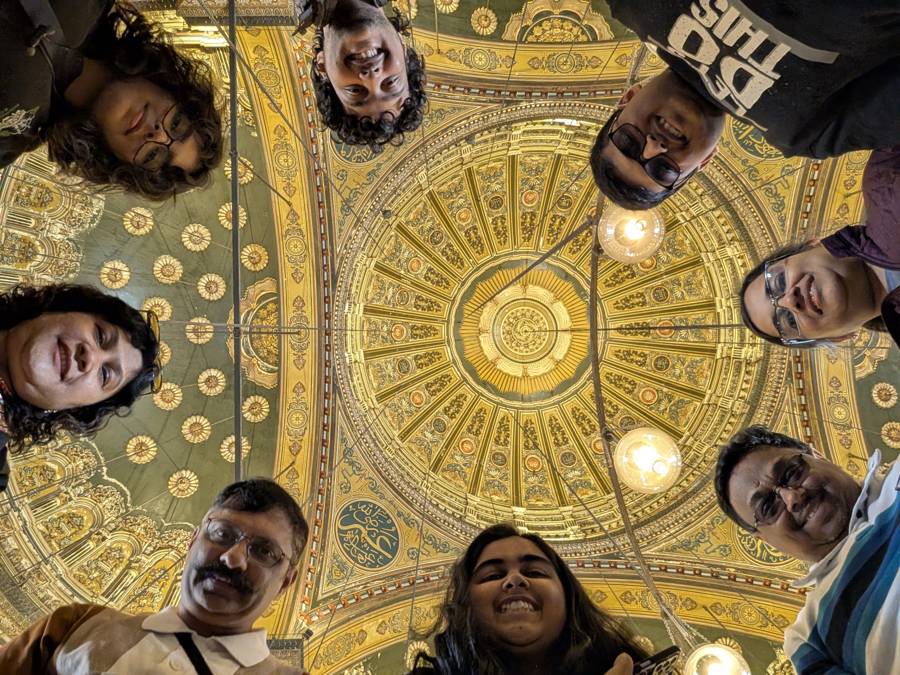
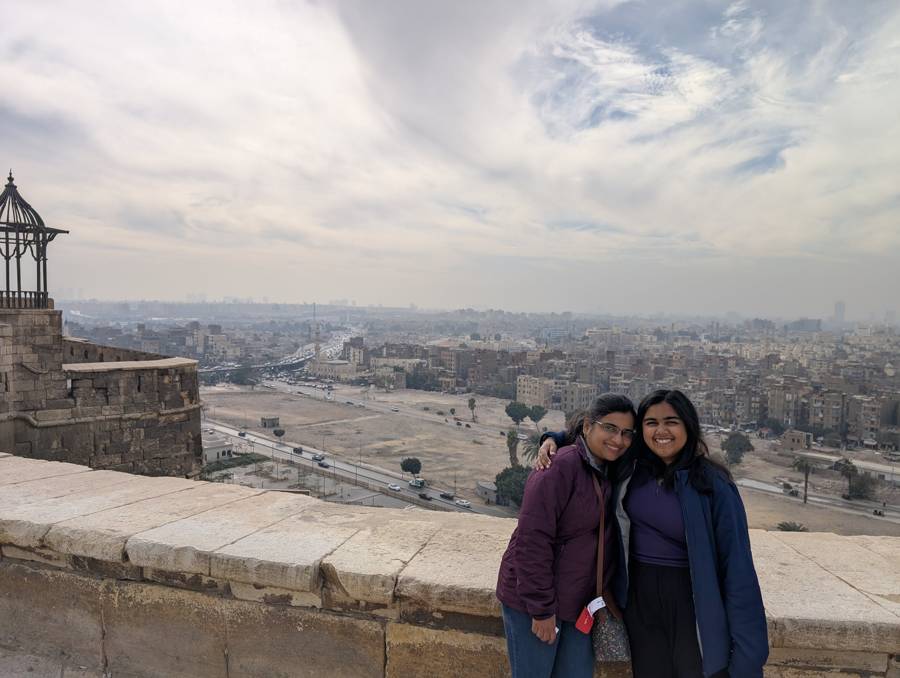
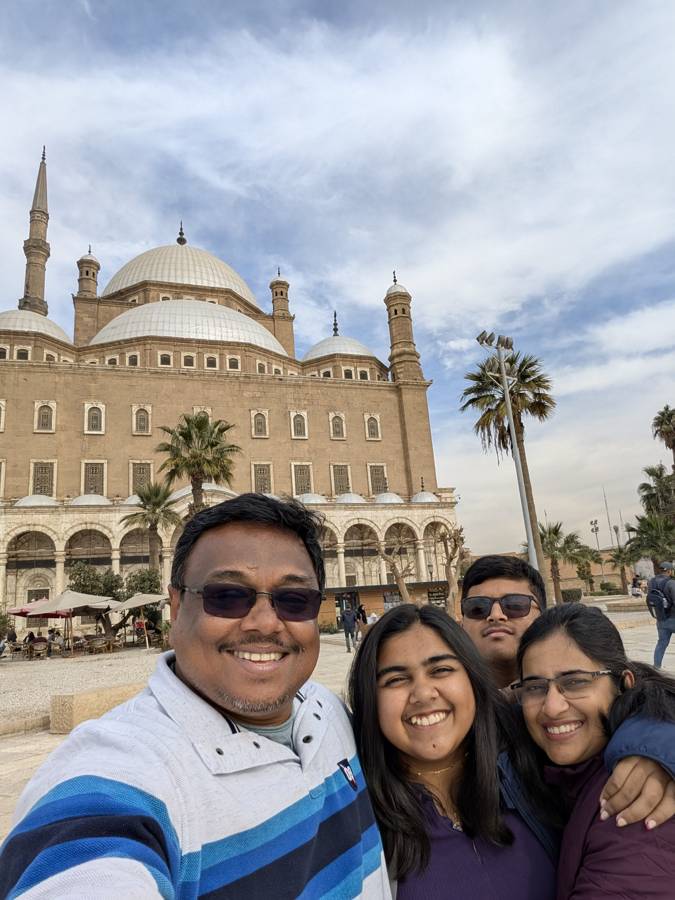
The last day was Islamic Cairo and the Citadel, where the story shifts from pharaohs to sultans. The Citadel was begun by Saladin in 1176 to protect the city from the Crusaders, and for nearly 700 years it was the seat of the government of Egypt. The mosque that now dominates its skyline is the Mosque of Muhammad Ali, built between 1830 and 1848 on the model of Istanbul’s Sultan Ahmed Mosque, and its domes and slim minarets can be seen from across the city.
For lunch we went for the national dish. Koshari is a heap of rice, lentils and pasta, topped with chickpeas, tomato sauce and crisp fried onions, and it is often called Egypt’s national dish. We had it at Abou Tarek, which is not just a koshari place but the koshari place. It is the famous one in Downtown Cairo, and our group made the pilgrimage like everyone else, for a meal that comes in a bowl and costs very little.
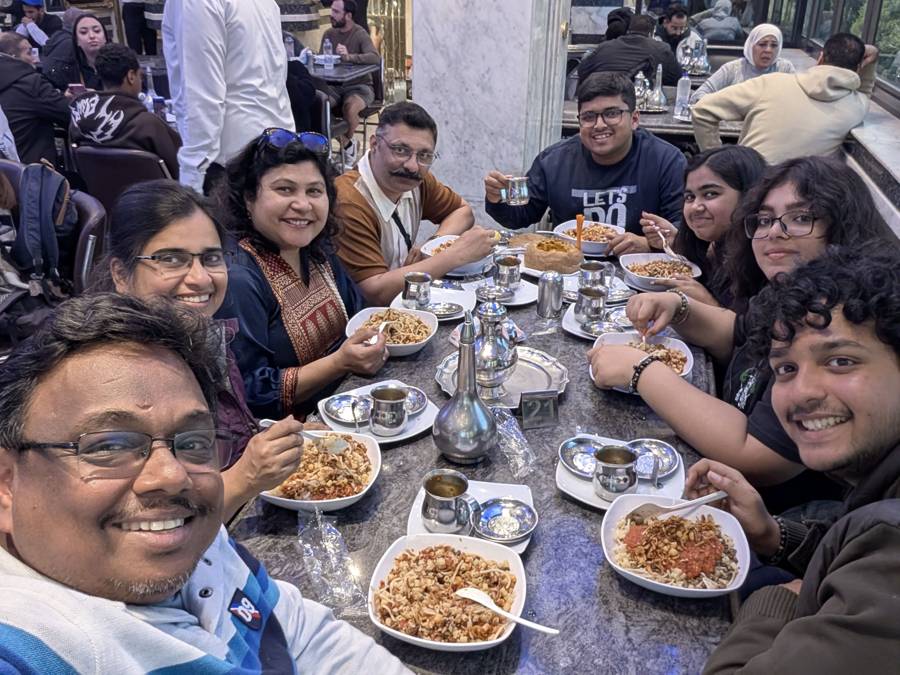
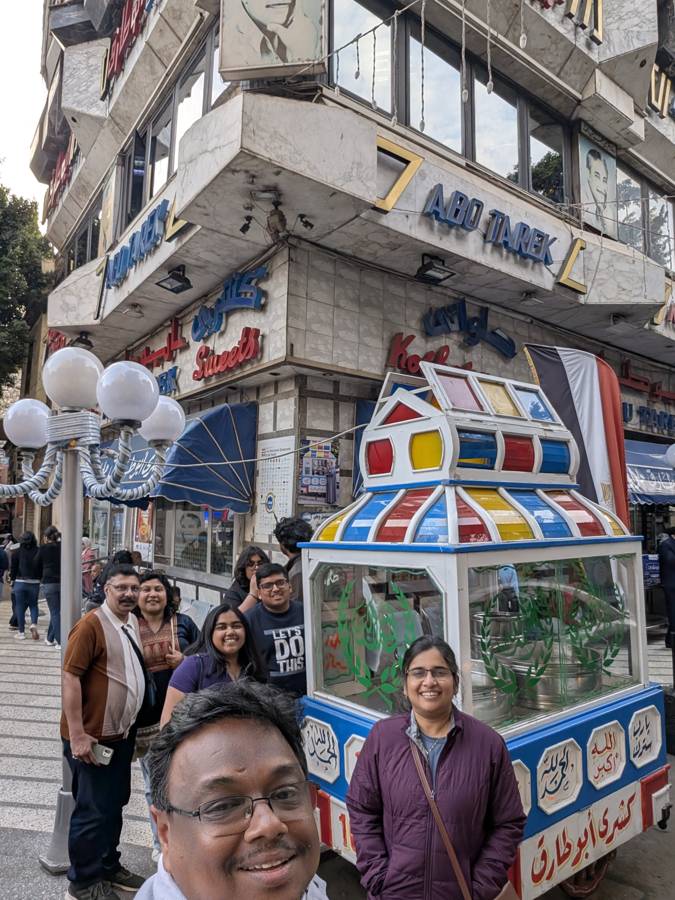
- Koshari is rice, lentils and pasta (macaroni and vermicelli) topped with chickpeas, a garlicky tomato sauce, vinegar and fried onions. It is often called Egypt’s national dish.
- Abou Tarek is named after its founder, Youssef Zaky, known as Abou Tarek, who inherited the trade from his father and grandfather and began by pushing a koshari cart around Downtown Cairo. Sources differ on the year the business began (1950 in one, 1963 in another).
- He later rented a shop on the spot where he sold from his cart. It grew into a four-storey building on Champollion Street in Downtown, and the original cart still stands outside it. That is the cart in our photograph.
- A plate costs a few dozen Egyptian pounds, about one to one and a half US dollars at the time of the article.
- The chain has since opened branches in the UAE and Saudi Arabia.
From the Egyptian Streets article on Abou Tarek and Cairo360’s guide to the restaurant.
- Begun by Saladin in 1176 and completed in 1183–84, to guard Cairo against the Crusaders and to give his new regime a secure base.
- It was the seat of government for nearly 700 years, until 1874, when Khedive Ismail moved the government to Abdin Palace.
- The Mosque of Muhammad Ali was built between 1830 and 1848 and completed in 1857 under Said Pasha. Its model was the Sultan Ahmed Mosque in Istanbul.
From Wikipedia’s entry on the Cairo Citadel.
That night we went to the airport for the late flight home, and landed in Delhi on the afternoon of 5 January.
The pharaoh pocket guide
A short who’s who of the people whose names kept appearing on walls, in the order we bumped into them.
- Khufu, Fourth Dynasty, around 2600 BC. The Great Pyramid. He wanted a tomb that would last, and it did.
- Khafre, his son. A pyramid of his own, still wearing its cap, and quite possibly the face of the Sphinx.
- Thutmose IV, around 1400 BC. He dug the Sphinx out of the sand after it asked him to in a dream.
- Amenhotep III. The Colossi of Memnon, and much of Luxor Temple.
- Ramesses II. The giant in the museum hall, the obelisk in Tahrir Square, and four colossal statues of himself at Abu Simbel, which we did not see.
- Hatshepsut. A woman who ruled as pharaoh, built a temple like a modern building, and then had her statues defaced by her successor.
- The Ptolemies. The Greek-speaking pharaohs who finished Edfu and Kom Ombo, and who wrote their names on the wall in Egyptian.
- Saladin. Not a pharaoh, the late arrival, and the reason the Citadel is where it is.
What moved, and where we slept
No tour survives contact with the real world intact, and ours was no exception. The table below shows where the plan and the photographs part company.
| Item | Itinerary | What happened |
|---|---|---|
| Nile dinner cruise | Day 1, evening | Day 2, evening |
| Abu Simbel | Day 3 | Not possible: a vehicle problem and the tour operator |
| High Dam and Philae | Day 4, morning | Day 3, in place of Abu Simbel |
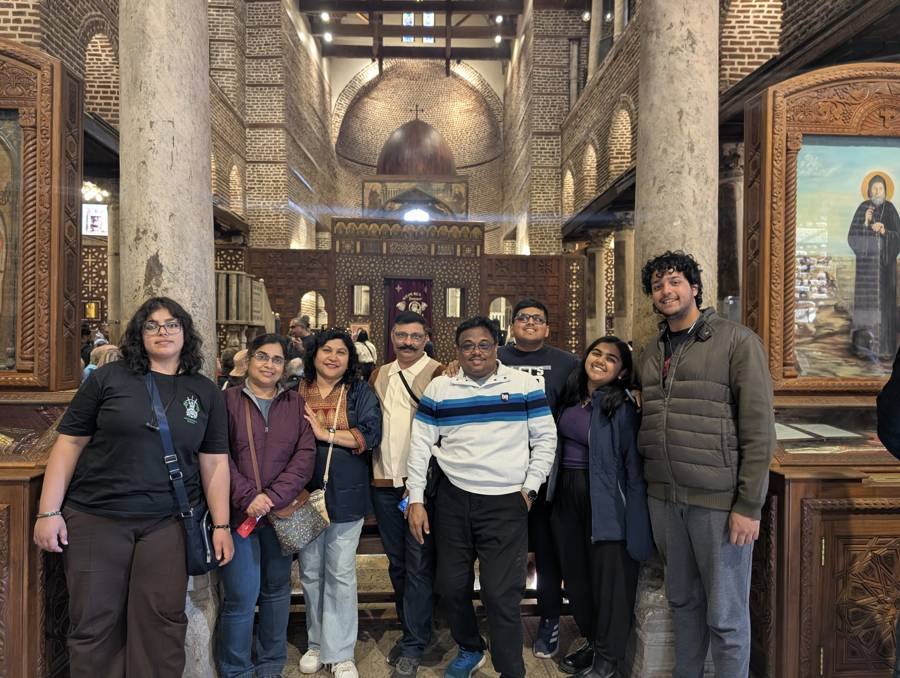
| Coptic Cairo | Day 9 | Day 10, with Islamic Cairo |
| Day 9 in Cairo | Khan el-Khalili bazaar and Coptic Cairo | A free day, wandering, with Tahrir Square and a long lunch |
| City | Hotel | Nights |
|---|---|---|
| Giza | Sahara Pyramids Inn | 2 |
| Aswan | Hapi Hotel | 1 |
| Luxor | Pyramisa Isis | 3 |
| Hurghada | Mirage Bay Aqua Park | 1 |
| Cairo | Golden Season Hotel | 2 |
The verdict
The scale. The Pyramids and the other great sites are unlike anything else in the world. The scale is jaw-dropping, and no photograph prepares you for it. The Great Pyramid is 138 metres tall today, and you can feel every one of them from the foot.
The lost world. Standing in a tomb in the Valley of the Kings, one thing weighed on me: the civilisation that built all this is gone. There is no pharaoh, no priesthood and no temple still doing what it was built to do, and the last hieroglyphic inscription was carved at Philae in AD 394. It is a sad feeling, and I think it is the right one. In fairness to Egypt, though, it is not as lost as it feels. The script was deciphered in the early 19th century, so we can read what the walls say. The ancient language lived on as Coptic, which is still used in the liturgy of the Coptic Orthodox Church. The spring festival of Sham el-Nessim is widely believed to date back to ancient times, and foods like ful medames, molokhia and fesikh are said to go back to the pharaohs. What has gone is the world around them, and what survives is partly in the walls and partly in Egyptian life.
The weather. It was very good: cold in the morning and at night, bright through the day and not too hot, except in the mid-afternoon.
The cost. Not bad at all. It felt a lot like India.
The Red Sea. It was majestic, and so was the underwater world beneath it.
The legwork. Over the days of sightseeing we walked about 10 kilometres a day, which came to roughly 15,000 steps a day on average. We saw five tombs in the Valley of the Kings and three more in the Valley of the Queens.
Who should go. Egypt gives you a view of the world that you can only get here, and, like India, it is a country that rewards the traveller who arrives curious. I would call it a must-visit for any world tourist. Abu Simbel is the one that got away. And we came away convinced of the one thing every pharaoh knew, which is that if you want to be remembered, you should build something big, and make sure it lasts.